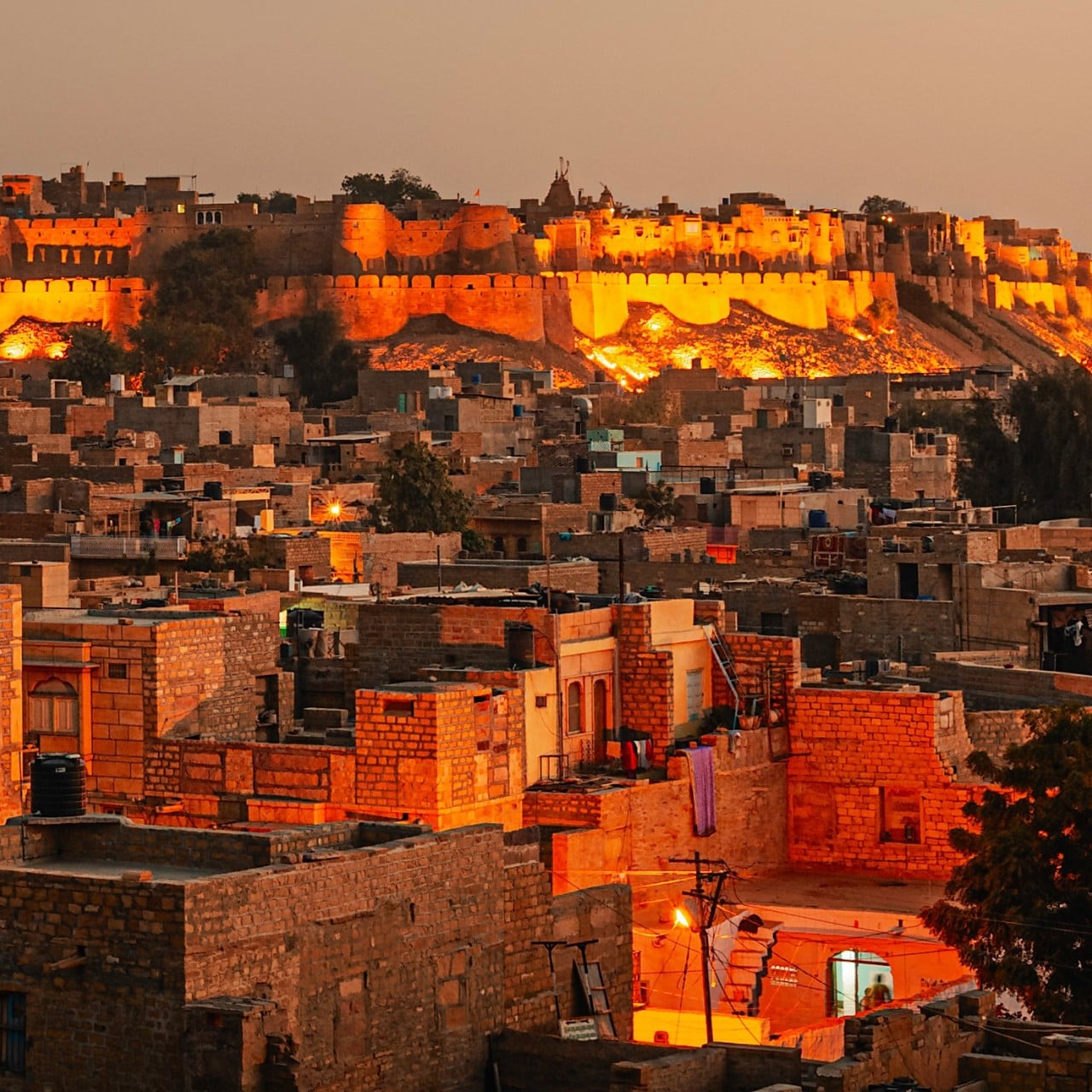
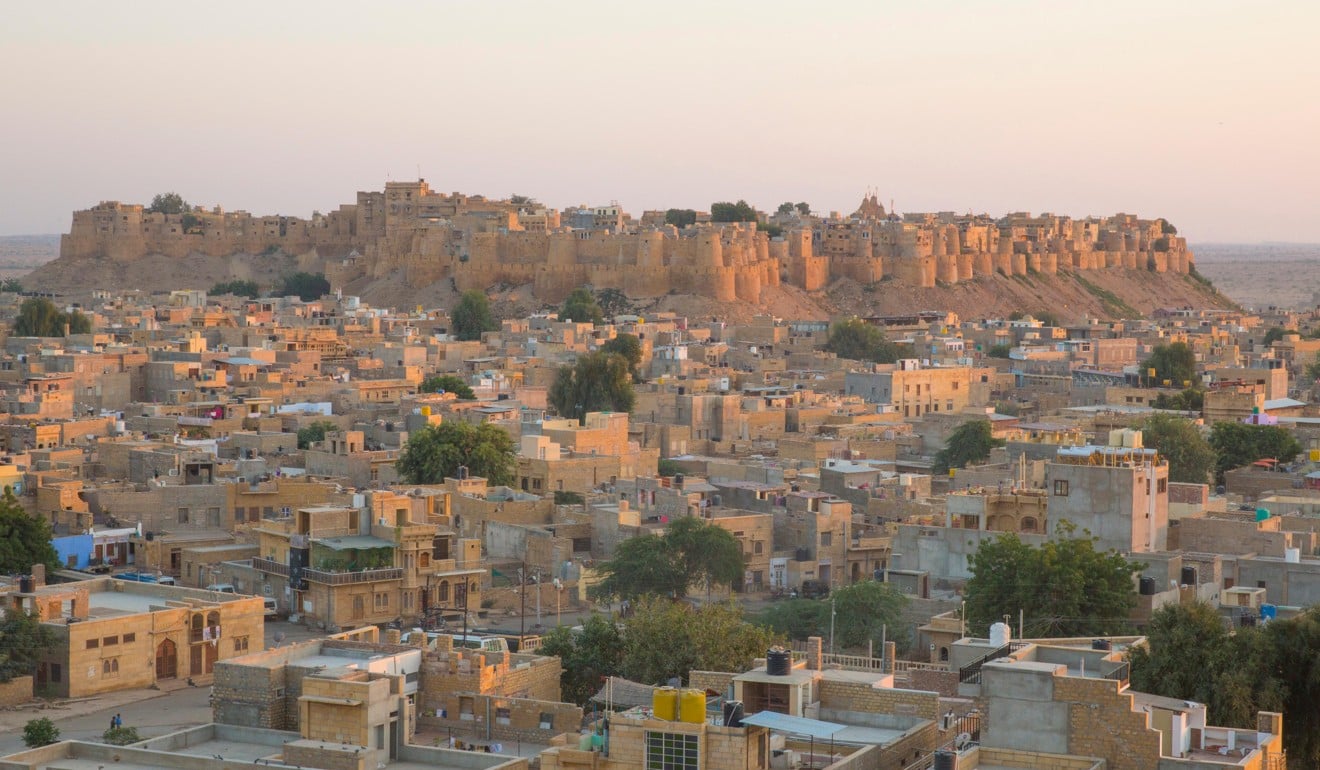
The walls of Jaisalmer’s Sonar Quila, or Golden Fort, shine as I step out of the railway station. The desert landscape before me is almost entirely basked in a golden light, lending Jaisalmer its nickname: the Golden City.
Nearly all the city’s structures – houses, mansions, forts and palaces – have been constructed from yellow sandstone, making them gleam in the sunlight and cast a mesmerising, bright golden light over the whole city.
Located in the south of the Thar Desert, Jaisalmer is a city in western India’s Rajasthan state famous for its barren land, lack of water and harsh weather. But thanks to its unique architecture, mouthwatering cuisine, rich culture, endless opportunities to shop and engrossing history, it’s tempting to stay longer than you originally planned.
From safaris among the sand dunes, which can be exciting camel or jeep expeditions, to taking in the architectural wonders of Jaisalmer Fort and the astonishingly ornate havelis – mansions – visitors can spend days appreciating the city’s beauty.
But a visitor’s first impression of the city will begin the moment they step off the train and see the city. The magnificent Jaisalmer Fort, an iconic monument, is immediately visible.
“You know, this is the only fort in India where people still live,” says my taxi driver, who is a living encyclopaedia of Jaisalmer. “Perched 250 feet [76 metres] high on Trikuta Hill, the fort is the largest living fort in the world.”

Within a few minutes, I am standing at the entrance of the imposing structure. The awe-inspiring sandstone monument is an architectural wonder, built of three layers of walls and four “poles” (gateways). Inside the fort is a whole city, and the residents are primarily descendants of its original medieval inhabitants.
There are five palaces within the fort: Sarvottam Vilas, Akhai Vilas, Raj Mahal, Rang Mahal and Moti Mahal. There are also luxury homes, beautiful hand-carved temples, museums, shops, accommodation and many places to eat.
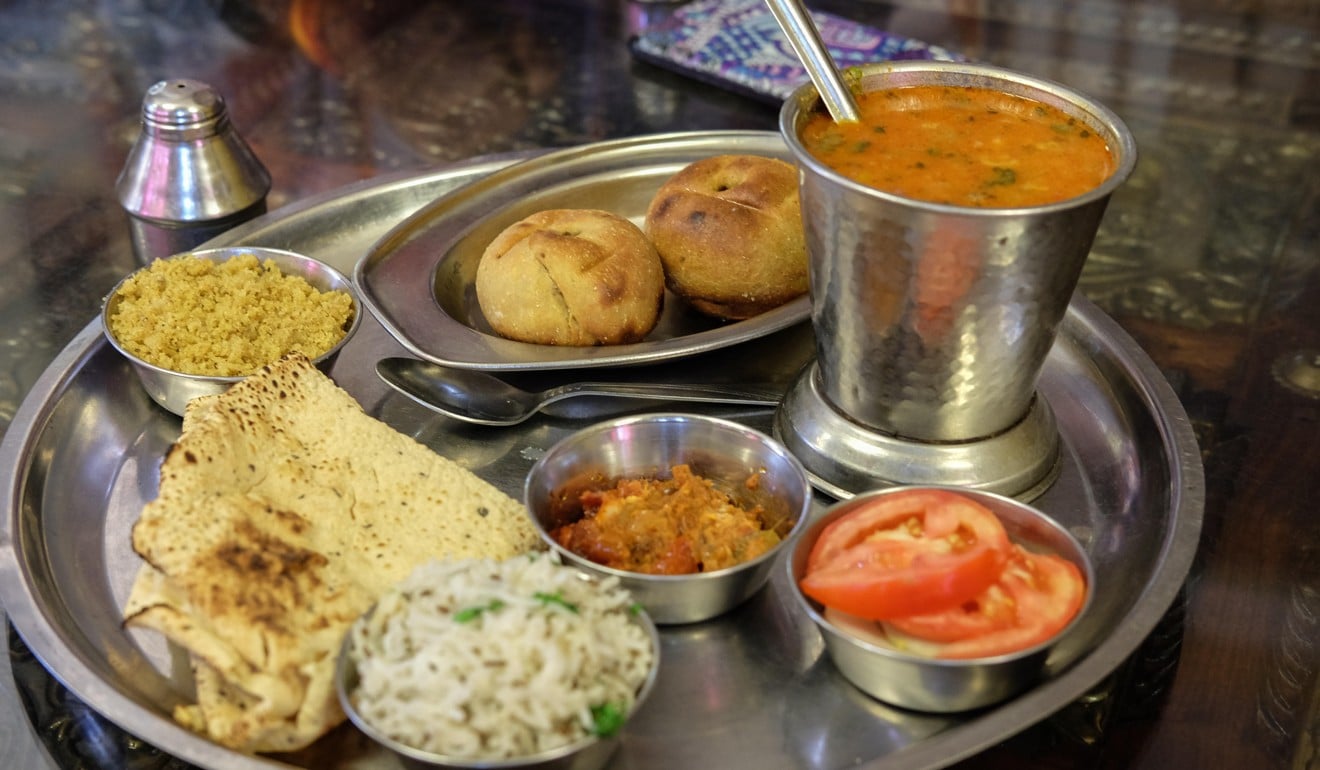
Outside its walls, tourists interested in shopping head to the local markets selling traditional apparel and jewellery. It is impossible not indulge in the authentic Rajasthani cuisine here, with speciality dishes such as dal bati churma (cooked lentils with hard wheat rolls) and laal maas (meat curry). Jaisalmer is heaven for foodies, who can feast on spicy and tasty delicacies in every corner of the city.
For lovers of history, Jaisalmer has many stories to share. Historical records show that the city is more than 800 years old, and was founded by King Rawal Jaisal in the 12th century (“Rawal” means of the royal house).
Descended from the fierce Rajput warriors of the Hindu warrior caste, Jaisal was originally crowned prince of Lodurva, a town 10 miles from today’s city of Jaisalmer.
According to one school of thought, Jaisal may once have been passed over for prince of Lodurva, and then sought another kingdom to lord over, which would later become Jaisalmer. But according to another interpretation, after Jaisal became ruler of Lodurva, threats of revolt from his half-brothers, who coveted the throne, forced him to move. In a bid to secure his kingdom, Jaisal decided to shift his capital to a secluded place, out of sight of his half-brothers.
Impressed by the towering triangular hill of Trikuta – which later became where the magnificent fort was built – Jaisal founded the city of Rawal Jaisal there in 1156. Rawal Jaisal later became Jaisalmer, meaning land of Jaisal in the maru (“desert” in Rajasthani).
Upon completion of the fort, Jaisalmer soon became a major stopover point along the ancient spice trade route. Merchants heading to Persia, Egypt and Africa would call in at the city, where they were taxed for the privilege of passing through. The constant stream of revenue kept the ruler of the city wealthy, and at the same time, the city’s attractive business opportunities drew many merchants from other parts of India who settled in Jaisalmer. So as the maharaja amassed his wealth, the merchants’ havelis became increasingly grand.
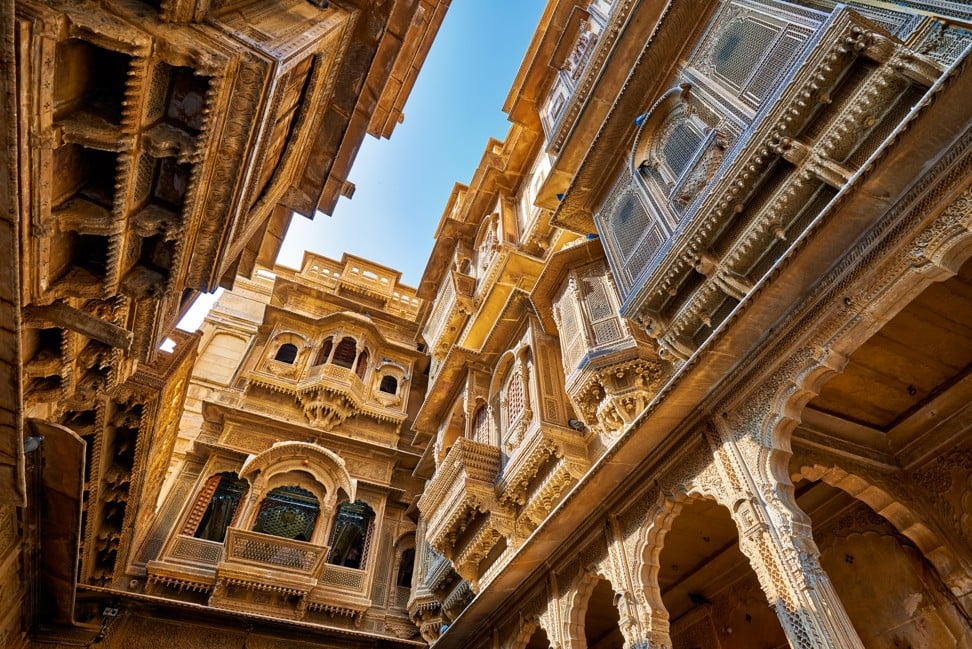
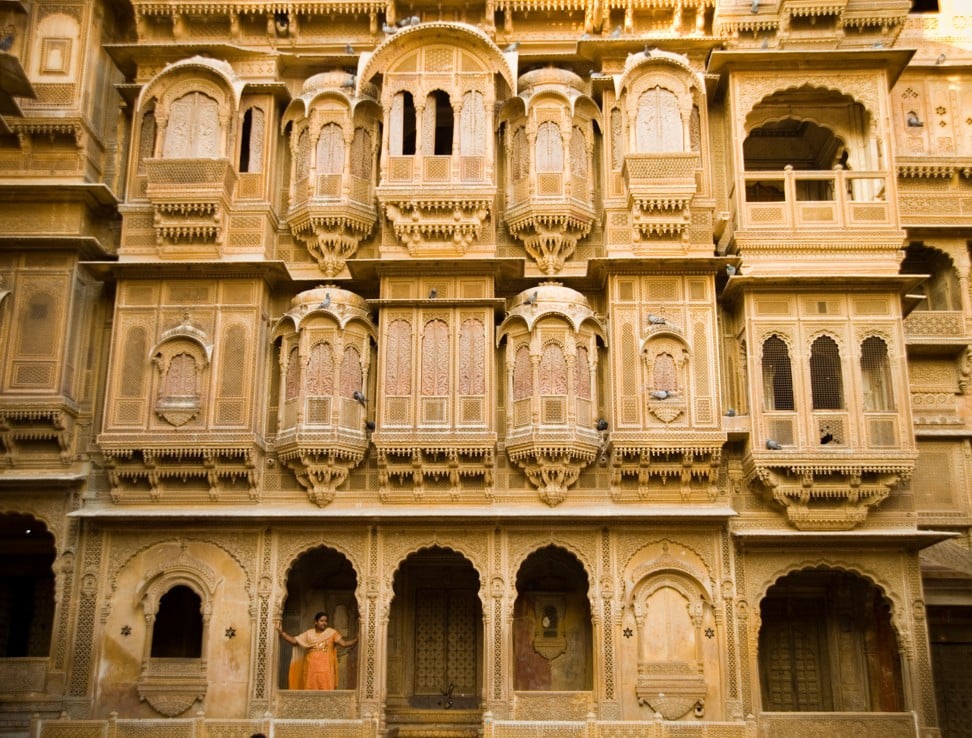
One of the most notable havelis, immediately opposite the fort, is Salem Singh Ki Haveli. Salem Singh was prime minister of the kingdom, and he built this mansion inspired by dancing peacocks in 1815. With 38 intricately carved balconies, the haveli was built without mortar or cement, and is instead held together with iron rods. Many observers claim Salem Singh’s home is even more opulent and memorable than the king’s.
Another notable haveli in Jaisalmer is the Patwon Ki Haveli, built by Guman Chand Patwa for his five sons between 1800 and 1860. Located in the centre of the city, it is the showpiece of Jaisalmer’s architectural wealth, with elaborate stone carvings and delicately chiselled balconies.
Then there is Nathmal Ki Haveli, built by two brothers in 1885, with two near-identical sections. A pair of yellow sandstone elephants guard the entrance of the mansion, and the interior is decorated with miniature paintings.
Jaisalmer’s age of prosperity did not last into the modern age, however. When Bombay port (later renamed Mumbai port) was opened by the British for trading, with the first docks built in the 1870s, the city began to lose its relevance as an important stopover on the desert trade routes, and the city’s businessmen were forced to move elsewhere.
But thanks to the colourful culture of the region surrounding the Thar Desert – also known as the Great Indian Desert – Jaisalmer would later became an attractive tourist destination. In the vicinity of Jaisalmer are villages on route to the Sam Sand Dunes, known worldwide for their scenic beauty. Surrounded by beautiful vistas overlooking the desert, these villages have homes with thatched roofs, but no vegetation at all.
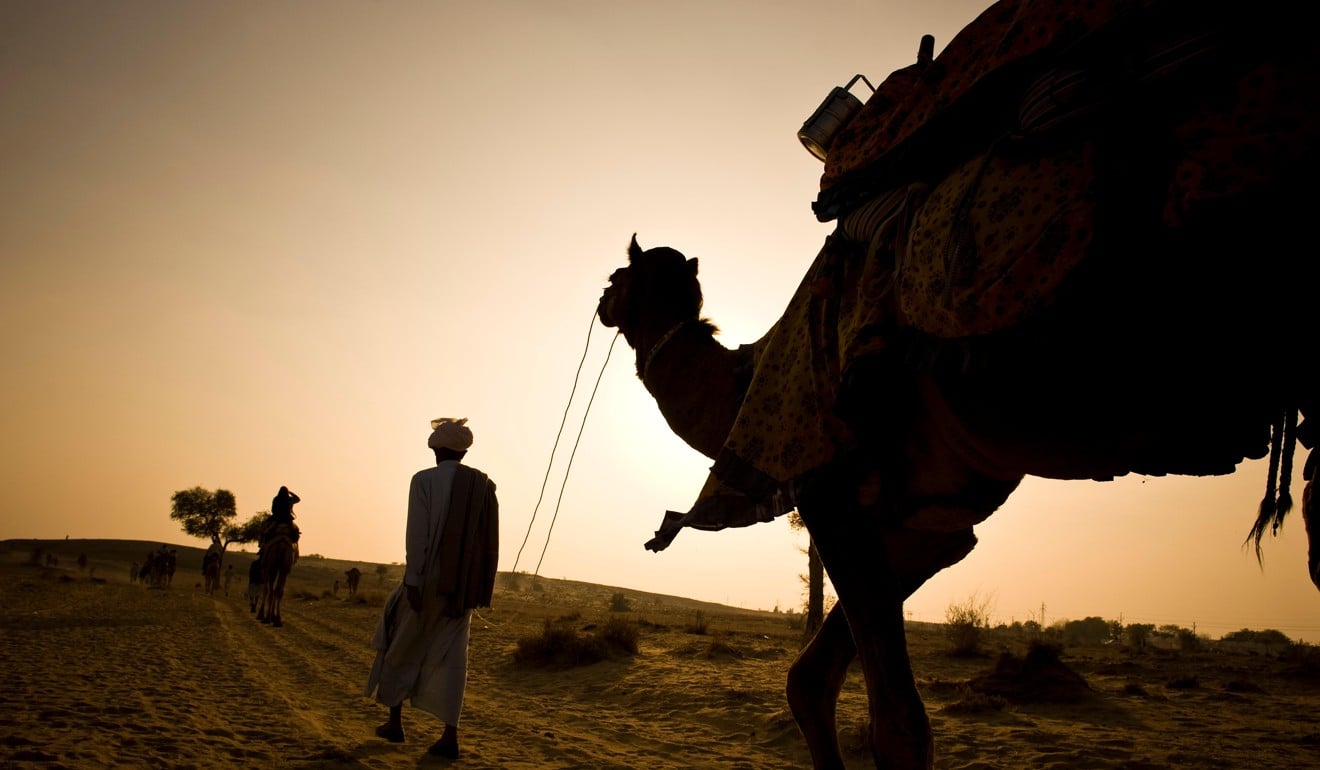
Once visitors reach the dunes, colourfully decorated camels and their owners will try and get you to go on a camel desert safari. This can be a wonderful experience – riding a camel to a secluded place where you can watch the kaleidoscope of colours in the sky as the sun sets below the horizon. The night I spent in the desert under the starlit sky with a bonfire and watching cultural programmes will be permanently etched in my memory.
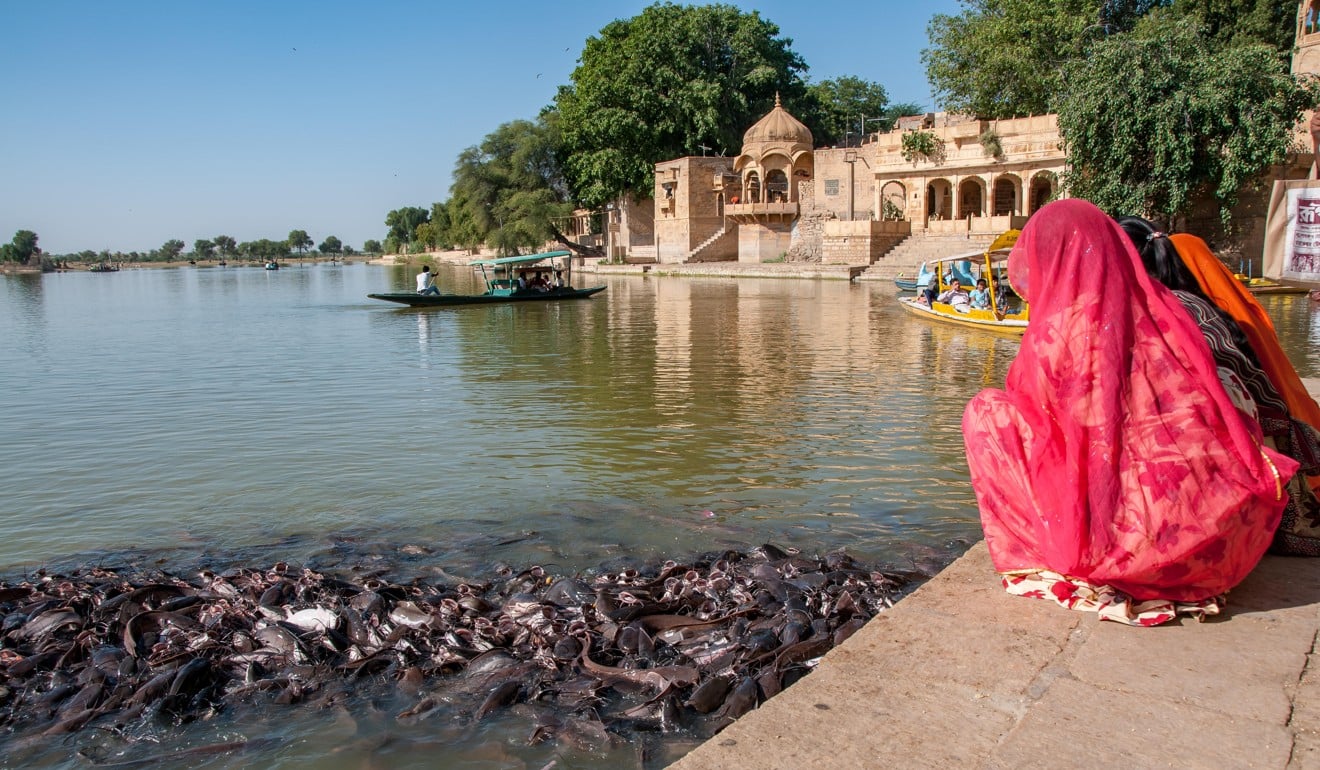
Another key tourist attraction in Jaisalmer is Gadi Sagar Lake. Originally a man-made reservoir built to provide a source of water for the city folk, these days the banks of the lake are lined with shrines, temples, ghats (sets of stone steps that gradually descend to the lake edge) and chhatris (domed pavilions).
Visitors can take boat rides on the lake or simply enjoy a leisurely walk around the perimeter. The Jaisalmer Fort in the background provides an amazing view.
Business opportunities are rare in the Jaisalmer area, so the unemployment rate has historically always been high. But one way local people have found to make a living is traditional handicrafts, with silver jewellery, silk embroideries and cotton weaving taking centre stage.
The most typical Jaisalmer artefacts likely to be of interest to tourists are traditional rugs, antiques, hand-woven shawls and blankets, embroidered items, Rajasthani mirror work, and old stonework. Among the popular markets to visit are Sadar Bazaar, Gandhi Darshan, Sonaron Ka Bass, Seema Gram, Manak Chowk and Pansari Bazaar.
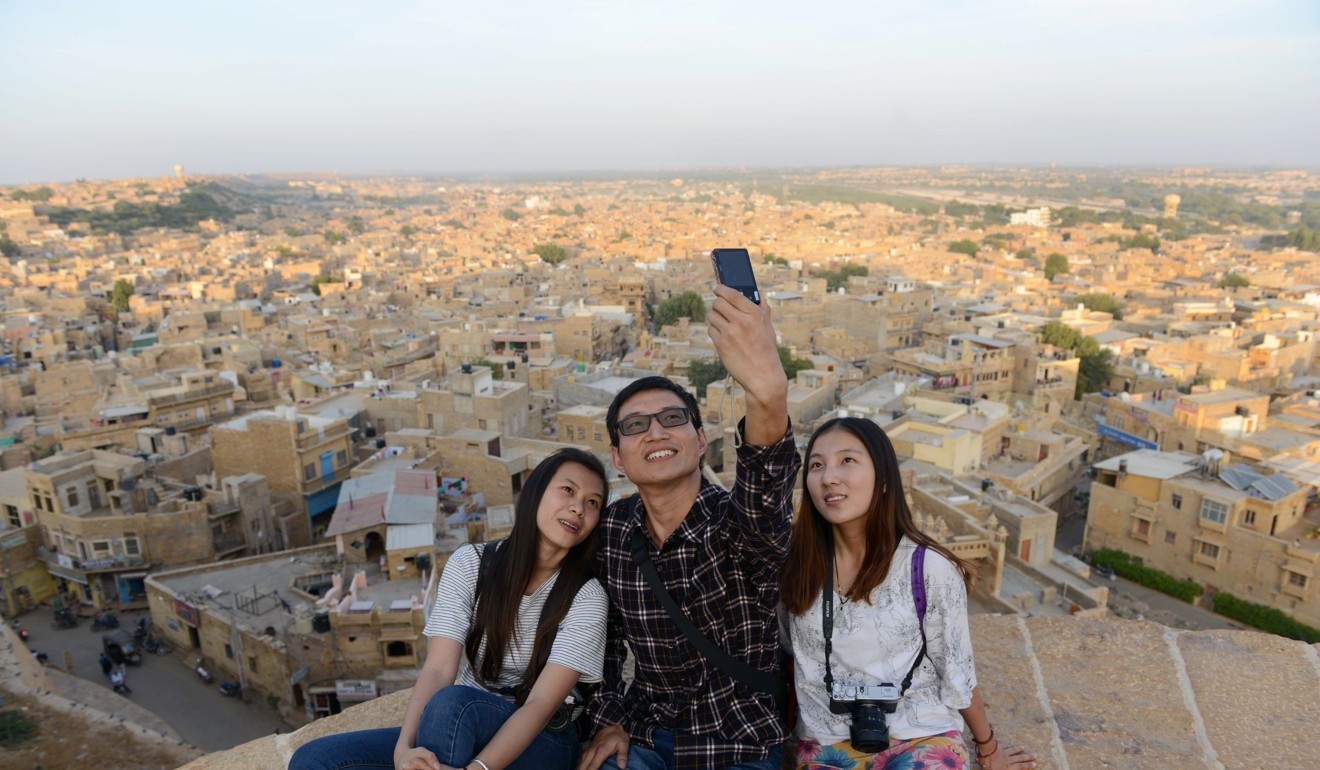
How to get there: There are daily flights and trains from New Delhi to Jaisalmer. Visitors can also drive from Delhi, Jaipur, Jodhpur and Bikaner.
Best time to visit: November to March, when the weather remains pleasant, with temperatures not exceeding 24 degrees Centigrade (75 degrees Fahrenheit).
What else: The three-day Desert Festival is held every year during the full moon in the Magh month – February – and includes polo matches, camel races and puppet shows, among other colourful spectacles.