For millennia, humans have looked up at the Moon and wondered what it would be like to live there. It has tugged at the human imagination — fueling myths, inspiring poems and some of our boldest scientific dreams.
Yet despite landing astronauts on its surface more than half a century ago, the Moon has remained a place we visit, not a place where we can live.
NASA now wants to change all that.
On July 20, 1969, astronaut Neil Armstrong put his left foot on the lunar surface and famously declared, “That’s one small step for [a] man, one giant leap for mankind.”
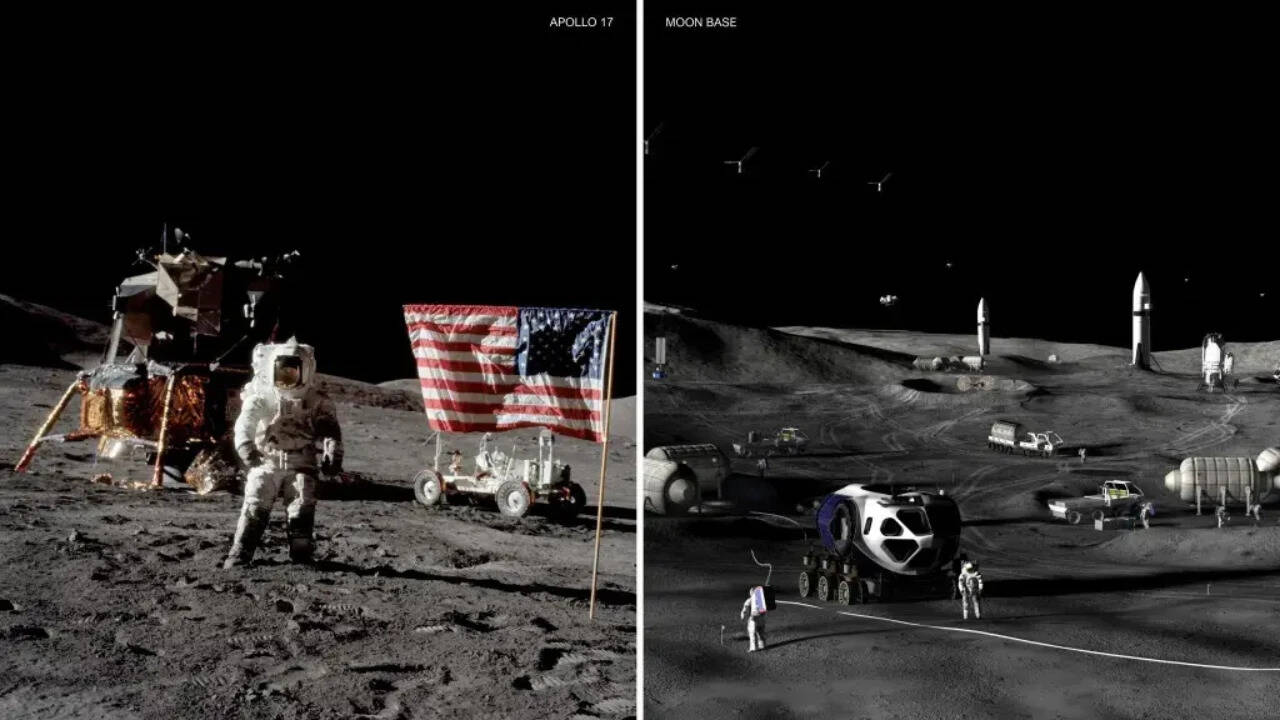
In March this year, the agency unveiled an audacious plan to build a permanent Moonbase near the south pole — an evolving, resilient outpost designed to host astronauts for months and to grow into something far bigger.
The proposed settlement will not resemble the gleaming science‑fiction cities of film. Instead, NASA envisions a spreading network of habitats, modular power systems, autonomous vehicles, communication relays and robotic explorers fanning out across hundreds of rugged square miles.
The strategy swaps one‑off spectacle for relentless execution: test fast, learn faster, scale smart. And if the plan succeeds, it could become humanity's first long-term home beyond Earth.