Spoiler warning: This blogpost contains references to episode one of The Game on BBC2 in the UK. Please do not post spoilers if you have watched further in the series on BBC America.
Tinker, Tailor, Soldier …
The boss might have brushed aside suggestions of a mole in the inner circle of MI5, but questions remain as to why the KGB killed their own agent – and who might have been sharing more than they had any right to. Set two years before the first book of John Le Carré’s Karla trilogy was published, The Game wears its influences proudly. This is spying as George Smiley would recognise it, filled with grey shadows and unease, worrisome defectors, misinformation, and lives taken too easily. (So strong are the drama’s influences, in fact, that in my head I found myself referring to the show’s writer, Toby Whithouse, as Toby Esterhase.)
While I particularly appreciate all the Le Carré love, and the joy of a spy story in which nobody triangulates anyone else’s location, it is also making me a bit cautious about The Game. It feels slightly odd for the BBC to making a 70s period drama about spying, when they have already made the ultimate 70s drama about spying. Even odder for them to have released such a very British story first on BBC America.
But still, let’s see where The Game takes us. This first episode had a lot of setting up to do, which perhaps excuses its, at times, heavy-handed approach – I rolled my eyes at Joe’s man upon the stairs. Hopefully, the heavy-duty spadework’s been done, and we’ll have a little less of the pointed shots of people peeling apples with dangerous looking knives. (I really would be so much happier if dramatists abandoned fruit peel as a motif in thrillers for a while.)
There were a lot of interesting seeds sown: Joe’s shifty background, Bobby’s ambitious intentions, Daddy’s perilous grasp on power, Special Branch’s dislike of the spooks, the KGB’s ears apparently everywhere. There’s definite potential here.
Operation Glass
Here’s what (we think) we know: KGB officer Colonel Arkady has defected, for reasons that are not yet clear, bringing with him news of Operation Glass – a gamechanger, he promises. “They’re going to tear everything down.”
Arkady is being contacted via the classified ads, and then being given the names of sleeper agents to activate via a dead drop. He knows nothing about other bits of the operation – the idea is that nobody has a clear overview of it.
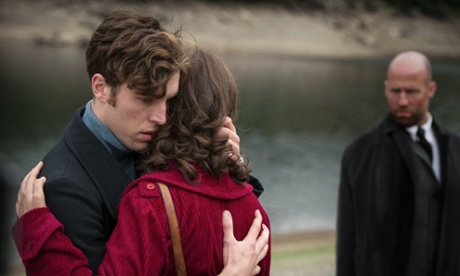
David Hexham, a former employee at the department of agriculture, is the first agent to be woken. He is asked to rent a flat in Marylebone – and has his throat cut for his trouble. Joe knows the KGB agent responsible: Odin, described by Kitty as a “hood”, responsible for the shooting and drowning of Joe’s lover. He lets Odin escape to save Jim’s life.
I wondered whether Joe and Jim would have got involved in a chase with the KGB, unarmed and in a conveniently derelict fairground. (Really? Another groan from me.) What if the KGB were so paranoid they had just decided to kill all their sleeper agents after they had fulfilled their missions? Wouldn’t they now know that MI5 were on to their operation?
Joe Lambe
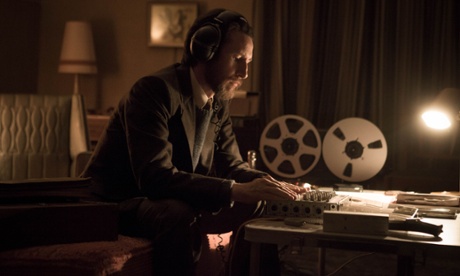
Can we trust Joe? That seems to be The Game’s central question: our beautiful young agent comes wrapped in an opaque nest of half-truths and unfinished stories. Haunted by the death of Yulia, a Polish chef he recruited, fell in love with, and apparently tried to defect for, it remains unclear whether his attempt to switch sides was for real or an attempt to penetrate Soviet intelligence.
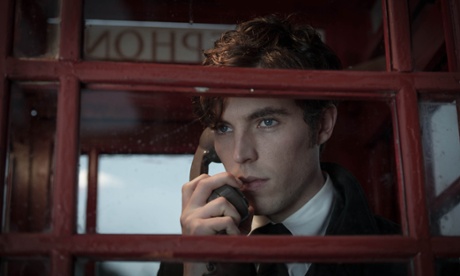
We have to presume the former at this point – Joe himself reminds Daddy that his cover story, as concocted by head of The Fray, is not true. (I found that conversation perhaps went a little bit too far: we didn’t need Daddy’s reasons for keeping Joe close explained in full; we could probably have joined those dots ourselves.) In any case, one thing is clear. If Joe gives you the speech about this being “an opportunity for you to be a soldier, a hero, to fight for something greater than us” it’s time to update your life insurance. In fact, if Joe asks you to do anything, you should probably write your will. RIP Kitty.
I enjoyed Tom Hughes’s performance here. Reviews for the show in America (careful: lots of them make reference to events further into the run) cast him as a younger, cheaper Benedict Cumberbatch. And I suppose he does have the cheekbones for it, and that very controlled iciness. But he has a more restless quality too, and that soft north-west accent.
Bobby Waterhouse and the rest
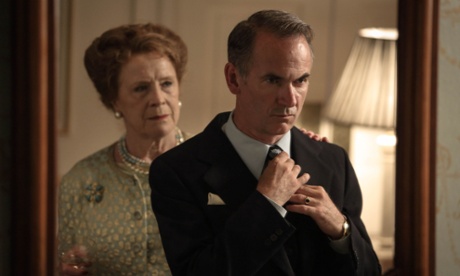
There’s so much to enjoy about Paul Ritter’s performance as MI5’s head of counter-intelligence, particularly the physical ticks – the cigarette smoked with arms clamped neatly to the body, the flick of dismissal – but I do find myself questioning the way Waterhouse has been drawn. I’m presuming we’re going to find out he’s gay, and while it’s of course fine to depict the homophobia of the time, this feels like a very 1970s rendering of a gay man: flamboyantly dressed and still in his mother’s pocket (a marvellous Judy Parfitt). Ritter could really be parachuted into a BBC Le Carré original, but is it all a bit too retro?
Sarah (Victoria Hamilton) I warm to more, not least because she appears to be resisting Waterhouse’s attempts to unseat his boss – although I’m not sure I entirely buy her reasons for packing Alan off to Marconi. And Brian Cox is a treat as Daddy, although I remain mystified as to how nobody could know his name given that he presumably must have worked his way up the MI5 ranks. Am I being dim here?
Thoughts and observations
- We will return to talk about this in much more detail, but just a brief mention this week of the glorious interiors and costumes. We have yet to reach the full horror of 70s style, so still get to drink in (just) those mid-century lines.
- I’m not sure the soundtrack is doing it for me. There’s something of The Hour about it, no?
- An enjoyable joke for those who recognised the home secretary’s voice, provided by actor Timothy Bentinck, as also belonging to David Archer: “I’ll be shuffled off to agriculture or something.”
- Much as Paul Ritter was fab here, there was a tiny bit of me that kept expecting him to take his shirt off and start barking: “Shit on it!”
- It was a nice touch to have footage of Martin Bell reporting from the miners’ strike. And in a covetable sheepskin coat too.
- On which note: for those who found themselves slightly thrown by mention of the miners’ strike, there were two – in 1972 and 1974 – before the 1984 strike.
- Does Tom Hughes have one mac he has to wear for all his parts? (I wouldn’t expect anything less from a Burberry model.) Here he is wearing something very similar in Silk.