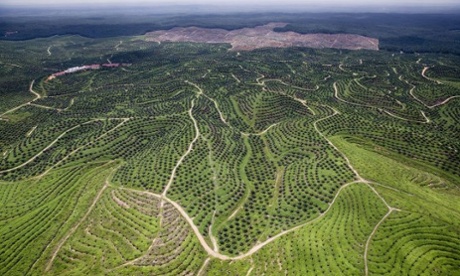
Palm oil is the most widely used vegetable oil in the world and is found in half of all packaged products on supermarket shelves, from shampoo to detergents. Its use is expected to double by 2020, yet the far-reaching impacts of its production are not widely known.
Palm oil production is responsible for deforestation, particularly in Indonesia, which lost more than 6m hectares of primary forest between 2000 and 2012. As rainforests are home to more than half of the world’s estimated 10m species of plants, animals and insects, this loss of forest puts much of the world’s biodiversity at risk. Communities are also destroyed as people who have lived off the forest’s rich resources for generations often do not own the land and are displaced to make way for new plantations.
Yet palm oil production also offers a life line to many farmers in developing countries such as Indonesia where palm oil accounts for 11% of the country’s export earnings. It can lift farmers out of poverty and give them a stable source of income so that their children can go to school.
Malaysia is the second largest producer of palm oil and is estimated to produce 39% of the world’s supply and over the last 10 years, markets in Africa and Latin America have grown too. However, if the oil is not produced in a sustainable way, with stringent industry regulations and responsibly-managed land, this exponential growth could further destroy the world’s rainforests. Some go as far calling for a halt to the production of palm oil, but with many small holder farmers reliant on income from this commodity, the solution is not so simple.
With business heavily dependent on palm oil, what role do companies have to play in ensuring it is sustainably produced? Are certification bodies such as the the Roundtable for Sustainable Palm Oil doing enough to prevent deforestation, and what role do consumer have in using their purchasing power to pressure companies in to cleaning up their supply chains?
Get involved
On Tuesday 18 November, 10 - 11.30am (GMT) we are hosting a live chat on what the future holds for palm oil and would like you to join our panel of experts in the comments section below. To participate, you can post your thoughts and questions beforehand using the form below, tweet us at @GuardianSustBiz with #askGSB or email your question to laura.paddison@theguardian.com.
Panel
Jeremy Goon, chief sustainability officer at Wilmar
Fiona Wheatley, sustainable development manager at Marks and Spencers
Daryll Delgado, manager of research and stakeholder engagement at Verité
Marieke Leegwater, programme manager at Solidaridad
Annisa Rahmawati, forest campaigner at Greenpeace
Adam Harrison, senior policy officer: food and agriculture at WWF
Katie McCoy, head of forests program at CDP
Yusof Basiron, CEO of Malaysian Palm Oil Council
Inke Van der Sluijs, technical manager Europe, Roundtable on Sustainable Palm Oil
The palm oil debate is funded by the Roundtable on Sustainable Palm Oil. All content is editorially independent except for pieces labelled brought to you by. Find out more here.
Join the community of sustainability professionals and experts. Become a GSB member to get more stories like this direct to your inbox