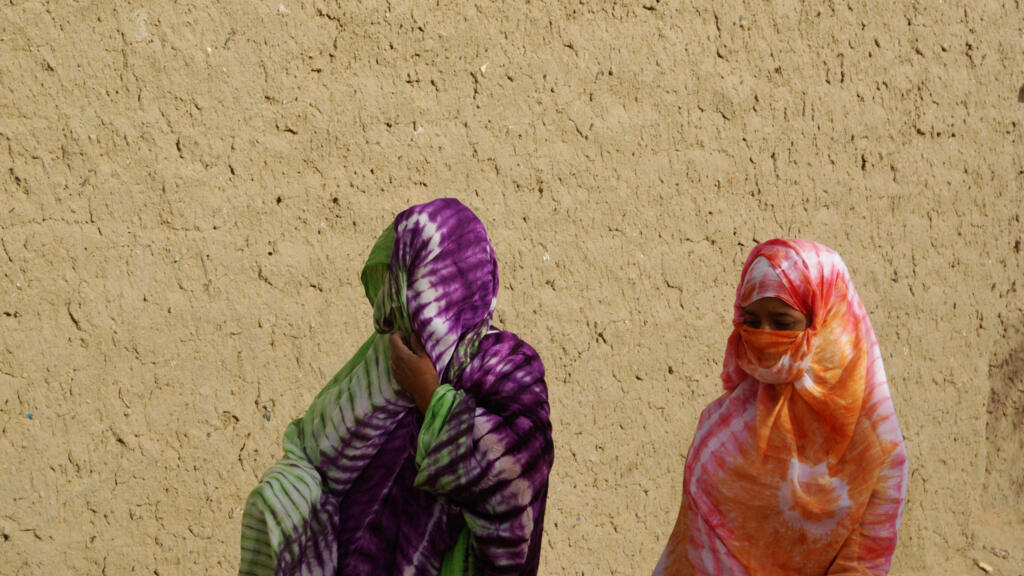
What is life like for the women living in the central Sahel, in areas controlled by the jihadist JNIM group? British researchers spoke with women from the Fulani ethnic group, which is strategically targeted for recruitment to the JNIM.
In a report published on Monday, the UK research programme Xcept said that while some of the women say they "support" the armed group, they believe such testimonies are "more often a survival strategy than radicalisation".
The al-Qaeda linked armed Group for the Support of Islam and Muslims controls larges parts of Mali and Burkina Faso. The researchers interviewed 77 women from the Fulani ethnic group – who are predominantly Muslim and historically associated with nomadic pastoralism – living in these areas.
Some were the wives, mothers or grandmothers of the jihadists, while others had no direct connection to them. More than half have lived for at least five years “under JNIM’s effective control”.
The researchers found a mixed reaction to the jihadists, with a mix of criticism and support, but said that most of the women have adopted “a survival strategy” rather than a full adherence to the group’s ideology.
Mali’s economy near standstill amid JNIM fuel attacks
State failings
"Women universally characterised JNIM’s ascendance as precipitating profound and overwhelmingly negative changes," the report says.
These changes related to dress codes – an insistence on women wearing the veil and abaya – along with bans on women working and driving, the abolition of traditional ceremonies, and restricted access to healthcare and education, as jihadists have closed state schools and health centres.
“Respondents describe JNIM regulations as economically devastating and deeply detrimental to their physical and mental health,” the study says.
Hostage video shows abducted Malian journalists asking for help
However there was also “longstanding dissatisfaction” with state corruption, in both Mali and Burkina Faso, and the governments’ inability to protect communities.
The researchers highlighted that human rights violations and “real or perceived collective punishment of the [Fulani] community” by soldiers and affiliated militias and foreign military partners – including volunteers for the Defence of the homeland, Dozo hunters or Wagner Russian mercenaries – “weakens state legitimacy”.
Around three-quarters of the women interviewed reported acts of violence committed during counter-terrorism military operations which are “exploited” by JNIM – which presents itself as “more reliable protectors of women”, helping them recruit new members.
Increasing acceptance
The research found that some JNIM policies were popular, such as direct material aid – generally obtained through looting – and access to justice.
The group's Sharia-based justice system was described as “faster, cheaper and more accessible than the state equivalent”.
Overall, the women’s perceptions of the JNIM tended to improve over time in areas where the jihadists are most entrenched and organised. However, the researchers note that “most women who said they appreciated the group’s provision of services did not equate this with support for its vision”.
There are accounts of women being beaten or whipped by jihadists enforcing Sharia law, followed by a gradual acceptance of these corporal punishments over the years.
Mali faces record number of kidnappings of foreigners by jihadist group
A few of the women admitted to helping JNIM by providing intelligence and logistical support.
According to the researchers, overall women’s perceptions of JNIM were "primarily negative". Many had simply resigned themselves to the group's presence and control, which, the study says, shows "an adaptation to life under the group’s dictates, rather than genuine radicalisation".
However, researchers highlighted that their children, many of whom are growing up “without having lived under the state", may have a different perspective.
“JNIM governance is altering social, generational, religious, behavioural and governance norms," the authors wrote – presenting a challenge for future generations.
This article was adapted from the original version in French by David Baché.