The World Cup simply wouldn’t be what it is today without Brazil, who enveloped the tournament in mystique during its formative stages before going on to dominate.
No national team has captured hearts and minds more than the Seleção, whose iconic canary yellow jerseys popped as color television emerged as the technical innovation of the 1960s. They performed soccer of the future, with the essence of ’jogo bonito’ felt around the globe.
It’s been 24 years since the two-time hosts and five-time winners last conquered the soccer world, and the Brazilian Football Confederation (CBF) has pulled out all the stops to ensure their drought ends in North America this summer.
An esteemed foreign coach leads a talented but far from vintage group of Brazilian players, and expectations for the national team had been uncharacteristically timid for 2026. Now that the tournament is upon us, a soccer-crazed nation believes destiny may well be on its side, as it goes in search of a sixth World Cup crown.
Here are the four biggest storylines surrounding Brazil at the 2026 World Cup.
’Rumo ao Hexa’
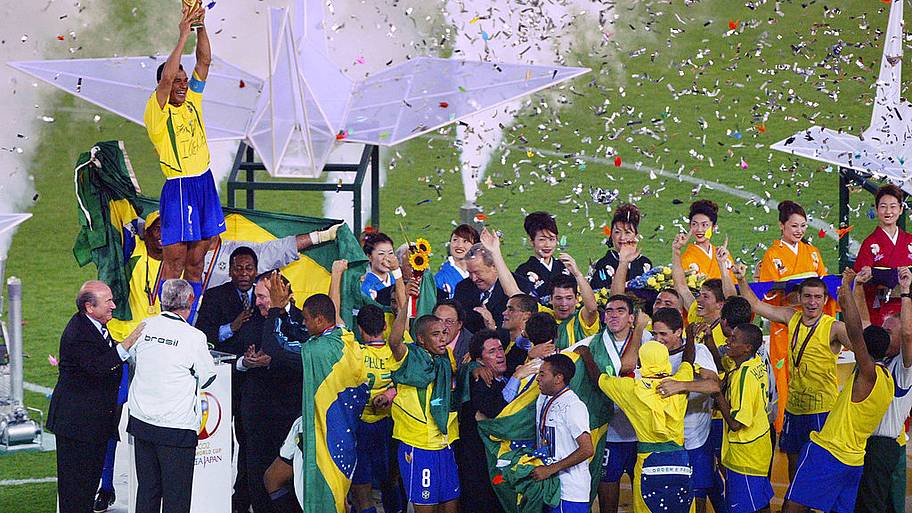
The World Cup has long made Brazil feel good about itself, and an obsession has emerged: ’Rumo ao Hexa’—chasing the sixth.
Since Ronaldo’s goals inspired them to trophy-lift No. 5 in the Far East back in 2002, Brazil has expected its next triumph at every tournament. It has been the favorite to win every World Cup between 2006 and 2022 bar one, 2010, when Spain was in the midst of its dominant cycle, and the bookmakers proved correct.
A star-studded roster in ’06 underwhelmed, the ultimate humiliation ended its fairytale campaign on home soil in 2014, then back-to-back quarterfinal exits ensued at 2018 and 2022. The staggering disappointments have matched the euphoric highs, and the nation will come to a stand-still when Brazil faces Morocco, Scotland and Haiti in the span of 11 days.
Supporters have grown accustomed to failure, and few were enamored with Brazil’s qualifying campaign. Still, hope is starting to re-emerge across the country, with whispers of ’Rumo ao Hexa’ bubbling from ear-to-ear.
A whole generation has waited for a sixth World Cup.
The Last Dance
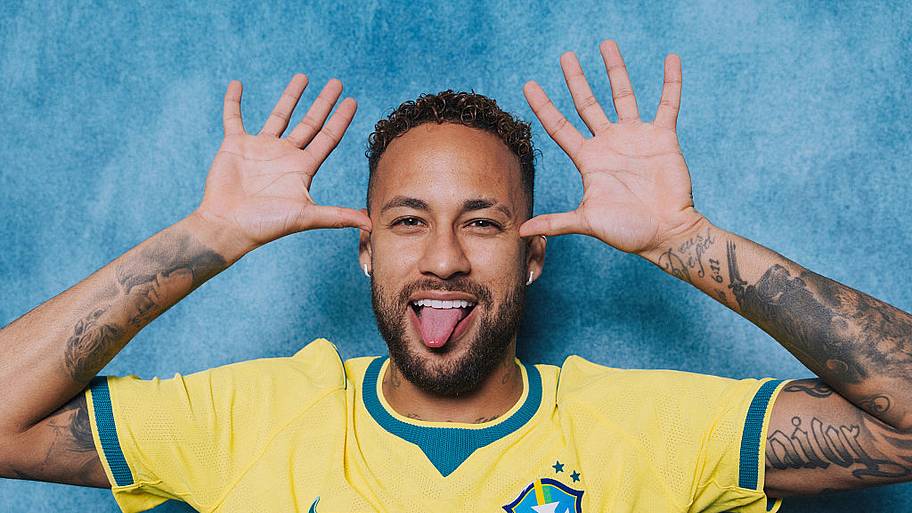
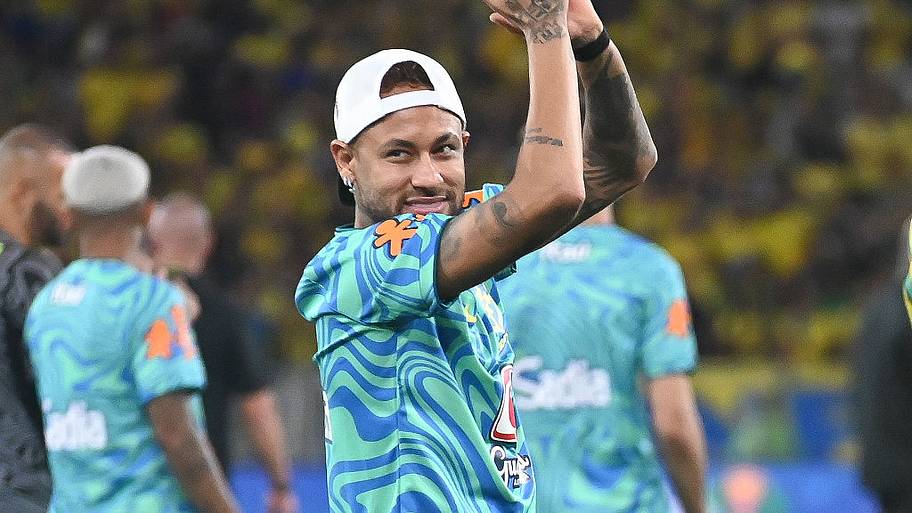
Neymar Junior joins the likes of Lionel Messi, Cristiano Ronaldo, Luka Modrić and Manuel Neuer for one last dance at this summer’s World Cup.
Now 34, Neymar’s inclusion in Carlo Ancelotti’s 26-man roster for the tournament was anything but a guarantee.
Since Brazil was beaten by Croatia on penalties in 2022, Neymar’s career has embarked on a drastic slide. Unaided by injuries, he’s had a contract terminated by Al Hilal and has been back with boyhood club Santos since the start of 2025.
The ’Golden Boy’ of Brazilian soccer for so long, Neymar has an impressive World Cup record, and many back home will argue that a sixth success would‘ve already been grasped had he never been subjected to a knee from Colombia’s Juan Camilo Zúñiga.
No longer the protagonist and even battling a calf injury pre-tournament, Neymar will have to accept a reduced role for Ancelotti‘s Seleção this summer.
Ancelotti‘s Impact
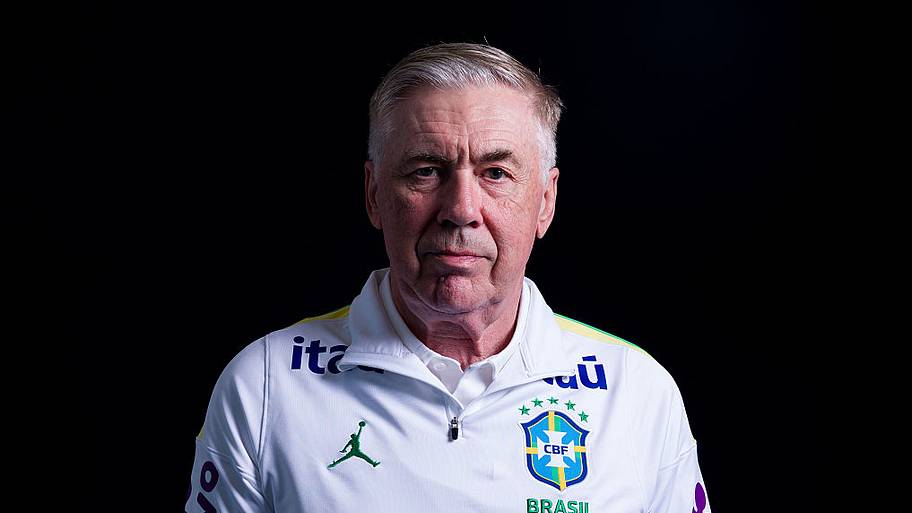
As Jonathan Wilson wrote in The Guardian last year: "For any major nation to turn to a foreign coach is always an admission of failure."
Brazil had become desperate. Qualifying was a mess, and in previous cycles, a fifth-place finish would’ve only been enough to make the inter-confederation playoffs. Thank God for FIFA’s unrelenting desire to expand.
Brazilian coaches were once the cream of the crop, but they’ve seldom been seen among the elite for a long time. The reigns of Ancelotti’s immediate predecessors (who essentially operated as caretakers while Brazil waited for the Italian)—Ramon Menezes, Fernando Diniz and Dorival Júnior—ranged from brief to uninspiring.
Ancelotti’s reputation speaks for itself. He’s one of the greatest managers ever, with success following him at every club he’s set foot in. Well, except for Everton. It’s easy to understand why Brazil has swayed away from tradition in favor of foreign influence, which, for so long, it insulated itself from.
Alternate ideas are required to thrust Brazil to a sixth World Cup, and Ancelotti’s capacity to mask roster flaws and facilitate harmony stands the Seleção in good stead. The first 10 games of his tenure returned only five wins, but there have been signs right before the tournament that Ancelotti is getting through to this group.
Who’ll Play the Lead?
All but one of Brazil’s World Cup triumphs have been defined by a standout individual. The anomaly of 1970 may well be the greatest international team in soccer history.
It was a teenage Pelé in 1958 before the idiosyncratic womanizer Garrincha took the mantle four years later. Romário inspired a rather insipid and unpopular Brazil side to glory in 1994, and 2002 was all about Ronaldo’s redemption.
So, history suggests that if the Seleção is to win the World Cup this summer, one of its attacking protagonists will come to the fore in a big way.
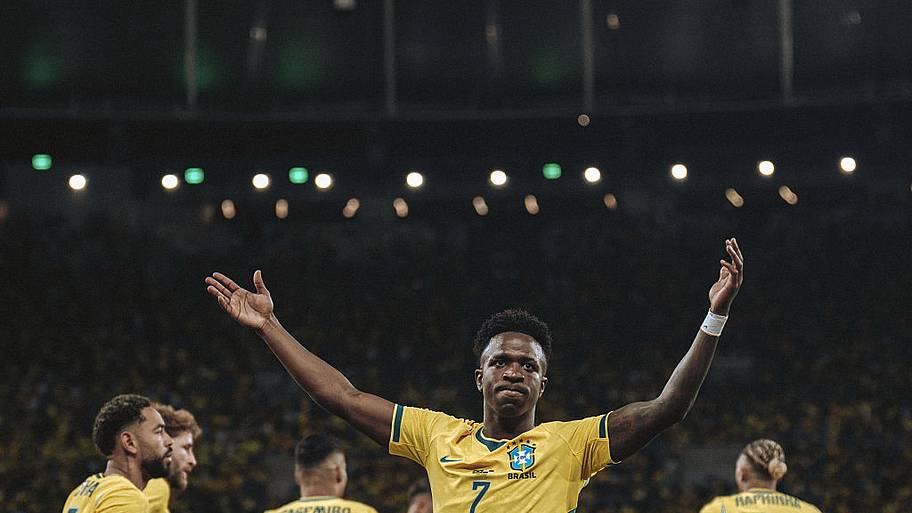
The primary candidate is Vinicius Junior, who’s been castigated back home for his relative underperformance in Brazilian colors. However, Vini Jr thrived under Ancelotti at Real Madrid, and the Italian has built his attack around the 25-year-old, who will play a fluid center-forward role.
Raphinha is more effective than he is dazzling. His output with Barcelona speaks for itself, and he’ll likely work in tandem with Vini Jr up top.
Igor Thiago’s inclusion over João Pedro was a surprise, but his profile is one Ancelotti appreciates. Another center-forward option, Endrick, is a fearsome striker of the ball and could emerge as a hero off the bench. The same goes for Bournemouth’s Rayan, while Matheus Cunha has an important role to play as the link between the defense and attack.
There‘s plenty of good, but bona fide superstars come in short supply. For Brazil to triumph this summer, it’s got to be Vini Jr’s tournament, right?