It tends to be around St Patrick’s Day that the subject comes up. As our Irish friends mark their national saint’s day with mass celebrations of Celtic culture and black beer, the question often gets asked: why do we let St George’s Day pass with so little fanfare?
Other than localised morris dancing and dragon-slaying reenactments, nothing much happens. And that, I think, is partly down to the lack of an attendant food tradition. Here, the old festivities that retain their mass appeal tend to be the ones that involve the sharing of food and drink – the kind of communing we’re always most comfortable with. Christmas and Easter offer loads of food. Halloween has food and dressing up. Bonfire Night complements its fireworks with baked potatoes, toffee apples and a few beers. St George’s Day… nothing.
It could be so different. If you live in London, a visit to Borough Market could be the place to start. In its rambling walkways, you’ll find all you need for a version of St George’s Day with food and togetherness at its heart.
1. An expression of place
One of the purest expressions of a place and its people can be found in its food. The potted Morecambe Bay shrimp, farmhouse Wensleydale, Melton Mowbray pork pies and Somerset cider sold at Borough draw on centuries of English history, culture and regional idiosyncrasy and present them in perfect little bundles.
Consuming oysters from the Blackwater estuary, raw milk from the Pevensey Levels, or cobnuts grown in the unique environs of a Kentish orchard means tasting the unmistakable essence of home. Any excuse to cherish and support these traditional foodstuffs is one we should grasp. Dragons don’t exist. It would be a crying shame if our old foods went the same way.
2. The beef of old England
St George also happens to be the patron saint of farmers and butchers, and Borough is blessed with plenty of both. Here, you can pick up the sirloin of a magnificent, rare-breed native ox, reared on lush English pastures and prepared by an expert butcher who works directly for the farmers. Serve that up with some punchy English mustard for a culinary equivalent of a 21-gun salute.

For a long time, an 18th-century ballad called “The Roast Beef of Old England” – wistful nostalgia, anti-establishment sentiment and digs at the French, wrapped up in boasts about the quality of our meat – was the country’s most popular patriotic song. That kind of harmless food-based braggadocio is to be encouraged. Just don’t be mean to the French traders. They’re lovely.
3. A seasonal treat
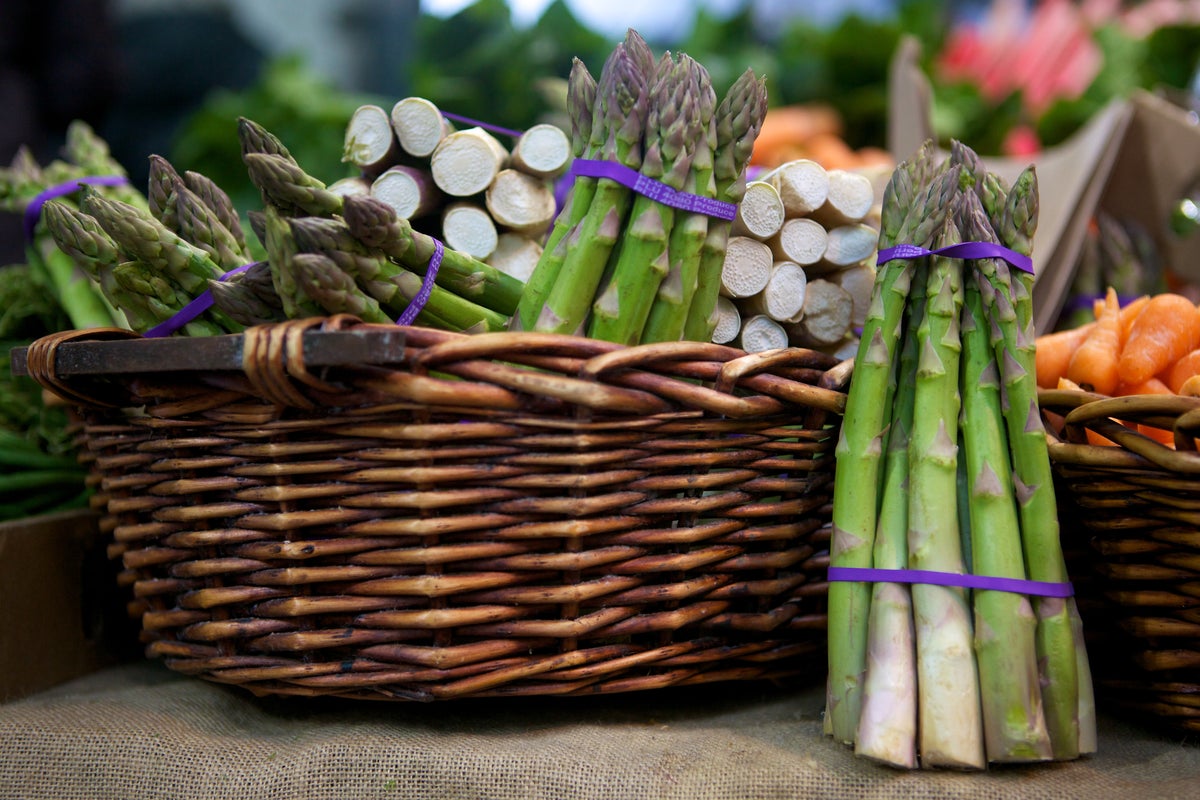
By tradition, St George’s Day is the official start of the asparagus season. There aren’t many areas in which England can convincingly claim to lead the world (financial services, footballer wages, Nineties nostalgia?), but the quality of our asparagus is right up there. Sweet, mineral and intensely verdant, it’s as special in its own way as the finest Italian tomatoes or Spanish peppers, but its peak lasts no more than a few weeks.
Visit Borough’s greengrocers, revel in the ephemeral joys of seasonal eating, and appreciate the fact that our maritime climate gifts us world-class green vegetables to make up for all the drizzle.
4. A taste of the Levant
He may be an icon of Englishness, but St George himself never saw England. Born in what is now Turkey, the son of a Cappadocian Greek father and a Palestinian mother, he spent his life in the eastern Mediterranean. He served in the Roman army but was killed on 23rd April 303 as the authorities set about purging the military of Christians. (No dragons involved – it took until the 11th century for that myth to find its feet.)
One of the defining qualities of our national food culture is its openness, evidenced by the refugee roots of fish and chips and our centuries-long embrace of Indian curries. As a result, celebrating St George with Borough’s falafel, Gemlik olives, Corinth raisins and other treats from his home region would seem entirely appropriate. Get some top-quality hummus in you. What could be more English?
5. Some Catalan romance
Presented with a choice between a knight who slayed a mythical beast and the massed ranks of kindly saints who devoted their lives to helping the poor, it wasn’t just the English who decided that the cool-looking bloke on a massive horse should be their patron. Bulgaria, Georgia, Portugal, Serbia and Ethiopia are all in his stable with us, along with loads of other regions and cities.
Catalonians celebrate St George’s Day with particular verve, but rather than the dragon-killing element, they pull at another strand of the myth – the romance of the rescued princess. Theirs is a celebration of love and literature, with roses and books exchanged as gifts, along with the sharing of special breads and cakes. What’s not to like about that? The very best Catalan products in London can be found at Borough, as can flowers and cookbooks. And, most importantly, a lot of love.
6. A bit of the Bard
By glorious happenstance, St George’s Day is also the anniversary of the death (and possibly the birth) of William Shakespeare, and he was a Borough Market shopper. Probably. It is widely accepted that from about 1599, the Bard spent several of his most fruitful years living in Bankside, close to Borough Market.
And while music may be the food of love, it won’t keep you going when you’ve got world-changing plays to write. For that, he needed actual food, procured from the local market. We can’t prove that Borough’s traders fuelled the most extraordinary creative burst in our country’s history – Hamlet, King Lear, Macbeth, Othello, Julius Caesar, Anthony and Cleopatra, Twelfth Night, Measure for Measure – but there’s a very good chance they did.
7. A generous, open Englishness
Through centuries of English history and into the present day, the iconography of St George has often been used as a marker of domination and exclusion. Borough Market represents a different kind of Englishness, and one that is genuinely worthy of celebration: fundamentally of this country, woven into the historic fabric of London and the land and seas around it, but gloriously open and international in its outlook.
St George’s Day could and should be all those things. All we need to make it stick is the promise of great food, and some strong English tea to wash it down.
Lamb meatballs in yoghurt, pea and herb broth
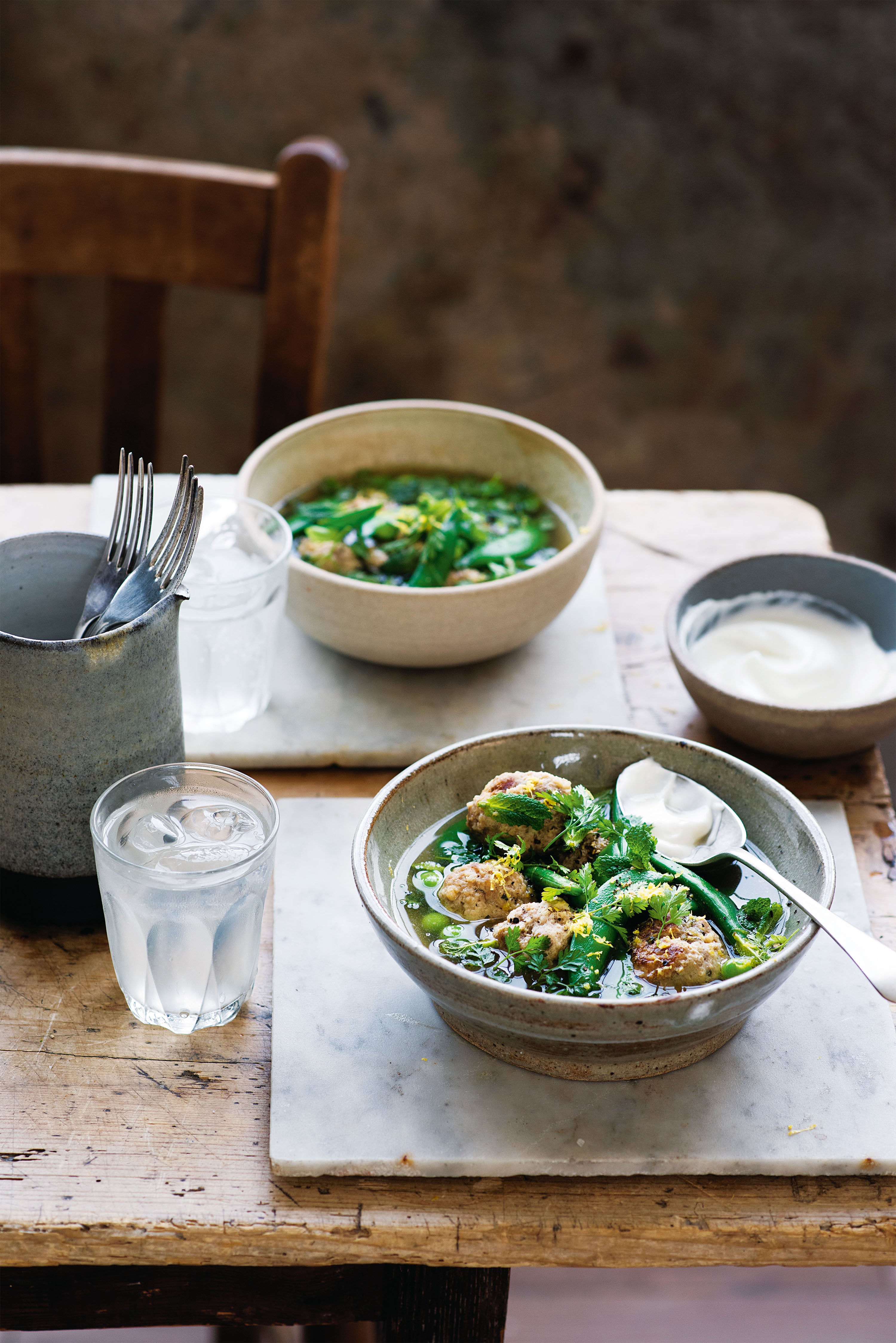
These minted lamb meatballs in a light broth, studded with sweet sugar snap and mangetout peas, feel exactly like the kind of thing we ought to be eating at this time of year.
It’s best to make these with the kind of lamb mince you find at a good butcher’s shop, with a decent streak of fat running through it, rather than the lean strands found in pre-sealed packets on the supermarket shelf.
Serve the meatball broth with something savoury and nutty, such as quinoa or wholemeal grains like pearl barley or bulgur wheat. Light pasta such as orzo or linguine works very well, too.
Serves: 4
For the meatballs:
500g lamb mince
100g ricotta
50g dry breadcrumbs
1 garlic clove, crushed
Finely grated zest of 1 lemon
1 large egg
Leaves picked from 30-40g mint, finely shredded
½ tsp sea salt
½ tsp black pepper
For the broth:
600ml vegetable stock
3 bay leaves
1 garlic bulb, cut in two through the middle
350g mixture of sugar snap peas, mangetout and freshly podded peas
15g chervil, leaves stripped, roughly chopped
To serve:
Yoghurt
A cooked grain, seed or pasta of your choice
Method:
1. Mix together all the meatball ingredients in a bowl, keeping a quarter of the shredded mint to one side, then get your hands dirty and roll the mixture into balls about the size of a walnut: 20-25g each if you’re into measuring. Arrange the meatballs on a baking tray and, if you have time, refrigerate for 1 hour or more.
2. Around 30 minutes before you plan to serve, heat the oven to 150C fan/170C/325F/gas mark 3. Once the oven’s hot, bake the meatballs for 10 minutes.
3. At the same time, bring the vegetable stock, bay leaves and garlic to the boil in a wide saucepan, then reduce the temperature and simmer for 5 minutes. Transfer the baked meatballs to the stock and poach for 5 minutes before adding the sugar snaps, mangetout and fresh peas. Simmer for a further 2 minutes, then remove the pan from the heat and leave the greens to warm through and the broth to cool a little.
4. Stir the chervil and remaining mint through the broth and meatballs, then serve with a grain, seed or pasta of your choice, and a dollop or two of yoghurt to stir through the broth.
Asparagus and sorrel puff pastry tart
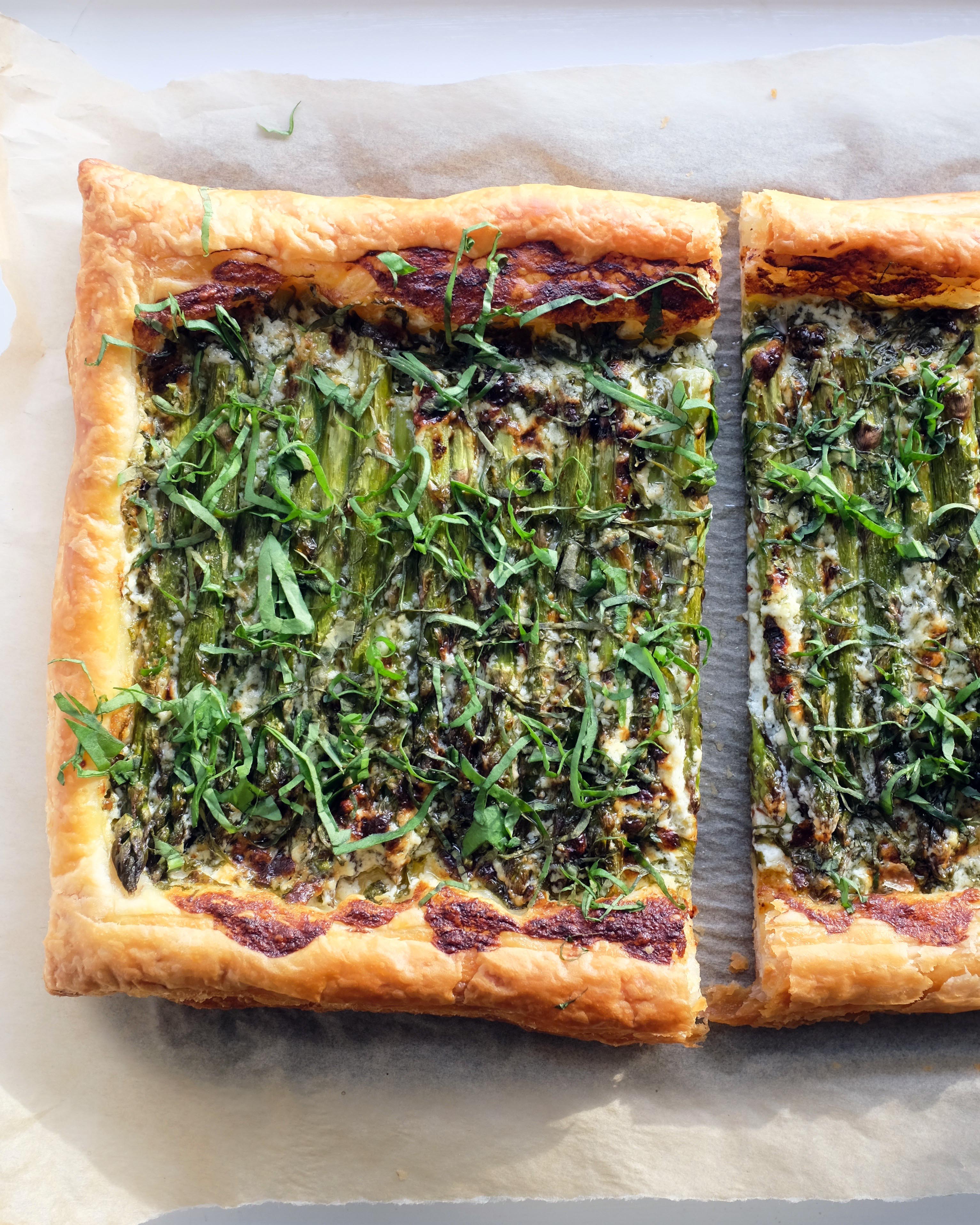
A winning combination of Cornish cheese and fresh nettles .
Serves: 1
Prep time: 5 minutes | Cook time: 20-25 minutes
Ingredients:
500g asparagus (medium-fine thickness spears)
50g sorrel leaves
200ml full-fat creme fraiche
25g parmesan, finely grated
1 tbsp light olive oil
320g ready-rolled all-butter puff pastry sheet
Method:
1. Preheat the oven to 200C. Place a wide saucepan of well-salted water over a hot hob and wait for it to come to the boil.
2. Meanwhile, snap the woody ends from the asparagus, discard those ends and set the spears to one side. Chop three-quarters of the sorrel leaves very finely. Decant the creme fraiche into a bowl and stir the chopped sorrel and parmesan through it.
3. Once the water is at a rapid boil, add the asparagus spears and blanch them for 30 secs. Drain the asparagus through a sieve, chill completely under running cold water, then leave to dry for 1-2 mins. Finally, roll the asparagus in the olive oil so each is glossy.
4. Unroll the pastry sheet (if your pastry is not ready-rolled, set the pastry block on a lightly floured surface and roll it out to a rectangle around 2-3mm thick). Put a sheet of baking parchment on a large baking tray that will comfortably fit the pastry. Lay the pastry flat on top, then lightly score a border 3cm from the edge using the blunt edge of a knife.
5. Spread the creme fraiche and sorrel paste over the top, right up to the edges of the border, then arrange the asparagus spears across the middle. The tart looks good and cuts well if they’re lined up in a neat row, standing to attention like soldiers.
6. Put the baking tray towards the top of the now-hot oven and bake for 20-25 mins, until the pastry edges are puffed and golden, the crème fraîche base bubbling and burnished, and the asparagus slightly charred.
7. Allow to cool for 5 mins, then finely shred the remaining sorrel and sprinkle over the top. Serve with a sharply dressed green salad and some tomatoes in good olive oil on the side. The tart is also enjoyable if left to chill to room temperature.
Slow-cooked beef shin tagliatelle
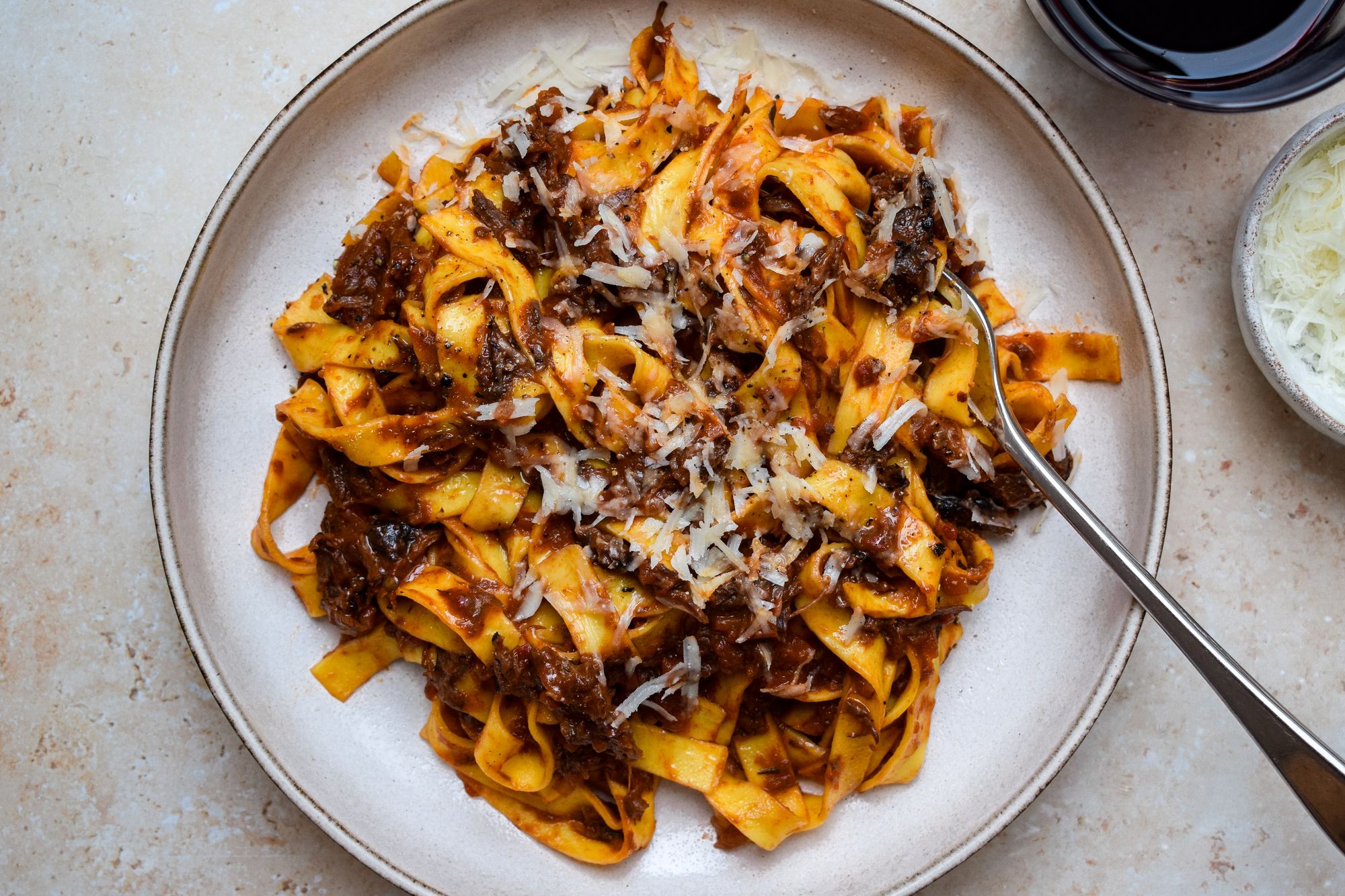
The key to achieving a good, rich depth of flavour in this easy beef shin tagliatelle (aside from a good tomato puree) is time. Well-browned meat, slow-cooked vegetables and plenty of time in the oven, both with the lid on and off, are nothing if you don’t let this ragu rest overnight to really develop the flavours. The finishing slick of butter and shower of pecorino cheese can be omitted if you need this to be dairy free, but they are rather good so don’t stint on them unless you have to.
Serves: 4-6
Prep time: 25 minutes | Cook time: 3 hours 15 minutes
Ingredients:
500g boneless beef shin
1 brown onion, finely chopped
1 carrot, finely chopped
2 sprigs of thyme
½ cinnamon stick
2 large cloves of garlic, crushed
3 tbsp tomato puree
1 chipotle in adobo sauce, finely chopped
1 x 400g tin of plum tomatoes
250ml beef stock
200ml red wine
20g unsalted butter, diced
400-600g dried tagliatelle (or 500g fresh tagliatelle)
Freshly grated pecorino, to serve
Method:
1. Heat the oven to 160C and season the beef all over with sea salt. Warm 1 tbsp light olive oil in a heavy-bottomed casserole dish over a medium-high heat. Once the oil is shimmering, brown the meat very well on all sides before removing from the pot and setting aside.
2. Reduce the heat to medium and add the onion, carrot, fresh thyme, cinnamon and a little more salt. Cook gently for 10-15 mins until the vegetables are soft. Stir in the garlic and cook for a minute more.
3. Stir in the tomato puree until everything is well coated and continue to cook for another few minutes until the tomato puree has darkened a little and started to caramelise. Stir in the chipotle.
4. Using your hands, crush the plum tomatoes over the pan and pour in any remaining juices. Use a little of the beef stock to wash any residual juices out of the tin and add them along with the rest of the stock, the red wine and a good seasoning of black pepper.
5. Return the beef and raise the heat to bring the sauce to the boil, then clap on the lid and transfer to the oven to cook for 2 hours. Remove the lid and cook for a further 45 mins.
6. Cook the pasta in a pan of well-salted, boiling water as per the packet’s instructions. When draining, reserve a cup of the cooking water.
7. Meanwhile, remove the thyme sprigs and cinnamon stick from the sauce and discard. Remove the beef and shred with two forks. Return the shredded meat to the pot and throw away any residual pieces of tough fat or gristle.
8. Stir the butter into the sauce and once it has melted check the seasoning.
9. Add the pasta to the pot along with a generous splash of cooking water. Set it over a medium heat and stir for a few more minutes until the sauce is rich, thick and glossy, adding more starchy cooking water as needed.
10. Serve in warm bowls topped with plenty of freshly grated pecorino.
Mark Riddaway is a food historian and author of Borough Market: Edible Histories. Recipes courtesy of Borough Market
Can the England flag ever be cool again? Gen Z are taking back control
MasterChef is better without Gregg Wallace – here is why the new women work better
6 easy alfresco recipes to elevate your spring BBQs and garden gatherings
Ditch cod: The best sustainable fish to cook at home right now
‘I’m a much nicer person now’: Brin Pirathapan on life after MasterChef