Banana might be one of the most ordinary plants, but it has long been in Thailand's culture, food, lifestyle and many other aspects of people's lives. Possibly, bananas have been with Thais longer than all other plants. Yet people somehow overlook the benefits of bananas and do not use them any more because they have found a better replacement.
People in the old days used banana leaves as their umbrella, especially when they'd already left the house and it started to rain. They would ask the owner of the nearest banana tree if they could have a few leaves. The owner would never say no. Banana leaves have a water-resistant quality that makes for a good umbrella. They can be easily thrown away after use. After that they rot and decompose, leaving no environmental problems.
Banana stems are porous. In the past, people tied stems together to create a flower holder that would be offered to monks or Buddha images at temples. Banana stems can help keep flowers and leaves fresh for a long time.
Banana stems can also make a fun toy. Children in the old days called it "banana-stem horse". They brought a big stem and bended it a little to make it look like a horse head. Then they rode the stem as if they rode a horse. Children would compete against one another on their banana-stem horses as if it was a race. Looking back, the banana-stem horse doesn't look intellectual, but kids in the past did not have as many toys to choose from as they do today. They played and had fun with whatever was available.
They could also turn a banana stem into a sword, which they used in war games. It's safe because slashing each other by using banana-stem swords left no wound nor injuries.
Banana trees bear fruit in bunches that are usually long, big and heavy. When the fruit begins to ripen, people will cut the tree so as to make it bend a little, which makes it easier for them to get the bananas. If bananas fall to the ground, they will be bruised. So when people get all the fruit, they cut the banana tree because it will bear no more. After the banana tree is cut, a shoot will grow, which will become a new tree.
Banana trees that have been cut down have several benefits. The leaf sheaves, the core and the innermost part called the stalk can be used in gaeng som (sour-and-spicy fish curry).
Leaf sheaves can be turned into ropes. People tear the leaf sheaves into long pieces before leaving them to sun-dry. They will become crisp and light. Before use, those pieces must be briefly soaked in water. They will become tough, suitable for binding things.
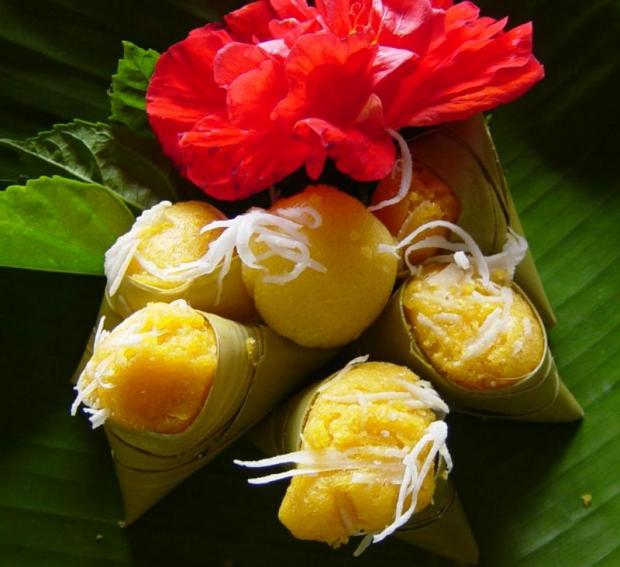
In the past, when there were no plastic bags, vendors that sold fried rice and noodles would place their food on a piece of banana leaf before folding it and binding it with banana rope. The leaf could keep the heat inside and the rope was easy to unbind. These food wraps were also friendly to the planet.
Today people no longer use banana ropes except for khao tom mud (banana wrapped with sweet sticky rice) and bajang (rice dumplings).
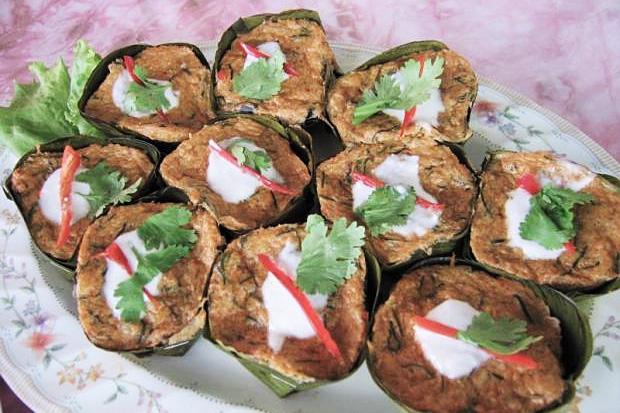
The reason people in the old days used a lot of banana leaves was because they were widely available, convenient and safe. Steamed mackerel was wrapped in banana leaf and sold. The leaf did not absorb liquid and could keep the skin intact. Today food sellers totally forget about using banana-leaf wrap. They opt for styrofoam containers.
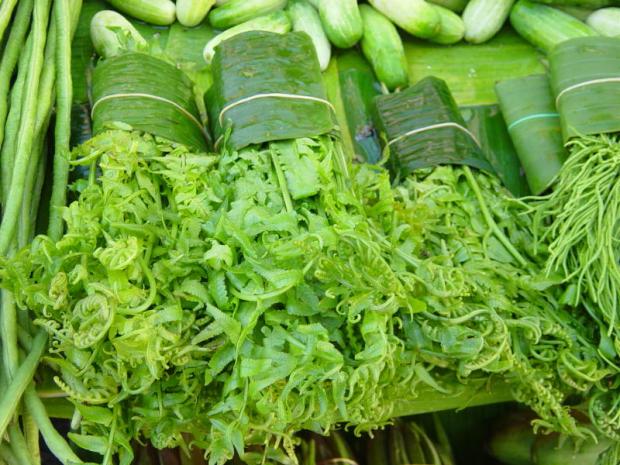
At markets, vegetables are placed above banana leaves because they can help retain the freshness.
Many people still wrap vegetables they buy with banana leaves before putting them in the refrigerator.
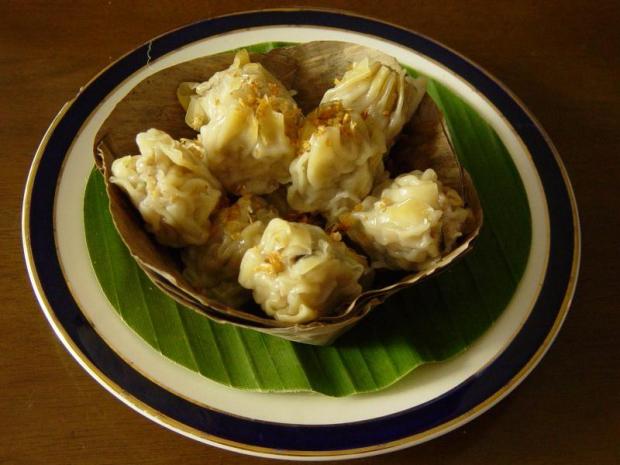
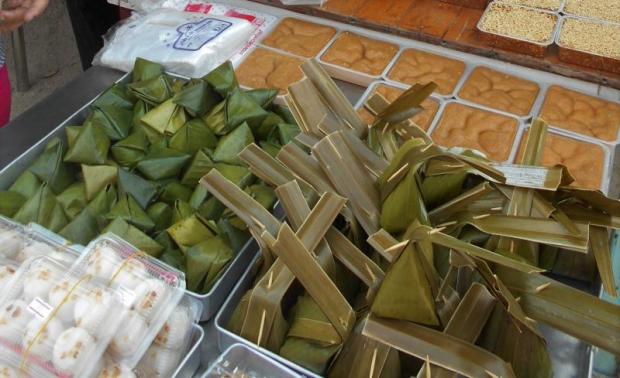
Young, yellow banana leaves can also be used, for example, as a wrap for certain Thai desserts such as khanom tian (pyramid-shaped glutinous rice dessert) and soft sweets that are usually wrapped in a triangle. Using young banana leaves for such desserts create true beauty.
Young leaves can be rolled into cigarettes. The leaves have to be left indoors until completely dried before being cut into pieces. People in rural areas still roll tobacco with young banana-leaf wraps.
ฺWithered banana leaves can be made into a kratong. These kratong -- made from very old, banana leaves -- are used as a container for ready-to-eat foods because they are cheap. It is a pity not many people use kratong these days. They turn towards styrofoam and plastic containers instead.
In the modern food industry, parts of banana trees that were once used are overlooked because there are various replacements. But in terms of appropriateness, these banana parts derive from nature and should still have a place in Thailand's culture and lifestyle.