Two months ago, Defense Secretary Pete Hegseth ended the U.S. military's decades-old mandatory flu vaccination requirement, framing the change as a matter of "medical autonomy." Last week, flu case counts at a major Texas training base climbed past 220. This week, the Army, Navy, and Air Force quietly received exceptions allowing them to require flu vaccination again for basic trainees.
As of June 26, 2026, more than 220 troops have contracted influenza at Lackland Air Force Base in Texas, up from 160 reported just one week earlier. The 37th Training Wing, which trains more than 36,000 recruits each year, has been managing the outbreak for three weeks.
Why This Matters
This is a story about a specific, traceable sequence of events: a policy change, a vaccination rate collapse, an outbreak, and, now, a partial reversal. None of these facts is in dispute. What remains formally unestablished is direct causation between the policy and the outbreak's size, though the timeline and the scale of the vaccination rate drop make the connection difficult to dismiss.
According to ABC News reporting, the flu vaccination rate among recruits at the San Antonio base fell from nearly 100 percent — when the shot was mandatory — to approximately 40 percent after Hegseth's policy made it voluntary.
What We Know So Far
Defense Secretary Pete Hegseth announced in April 2026 that the Pentagon would no longer mandate flu vaccination for U.S. service members, both active duty and reserve, calling the previous requirement "absurd, overreaching mandates that only weaken our warfighting capabilities." The change followed a similar move, making COVID-19 vaccination optional for troops.
Roughly two months later, the outbreak at Lackland began. An Air Force spokesperson confirmed that the 37th Training Wing, in coordination with the 59th Medical Wing — the Air Force's largest medical wing — has been "managing a localized influenza outbreak among trainees at Basic Military Training" for the past three weeks.
The case count has grown steadily:
- Initial reports: nearly 160 cases, two hospitalizations
- One week later, per Rep. Joaquin Castro's (D-TX) office : 222 cases, an increase of 62 cases in less than a week
Symptomatic trainees are being treated with antiviral medications, including Tamiflu, and will return to training once medically cleared.
A Recruit's Death Under Investigation
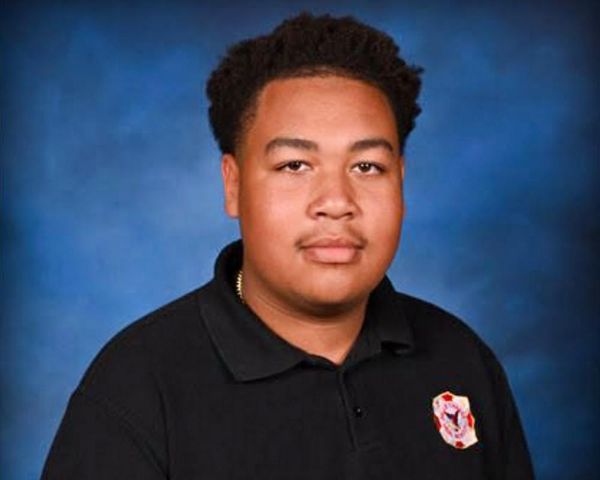
The Air Force confirmed that Keon McDaniel, a trainee in his sixth week of Basic Military Training, died on June 16, 2026 at Brooke Army Medical Center, following a medical emergency on June 12. The cause of his death is under investigation, and the Air Force has stated it is unclear whether his death is connected to the flu outbreak. A comprehensive medical review is ongoing.
Rep. Joaquin Castro, whose district includes Lackland, called the outbreak "reckless" and said it was "only a matter of time" before such an event occurred following the policy change. He has requested a full accounting from the Pentagon of both the outbreak and the circumstances of McDaniel's death.
The Policy Reversal
According to reporting from ABC News and MS NOW, the Pentagon has granted exceptions to Hegseth's voluntary vaccination policy for the Army, Navy, Air Force, National Security Agency, and Defense Health Agency, through the Under Secretary of Defense for Personnel and Readiness, Anthony Tata.
Pentagon chief spokesperson Sean Parnell described the exceptions: "The decisions were based upon thorough risk assessments and are designed to maximize operational readiness, lethality, and force generation, while safeguarding at-risk populations. The Army, Navy, Air Force, NSA, and DHA are responsible for implementing the exceptions to the policy."
As part of this exception, basic trainees — the population most affected by the Lackland outbreak — are once again required to receive the flu vaccine. As one commentator described it: "It seems like an important reversal — and an unsubtle acknowledgement that the beleaguered defense secretary has made a dramatic mistake."
What Doctors and Experts Say
Senate Armed Services Committee Chair Roger Wicker (R-MS), who called the original policy change "a mistake," distinguished the flu vaccine from COVID-19 vaccination specifically: "I don't equate them with COVID shots, which were largely experimental and had not stood the test of time. When I was on active duty and a reservist, I dutifully took my flu shot every year. And as a whole, it made for a healthier armed forces."
Public health researchers cited by ABC News noted that a Defense Health Agency study covering flu seasons from 2010–2011 through 2023–2024 found the highest rate of influenza hospitalizations among active service members occurred in those under age 25 — particularly young recruits in basic training, where close living quarters and intensive physical training create elevated transmission risk.
What the Evidence Shows — and What It Does Not
The temporal sequence is well-documented: policy change in April, vaccination rate drop from approximately 100 percent to 40 percent, outbreak onset roughly two months later, growing case count, and a subsequent partial policy reversal specifically restoring the requirement for the population where the outbreak occurred.
What has not been formally established through epidemiological investigation is a direct causal mechanism connecting the policy change to this specific outbreak's size — influenza outbreaks have occurred at training installations in prior years even under mandatory vaccination, given the unique transmission dynamics of basic training environments (close quarters, intensive shared physical activity, recruits arriving from diverse exposure backgrounds). However, the magnitude of the vaccination rate decline and the timing relative to the outbreak represent a strong circumstantial association that public health researchers say warrants close monitoring and formal review.
Who Faces the Greatest Risk?
- Basic trainees in close-quarters training environments, who face elevated transmission risk regardless of vaccination policy
- Young recruits under 25, who according to Defense Health Agency data face the highest rate of influenza hospitalization among active service members
- Military families and communities surrounding major training installations
What You Can Do Now
- If you are a service member or family member affected by military vaccination policy changes, consult current Defense Department guidance, which now includes exceptions reinstating flu vaccination requirements for several branches' basic trainees.
- If you are entering basic training, confirm current vaccination requirements with your specific service branch, as policy continues to evolve.
- For general flu prevention, annual vaccination remains the most effective protective measure available, regardless of military policy status.
What Happens Next
Rep. Castro's office has requested a full Pentagon accounting of the outbreak and an investigation into McDaniel's death. The exception process allowing services to reinstate flu vaccination requirements for at-risk populations, including basic trainees, is now in effect for the Army, Navy, Air Force, NSA, and DHA. MedicalDaily will report on the results of any formal investigation and on whether additional military installations adopt similar exceptions.
The Bottom Line
A policy change that made military flu vaccination voluntary was followed, roughly two months later, by an outbreak that grew from 160 to 222 cases at a major Texas training base — and the vaccination rate among affected recruits had fallen from nearly 100 percent to 40 percent in the interim. The Pentagon has now granted exceptions allowing several service branches to reinstate the requirement for basic trainees specifically. Whether or not direct causation is ever formally established, the sequence of events and the subsequent policy reversal speak for themselves.