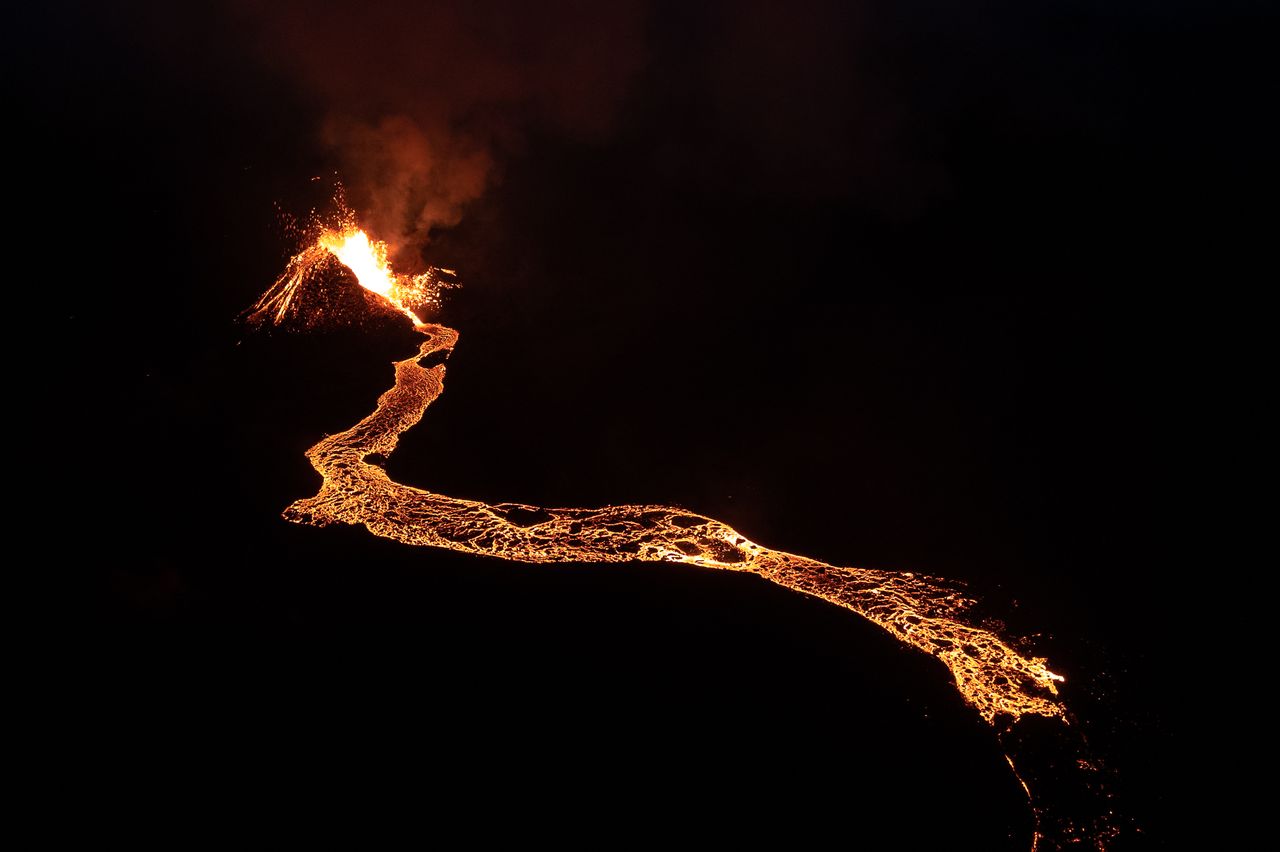
Although he's primarily a stills photographer, Karim Iliya also makes films. And one of those, titled 'Blood of the Earth', so impressed the judges of the fourteenth season of HIPA (the Hamdan bin Mohammed bin Rashid Al Maktoum International Photography Award) that Karim went home with the trophy for Drone (Video).
Karim's mission was simple: he wanted to show how beautiful volcanoes are, which many people don’t actually get to see.
"People often think of volcanoes as places that are destructive and violent and terrifying," he explained to me after the awards ceremony in Dubai, the United Arab Emirates, last November.
"But volcanoes are fascinating places, and I think it's hard not to love them. The things that little kids often love are dinosaurs, whales, uniforms, construction, volcanoes – volcanoes are in the 'cool thing' category."
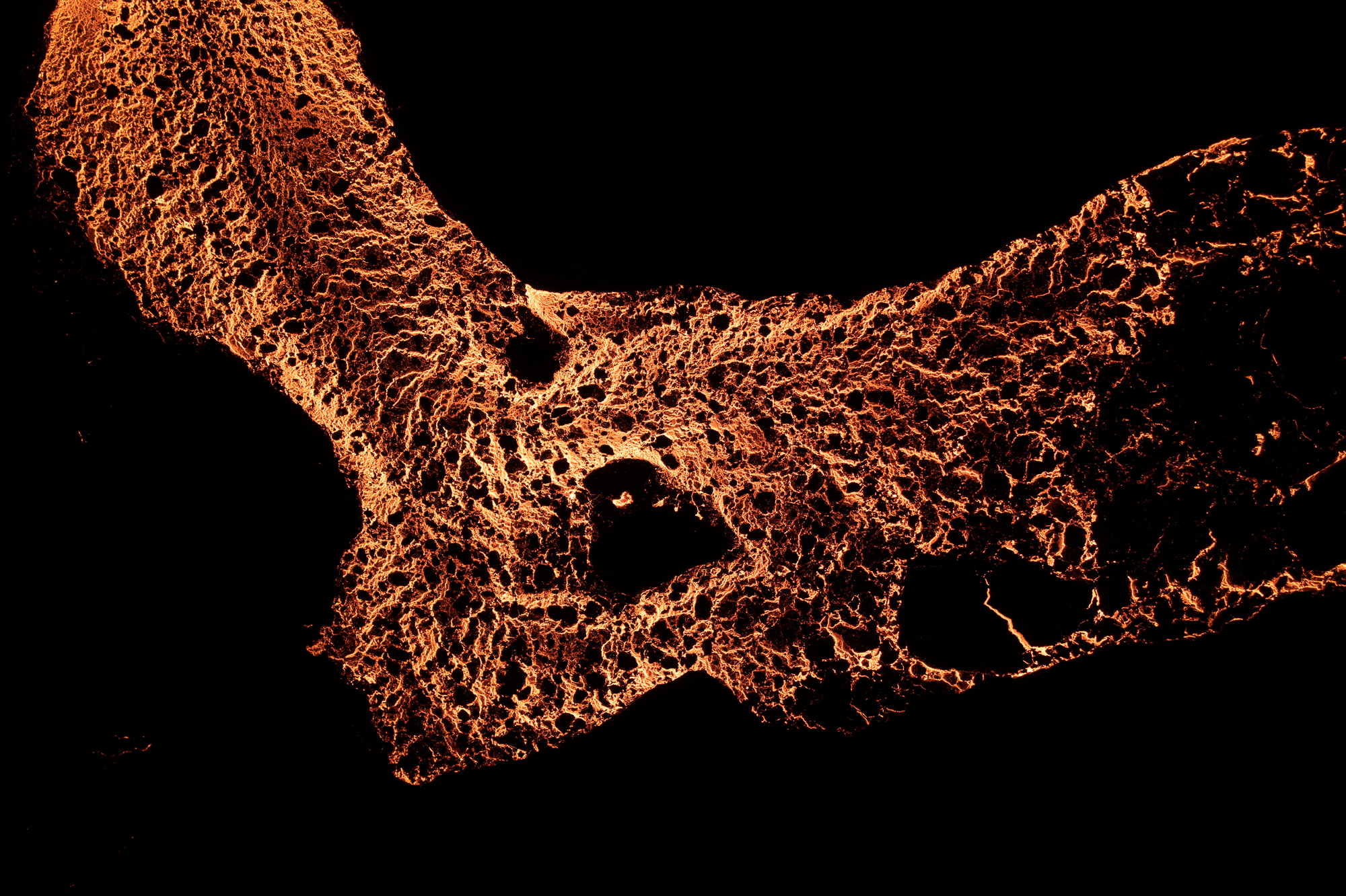
Although based in Iceland, Karim has traveled around the world to see the majesty of volcanoes – both dormant and erupting.
"The first volcano I saw was an eruption in Guatemala, Central America, and there are volcanic eruptions in Hawaii, where my family is.
"I've been to volcanoes that weren't erupting at the time but were in the process of doing so, like Etna in Sicily [a photograph of Etna erupting, by Gianluca Gianferrari, was the Grand Prize winner of HIPA 'Power'].
For 'Blood of the Earth', though, Karim traveled to Iceland, an island in the North Atlantic, in 2021, to see the volcanic eruption at Fagradalsfjall [which means 'beautiful valley mountain'].
The volcano started erupting in March that year, and the eruption went on for six months. Karim tried to get there as quickly as possible.
"Originally I had booked a three-week trip to Iceland to go and photograph and film Fagradalsfjall, and I ended up extending my stay for three months," he recalls.
"Then I met an Icelandic woman and decided to live there. So over the course of this volcanic eruption, I filmed as much as I could with a drone and eventually put together this little short film."
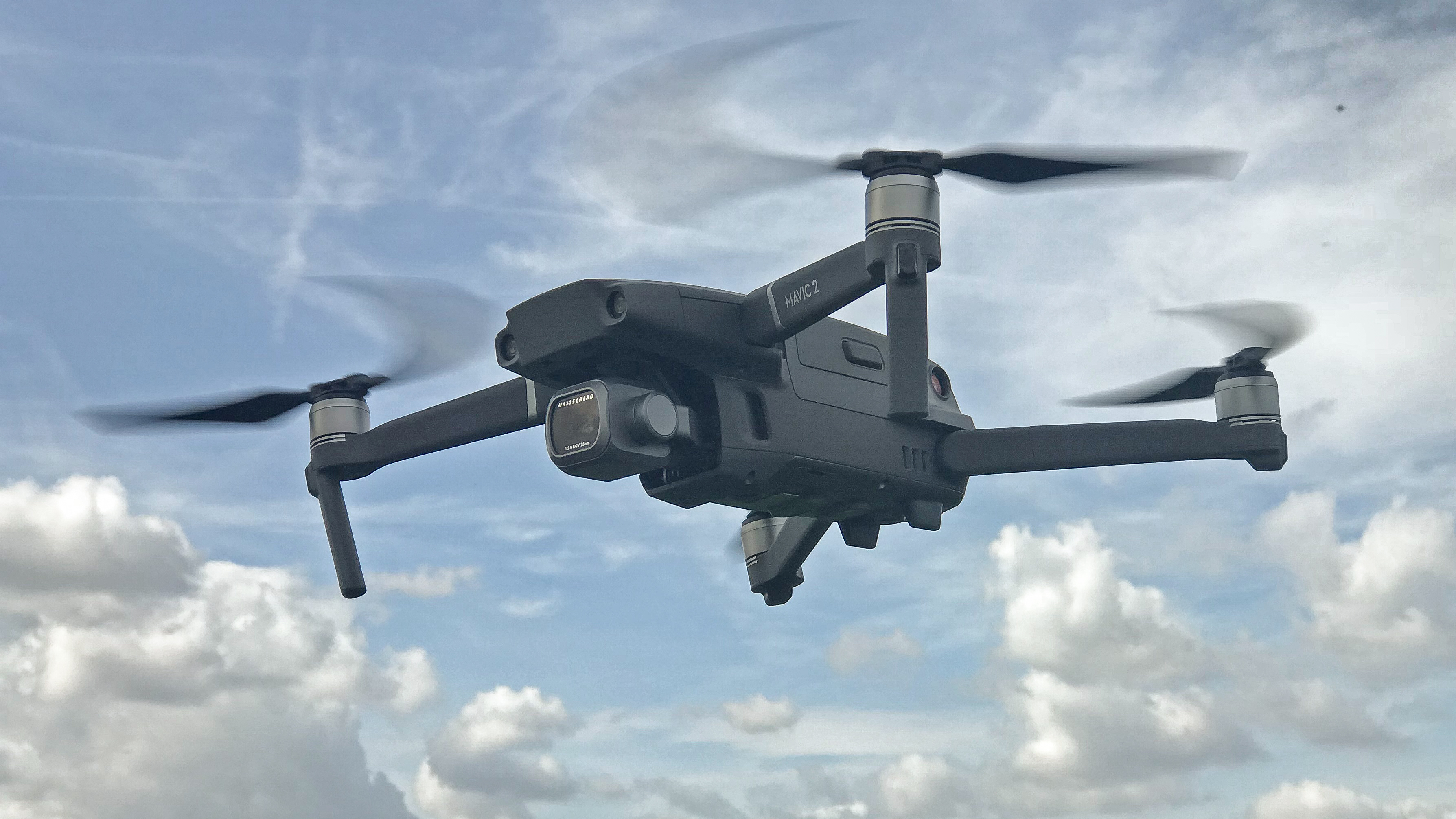
Karim's tools of choice are DJI camera drones. "The footage was filmed on a Mavic 2 Pro – a DJI drone that is small and portable and able to do the job."
He's a fan of the DJI brand as he feels it pushes technical boundaries and constantly innovates, and he's familiar with how they work, too.
"I’ve found them to be generally very reliable – good in low light, good battery life and they can handle quite a bit of wind.
"Weather conditions in Iceland can be horrendous. The winds can be high, you get snow and hail and rain… I've just found that DJI drones can survive the trip and can handle the elements. So far it has all worked out."
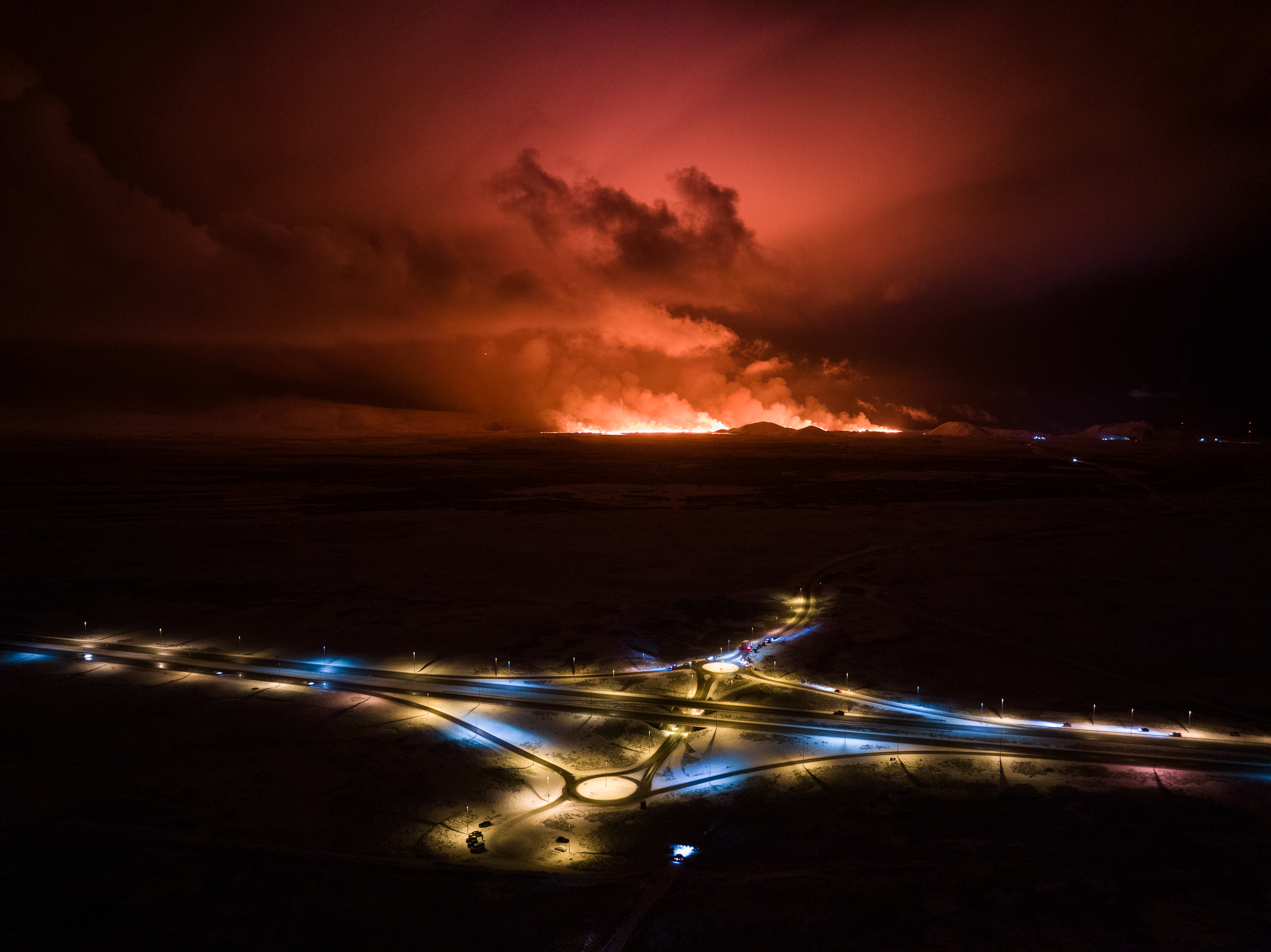
But Karim's filming wasn't without incident. As well as losing the front element of one drone, the sensors melted, so he had to figure out how to stay in the areas that are less hot.
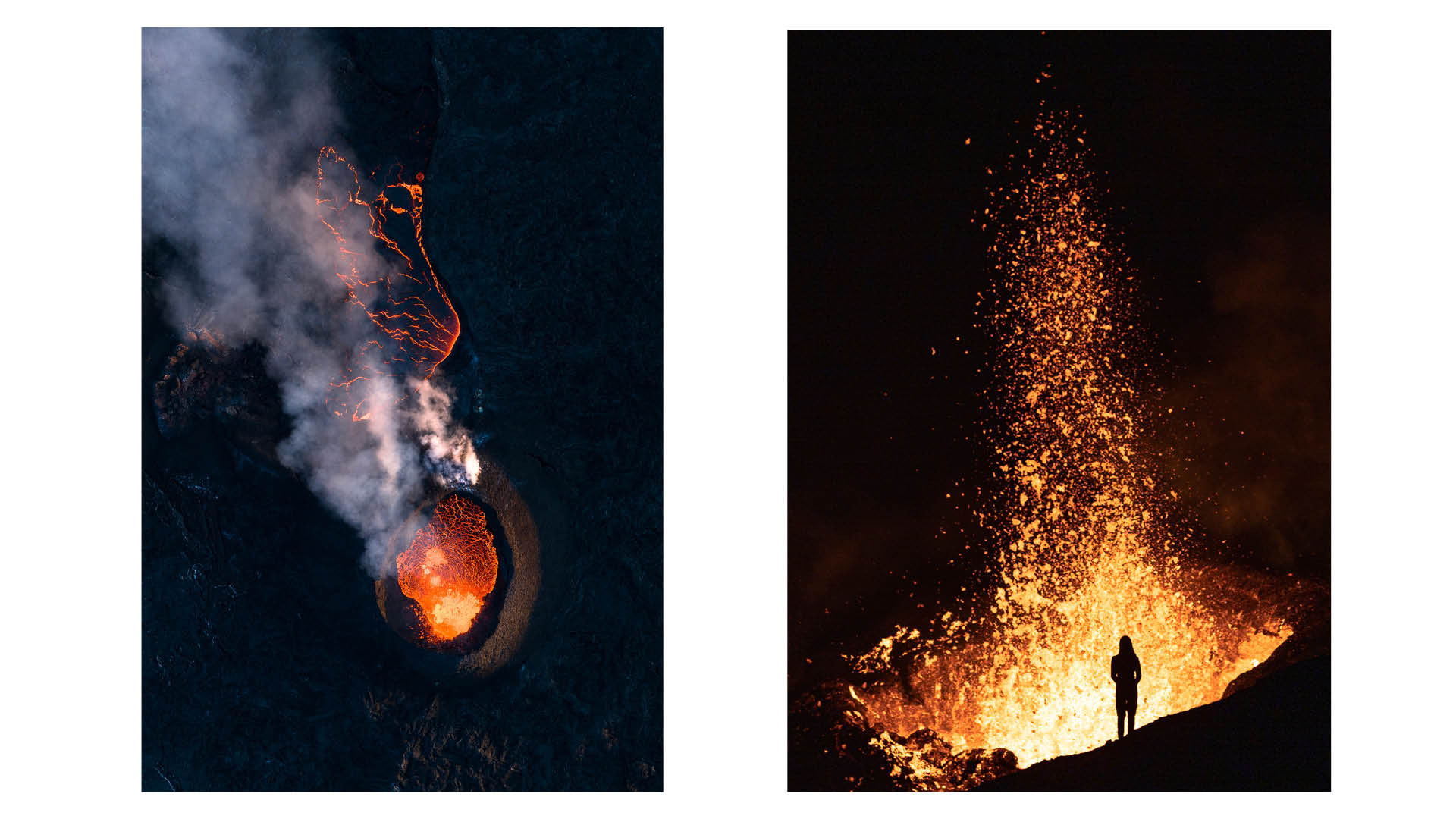
"The thing with volcanoes is how there's so much to film and so much to see, and it's constantly changing. You're looking for new things, but how do you find something different that someone hasn't seen before?"
But while a drone offers a unique perspective, there's no substitute for being there and witnessing the power of nature yourself.
"I spent a lot of time looking with my eyes because it's not quite the same to look at film on a screen as it is to be there, to see the eruption and feel the heat, and experience the feelings that come from it."
To tell a story like 'Blood of the Earth', Karim had to capture around 50 hours of footage of different eruptions in the same volcanic area, gathered from many trips to the volcano over the course of many days: "I would go to the volcano with the intention of spending a couple of hours and 11 hours would go by."
Karim doesn't obsess over the technical aspects of filming, preferring to trust his instincts, whether something looks good or not.
"I prioritize capturing the moment and recording it, rather than worrying about what gear I have or what settings I'm using.
"Sometimes, certain settings are fairly straightforward and can stay the same, or I'll change other settings depending on what's going on."
The editing process is about reconstructing what he saw at the time.
"The edit was fairly quick, mostly because of the time constraints. There are moments you film that afterwards you remember are very different and interesting."
And he clearly did a good job with his storytelling, as the HIPA judges praised his work for being "… a truly hell-inspiring glimpse at the majesty, wonder and profound power of the volcanic eruption", which fitted perfectly with the 'Power' theme of the 14th season of HIPA.
Winning the category award and the prize money will allow Karim to pursue more personal projects without the worry of how to fund them.
"The wonderful thing about winning the HIPA award is that you meet a lot of fantastic people at the ceremony, so you can build those connections," he says.
"And the prize money allows me to go out and continue doing what I'm doing. Oftentimes the thing that nature and wildlife photographers – and photographers in general – need more than anything is just money to go and do their projects, because I put [any money I make] back into the work I do.
"If I have money, I'm filming more, I'm photographing more, I'm telling these stories and trying to continue the work that I do.
"The HIPA prize enables me to continue doing my work, and invigorates me to keep pursuing and pushing the boundaries of what is possible."
And what's next for Karim – will there be more in the same vein as 'Blood of the Earth'?
"I'm actually in the process of making a film about volcanoes," he says. "It's a long project, let's say something that spans 20 years."
Read more about 'Blood of the Earth'
A longer version of this interview appears in the May issue (307) of Digital Camera World magazine.
You can subscribe and get the magazine delivered to your door every month. Choose between a print or digital subscription, or a bundle of the two.
All print subscribers to Digital Camera magazine can now access digital back issues dating from 2009 (when using iOS) or 2012 (when using the Pocketmags Magazine Newsstand app or the Pocketmags website).