An artist's most famous work rarely tells the whole story. The first painting often reveals a student still searching for a voice, while the last can reflect decades of experience, changing influences, and even the circumstances surrounding the end of a life. Placing these works side by side offers a rare opportunity to see not only how an artist's technique evolved, but also how their interests, ambitions, and worldview changed over time.
Originally shared by The Cultural Tutor, this collection follows the creative journeys of 16 of history's greatest painters, from Claude Monet and Vincent van Gogh to Frida Kahlo and Caravaggio, through their earliest surviving works and their final masterpieces.
Scroll down to discover how some of the most celebrated artists in history began, and where their remarkable careers ultimately led.
More info: Instagram | x.com | amazon.co.uk
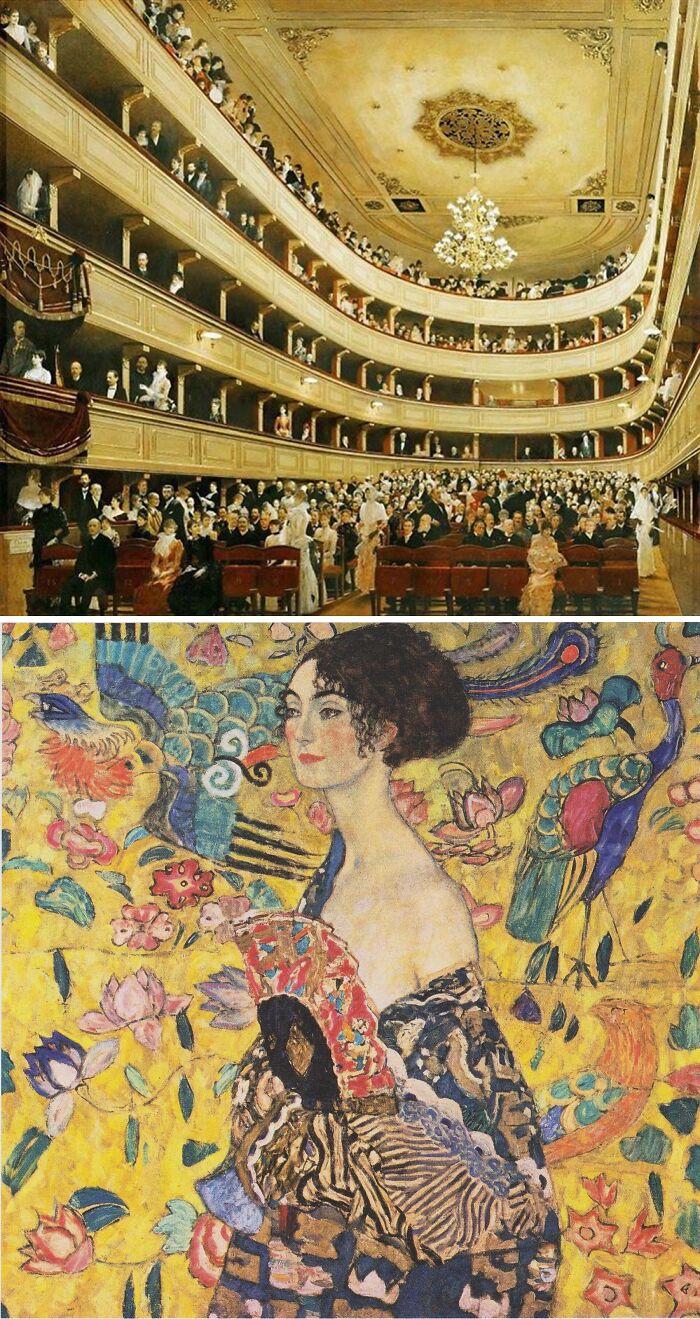
#1 Gustav Klimt
The Old Burgtheater in Vienna (1888) and Lady with a Fan (1918) Gustav Klimt's career began with meticulously detailed architectural interiors and ended with one of the most celebrated portraits in modern art. His early The Old Burgtheater in Vienna (1888), painted when he was in his mid-twenties, captures the grand interior of Vienna's historic imperial theater with remarkable precision. The work earned Klimt the Emperor's Prize and established him as one of the Austrian Empire's most promising young artists. Three decades later, Lady with a Fan (1918), completed shortly before his passing and left unfinished on the easel, reveals just how dramatically his style had evolved. Filled with bold colors, flattened forms, and richly decorative Asian-inspired motifs, the portrait reflects the freedom and innovation of his late period. In 2023, Lady with a Fan made headlines when it sold for £85.3 million ($108.4 million) at Sotheby's, becoming the most expensive artwork ever sold at auction in Europe.
© Photo: The Cultural Tutor
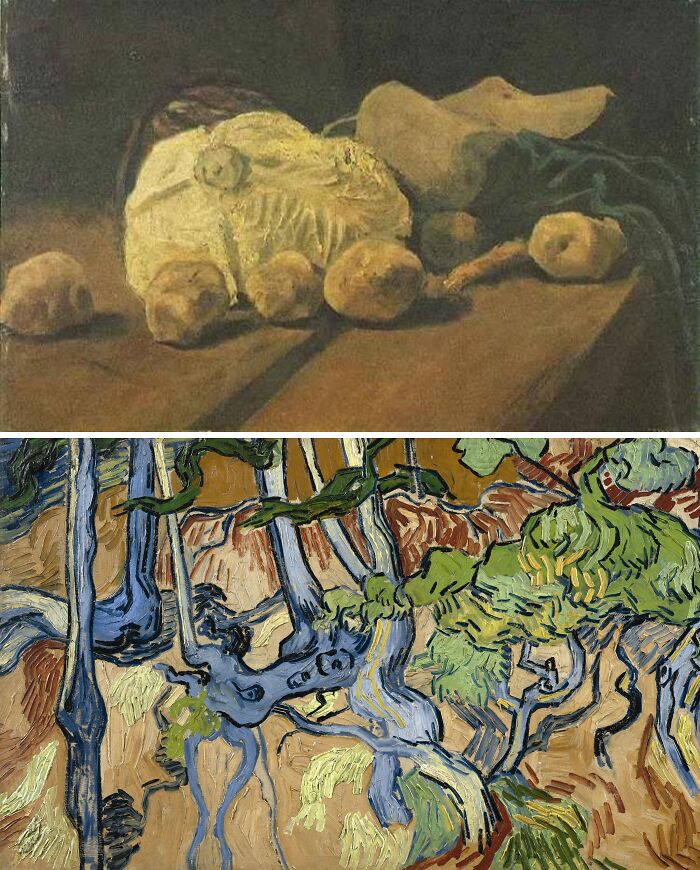
#2 Vincent Van Gogh
Still Life with Cabbage and Clogs (1881) and the last is Tree Roots (1890) Vincent van Gogh's artistic career lasted less than a decade, yet it transformed the course of modern art. His early Still Life with Cabbage and Clogs (1881), painted shortly after he decided to become an artist, reflects the dark, earthy palette of the Dutch Realist tradition. The humble arrangement of vegetables and worn shoes already reveals his fascination with the lives of ordinary people, a theme that would later culminate in The Potato Eaters. By contrast, Tree Roots (1890), completed on the very day of, or possibly the day before, his passing, is a striking explosion of twisting roots, bold colors, and energetic brushstrokes. Some art historians believe its tangled forms mirror Van Gogh's emotional state during his final hours, while others see it as a celebration of nature's resilience. Remarkably, in 2020, researchers identified the exact hillside in Auvers-sur-Oise, France, where Van Gogh painted the scene, solving a mystery that had remained unsolved for more than a century.
© Photo: The Cultural Tutor
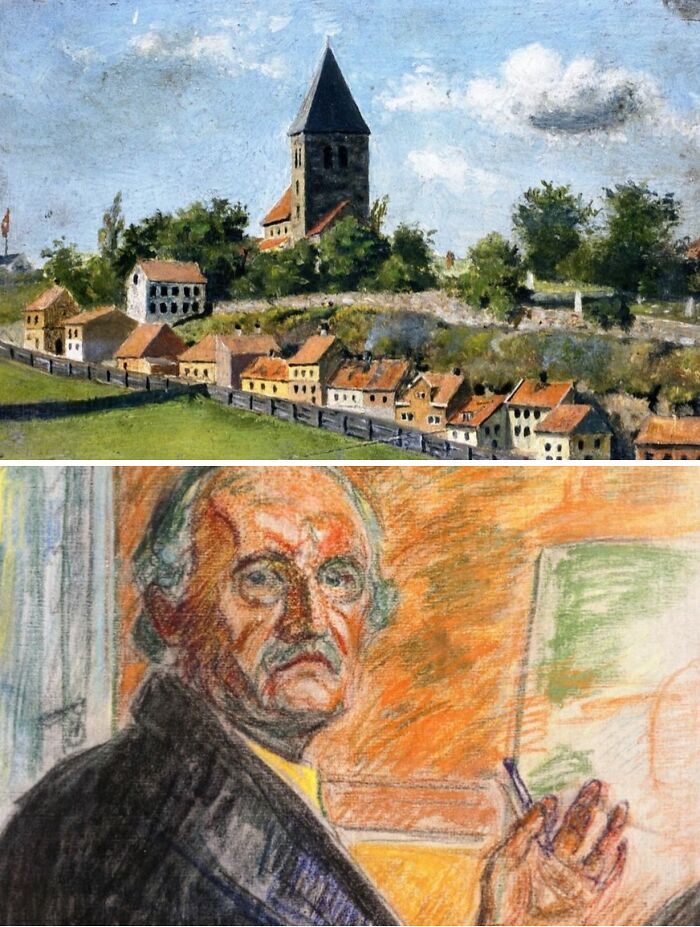
#3 Edvard Munch
Telthusbakken (1880) and Self Portrait (1943) Edvard Munch's artistic career spanned more than six decades, from carefully observed cityscapes to deeply introspective self-portraits. His early Telthusbakken (1880), painted when he was just 16 years old, depicts a quiet street in Christiania (now Oslo) and reflects the naturalistic style he learned before developing his distinctive visual language. Though modest in subject, it already reveals Munch's sensitivity to atmosphere and mood. More than sixty years later, Self-Portrait (1943), painted during the final year of his life while living in occupied Norway, presents a strikingly different vision. Rather than focusing on external appearance, Munch confronts the viewer with an unflinching image of old age, solitude, and mortality. Created only months before his passing in 1944, the painting stands as a powerful reflection on a lifetime devoted to exploring the complexities of the human condition, making it a fitting conclusion to one of modern art's most influential careers.
© Photo: The Cultural Tutor
#4 John Singer Sargent
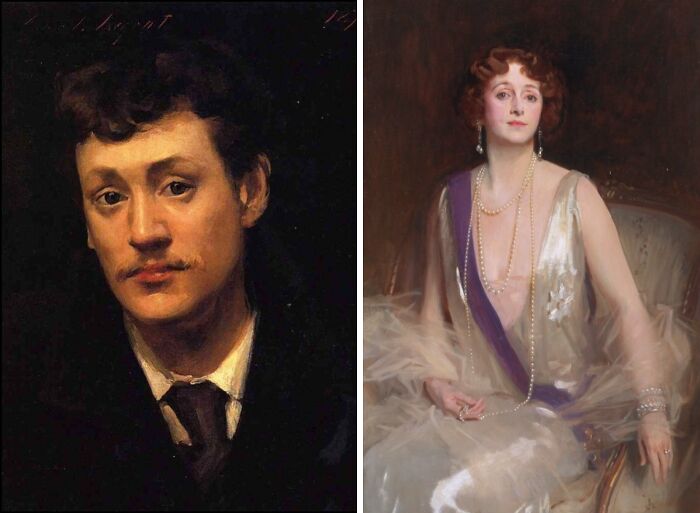
Portrait of Frank O'Meara (1876) and Portrait of Grace Curzon, Marchioness Curzon of Kedleston (1925) John Singer Sargent's career began with an intimate portrait and ended with one of the last great society portraits of the early twentieth century. His early Portrait of Frank O'Meara (1876), painted when he was just 20 years old, depicts his close friend and fellow artist Frank O'Meara during their studies in Paris under Carolus-Duran. Even at this early stage, Sargent's confident brushwork and remarkable ability to capture character hinted at the brilliance that would soon make him the world's most sought-after portrait painter. Nearly fifty years later, Portrait of Grace Curzon, Marchioness Curzon of Kedleston (1925) became one of his final major portraits. Painted only months before his passing, it portrays the influential British aristocrat in a striking black gown with the effortless elegance and psychological depth that had defined Sargent's mature style. Together, the two works trace the extraordinary career of an artist who transformed portraiture, from a gifted student in Paris to the most celebrated society painter of his generation.
© Photo: The Cultural Tutor
#5 Edward Hopper
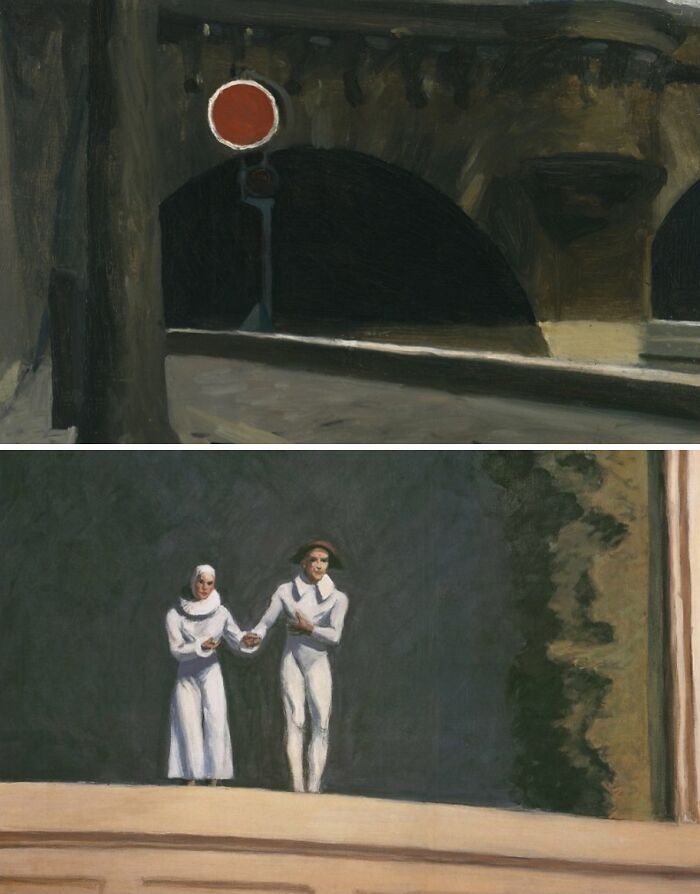
Edward Hopper's career spanned six decades, beginning with quiet studies of European streets and ending with a deeply personal farewell. His early Bridge in Paris (1906), painted during one of his formative trips to France, captures the city's architecture and atmosphere with a restrained palette and careful observation. Although Hopper admired French Impressionism, he resisted its loose brushwork, preferring the clarity, structure, and quiet realism that would later define his work. Sixty years later, Two Comedians (1966), completed just two years before his passing, became his final painting and is widely regarded as his artistic goodbye. The two bowing figures on stage are commonly interpreted as Hopper and his wife, Josephine (Jo) Hopper, taking one last curtain call before leaving the stage. Created at the age of 84, the painting is both a poignant farewell and a fitting conclusion to the career of one of America's most influential realist painters.
© Photo: The Cultural Tutor
#6 J. M. W. Turner
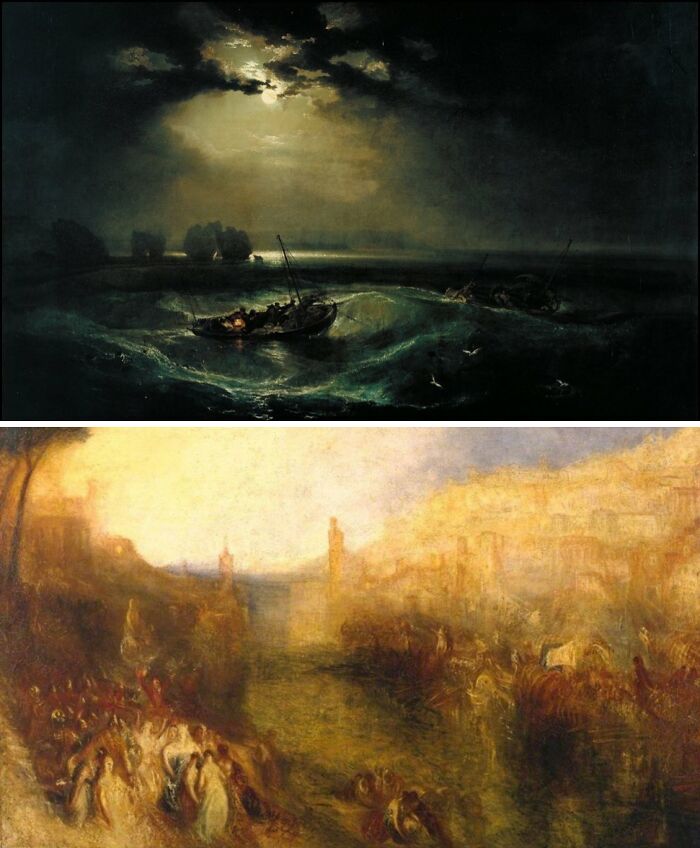
Fishermen at Sea (1796) and The Departure of the Fleet (1850) J. M. W. Turner's career began with a dramatic moonlit seascape and ended with a luminous meditation on light and atmosphere. His first exhibited oil painting, Fishermen at Sea (1796), was shown at the Royal Academy when Turner was just 21 years old. The scene depicts fishing boats battling the sea beneath a full moon, already demonstrating his remarkable ability to capture the effects of light on water—a subject that would define his career. More than fifty years later, The Departure of the Fleet (c. 1850), one of his final unfinished works, reveals how radically his style had evolved. Forms dissolve into glowing washes of color and light, with ships becoming almost secondary to the atmosphere itself. So innovative were these late paintings that many later artists, including the Impressionists, looked to Turner as a pioneer who anticipated modern art decades before it emerged.
© Photo: The Cultural Tutor
#7 Dante Gabriel Rossetti
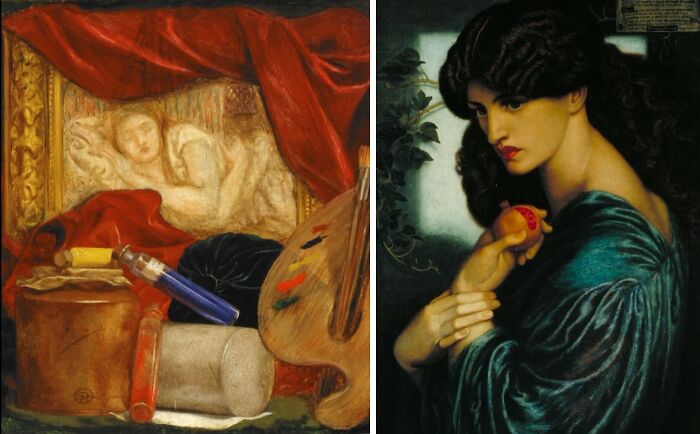
Bottles (1848) and Proserpine (1882) Dante Gabriel Rossetti's artistic career began with a modest student exercise and ended with one of the defining images of the Pre-Raphaelite movement. His earliest known oil painting, Bottles (1848), was created while studying under Ford Madox Brown as a still-life exercise, featuring everyday objects from the artist's studio. Years later, Rossetti even added the sleeping female figure in the background, transforming the simple composition into something more personal and symbolic. More than three decades later, Proserpine (1882) became one of his greatest masterpieces. Inspired by the Roman goddess condemned to spend half the year in the underworld, the painting is rich with symbolism—from the pomegranate in her hand, representing her eternal fate, to the ivy and narrow shaft of light, evoking both hope and confinement. The model was Jane Morris, Rossetti's lifelong muse, and the work is widely interpreted as reflecting not only the classical myth but also the pair's complex and often turbulent relationship. Together, these paintings reveal the extraordinary journey of an artist who evolved from experimenting with simple still lifes to creating some of the most psychologically charged and symbolically rich works of the Victorian era.
© Photo: The Cultural Tutor
#8 Claude Monet
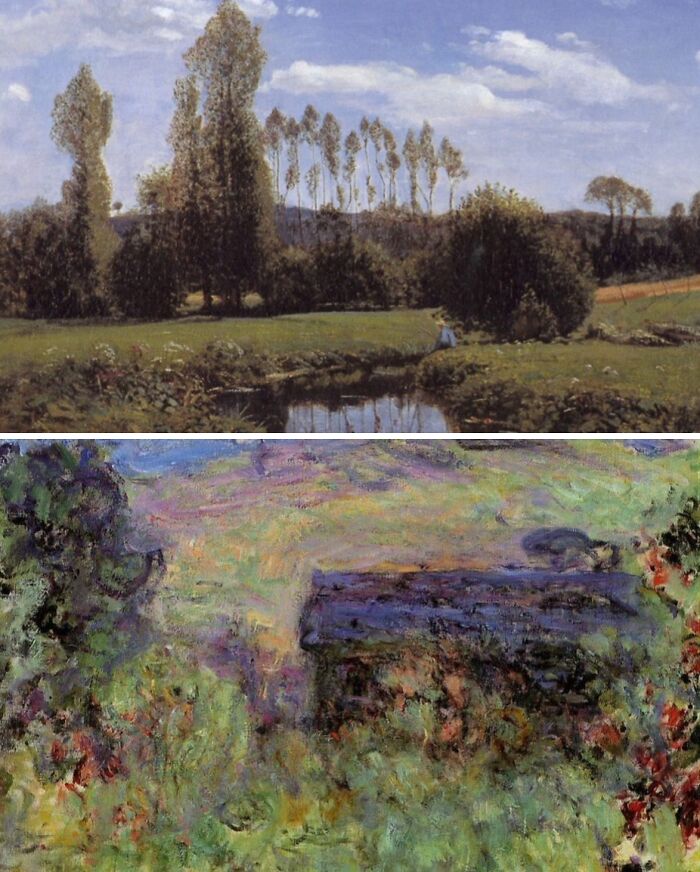
View from Rouelles (1858) and The House through the Roses (1926) Claude Monet's artistic journey stretched across nearly seven decades, and few pairings illustrate that evolution more dramatically than View from Rouelles (1858) and The House through the Roses (1926). Monet painted View from Rouelles when he was just 18 years old, long before becoming the leading figure of Impressionism. Created near Le Havre, the carefully observed landscape already reveals his fascination with changing light and the outdoors—an interest encouraged by his mentor Eugène Boudin, who introduced him to painting en plein air. By contrast, The House through the Roses, completed in the final year of his life, almost dissolves into color and atmosphere. Painted at his beloved home in Giverny, the work reflects both decades of artistic experimentation and the effects of the cataracts that increasingly blurred his vision, softening forms into luminous patches of pink, green, and blue. Together, the two paintings capture one of the most extraordinary transformations in art history, from a talented young landscape painter to an artist whose revolutionary approach forever changed how light, color, and perception were represented on canvas.
© Photo: The Cultural Tutor
#9 Artemisia Gentileschi
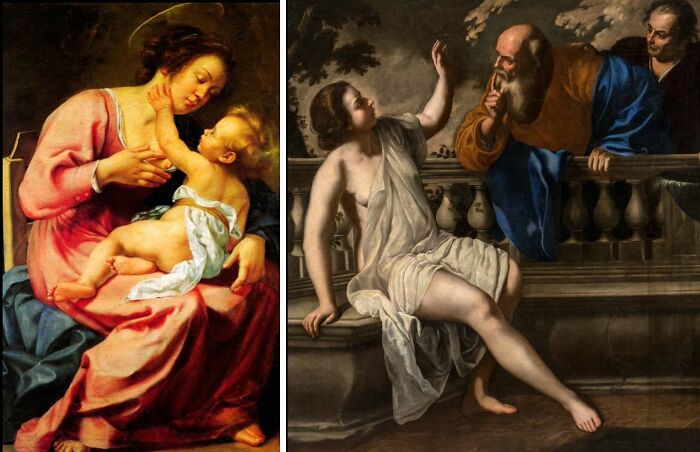
Madonna and Child (1610) and Susanna and the Elders (1652) Artemisia Gentileschi began and ended her career with biblical women, but the two paintings reflect a lifetime of artistic growth and personal resilience. Her early Madonna and Child (c. 1610), painted in her teens, reveals the influence of her father Orazio Gentileschi and Caravaggio, combining soft naturalism with dramatic lighting. More than four decades later, Susanna and the Elders (c. 1652), one of her final known works, revisits a subject she had famously painted as a teenager. Unlike many male artists of the time, Gentileschi portrayed Susanna not as a seductive figure but as a woman visibly distressed by harassment, bringing psychological realism and empathy to the biblical story. Comparing the two paintings reveals how Artemisia evolved into one of the Baroque period's most original painters, celebrated today for her powerful depictions of women and her groundbreaking role as one of history's greatest female artists.
© Photo: The Cultural Tutor
#10 Caravaggio
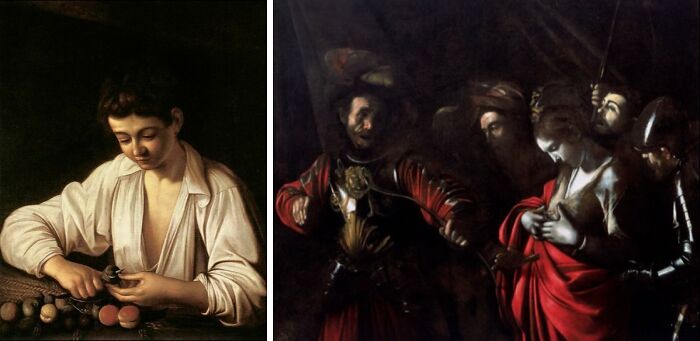
Boy Peeling Fruit (1592) and The Martyrdom of Saint Ursula (1610) Caravaggio's career lasted less than two decades, yet it transformed the course of Western painting. His early Boy Peeling Fruit (c. 1592–1593), believed to be his earliest surviving work after arriving in Rome, already showcases his remarkable ability to observe everyday life with striking realism. Rather than depicting an idealized figure, Caravaggio focused on an ordinary young boy engaged in a simple task, foreshadowing the naturalism that would become his hallmark. Nearly twenty years later, The Martyrdom of Saint Ursula (1610), completed just weeks before his passing, stands as his final known painting. The dramatic scene captures the precise moment Saint Ursula is struck by an arrow, with Caravaggio including a self-portrait among the horrified onlookers, an image many art historians interpret as a deeply personal reflection created while the artist desperately sought a papal pardon after years in exile. Together, these two works reveal the extraordinary evolution of a painter whose revolutionary use of light, realism, and psychological intensity forever changed the history of art.
© Photo: The Cultural Tutor
#11 Rembrandt
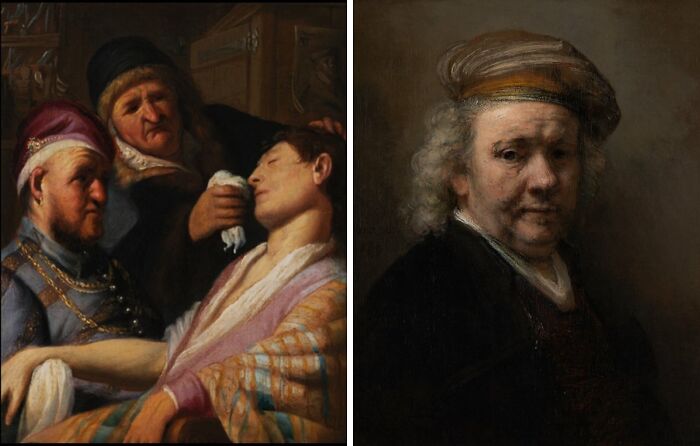
Smell (1624) and Self Portait (1669) Rembrandt's artistic journey began with an experiment in the senses and ended with one of the most profound self-portraits in Western art. His earliest known painting, Smell (The Unconscious Patient) (c. 1624), was created when he was around 18 years old as part of a planned series representing the five senses. The humorous scene, showing a man being revived with smelling salts, is the only surviving painting from the series and already demonstrates Rembrandt's fascination with expressive faces, dramatic lighting, and storytelling. More than four decades later, Self-Portrait (1669), completed during the final year of his life, presents the artist with remarkable honesty and psychological depth. Far removed from the confident self-portraits of his youth, the painting reveals an aging man marked by personal loss, financial hardship, and decades of experience. Today, it is regarded as one of the greatest self-portraits ever created, offering a powerful meditation on mortality, resilience, and the life of an artist who fundamentally changed the course of painting.
© Photo: The Cultural Tutor
#12 Frida Kahlo
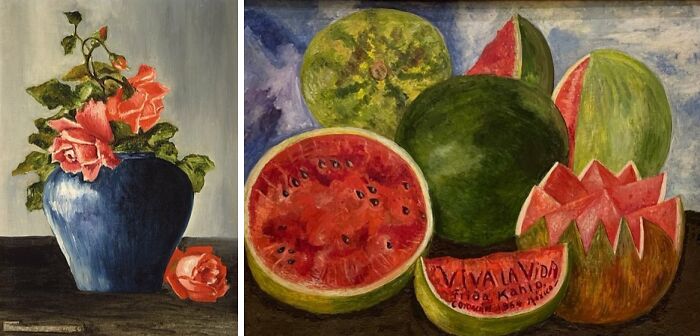
Still Life, Roses (1925) and Viva la Vida, Watermelons (1954) Frida Kahlo's artistic journey began and ended with still lifes, but the two works reveal just how profoundly her perspective changed over nearly three decades. Still Life, Roses (1925), painted when she was just 18 years old, is among her earliest surviving works and was completed before the bus accident that permanently altered her life. Executed in a traditional academic style, it shows little hint of the intensely personal symbolism that would later define her art. By contrast, Viva la Vida, Watermelons (1954), finished only eight days before her passing, is one of Kahlo's final paintings and carries a striking message of resilience. She inscribed the words "Viva la Vida" ("Long Live Life") directly onto the watermelon, transforming an ordinary still life into a powerful affirmation of life despite years of chronic pain and declining health. Today, the painting is regarded as a deeply moving farewell and one of the most poignant final works in modern art.
© Photo: The Cultural Tutor
#13 Johannes Vermeer
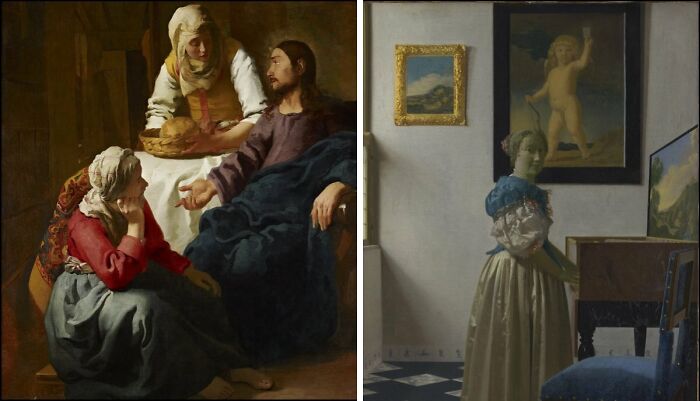
Christ in the House of Martha and Mary (1655) and Lady Standing at a Virginal (1672) Johannes Vermeer's surviving body of work consists of only about 34–36 paintings, making him one of the rarest masters of the Dutch Golden Age. His earliest known work, Christ in the House of Martha and Mary (c. 1655), is also his largest painting and one of the few biblical scenes he ever created. Influenced by Italian Baroque artists, it features dramatic figures and rich colors that differ markedly from the quiet domestic interiors for which Vermeer would later become famous. By the time he painted Lady Standing at a Virginal (c. 1670–1672), Vermeer had fully developed his signature style: serene, light-filled interiors, exquisite attention to texture, and an extraordinary ability to capture moments of quiet contemplation. Believed to be among his final works, the painting reflects the refined simplicity that has made Vermeer one of history's most admired painters. Today, it is housed in the National Gallery in London.
© Photo: The Cultural Tutor
#14 Raphael
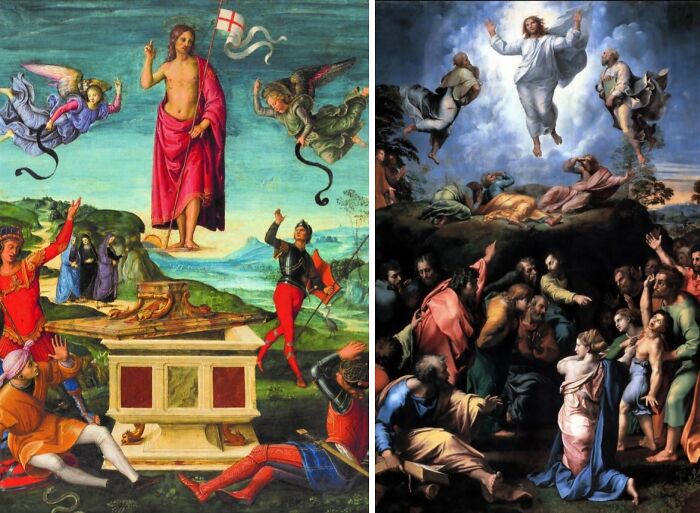
Resurrection of Christ (1499) and The Transfiguration (1520) Raphael's artistic career lasted little more than two decades, yet it transformed the course of the High Renaissance. His early Resurrection of Christ (c. 1499), painted when he was around 16 years old, already demonstrates an extraordinary command of composition and graceful figures, reflecting the influence of his father Giovanni Santi and his early teacher Pietro Perugino. Just over twenty years later, Raphael's final masterpiece, The Transfiguration (1518–1520), pushed his art to new heights. Combining the radiant scene of Christ's Transfiguration with the dramatic healing of a possessed boy below, the painting unites divine serenity with intense human emotion in a single composition. Left unfinished at Raphael's untimely passing at the age of 37, it was placed beside his coffin during his funeral before being completed by his pupil Giulio Romano. Today, it is regarded as both the culmination of Raphael's career and one of the defining masterpieces of the Italian Renaissance.
© Photo: The Cultural Tutor
#15 Salvador Dalí
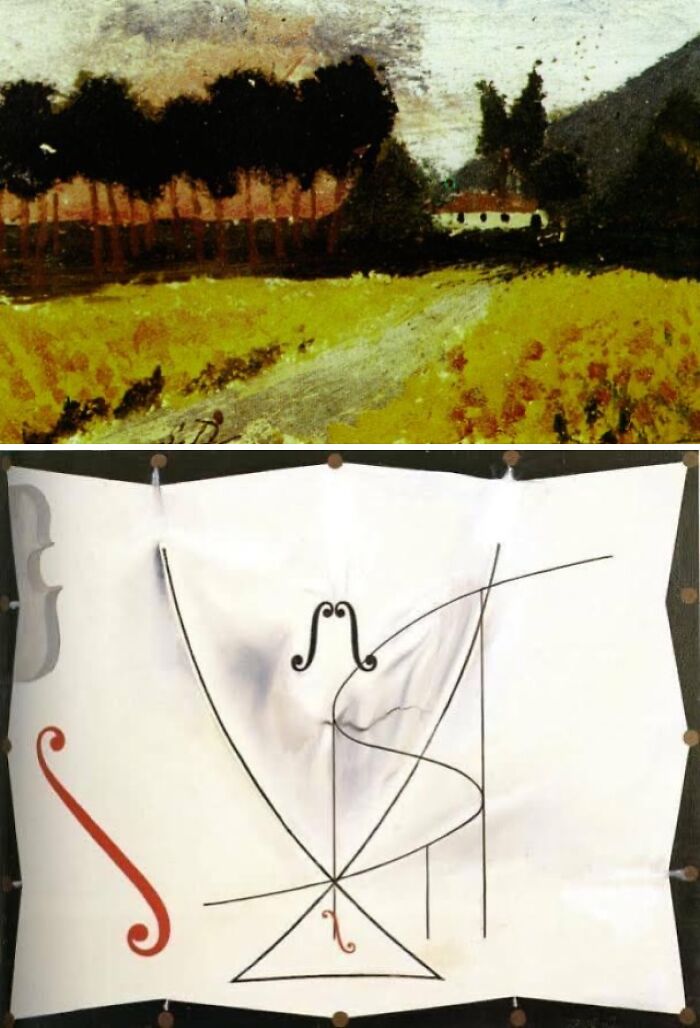
Vilabertran (1913) and The Swallow's Tail (1983) Salvador Dalí's career stretched across an extraordinary seven decades, from precocious teenage landscapes to mathematically inspired abstractions. His earliest known oil painting, Vilabertran (1913), was completed when he was just nine years old, depicting the countryside near his hometown of Figueres in northeastern Spain. Though modest and traditional in style, it already reveals his remarkable observational skills and fascination with landscape. Seventy years later, Dalí completed The Swallow's Tail (1983), the final painting of his career. Inspired by the mathematical principles of René Thom's catastrophe theory, the work replaces the dreamlike imagery of his Surrealist years with elegant curves, geometric forms, and scientific concepts. It stands as a fitting conclusion to a lifelong career defined by constant experimentation, demonstrating that Dalí remained as fascinated by new ideas in his final years as he had been in childhood.
© Photo: The Cultural Tutor
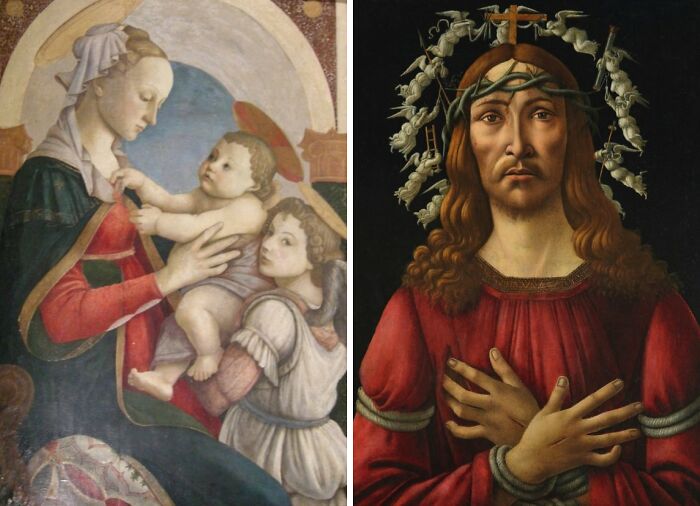
#16 Sandro Botticelli
Virgin and Child with an Angel (1465-1467) and The Man of Sorrows (1500-1510) Sandro Botticelli's career spans one of the most dramatic shifts in Renaissance art. His early Virgin and Child with an Angel (c. 1465–1467), painted in his early twenties, reflects the influence of his teacher Fra Filippo Lippi, with its delicate figures, graceful lines, and serene religious devotion. It already hints at the elegance that would later define masterpieces such as The Birth of Venus and Primavera. More than three decades later, Botticelli's The Man of Sorrows (c. 1500–1510) reveals a profoundly different artist. Created after the political and religious upheavals that swept Florence, including the fiery sermons of Girolamo Savonarola, which deeply affected Botticelli, the painting abandons mythological beauty in favor of an intensely emotional image of the suffering Christ. Rich in symbolic details and inscriptions, it is widely regarded as one of Botticelli's final masterpieces, offering a powerful glimpse into how his artistic vision evolved from the refined optimism of the early Renaissance to a deeply spiritual and introspective style.
© Photo: The Cultural Tutor