
I know most social entrepreneurs have their heads down looking after business at the moment – even so I was surprised, when I got a chance to look up for a couple of hours myself this weekend, that there was almost no comment on the relationship between social enterprise and the wider economic crisis.
This was the weekend after the governor of the Bank of England warned that we were living through the most serious financial crisis since "at least the 1930s, if not ever". Every day some expert talks about the crisis – even the end – of capitalism. You don't have to look far to find disapproval heaped on business models based on greed and exploitation. Like the way the private equity fund Blackstone structured the relationship between Southern Cross and its main landlord NLP – both of which Blackstone owned – not to provide better care, but to extract more and more money. Or how the once exemplary ethical Quaker company Cadbury was sold off by fund managers who in "maximising shareholder value" were "just doing their job", and who probably really believe that this narrow financial focus is what drives competition and growth.
And then there are the banks.
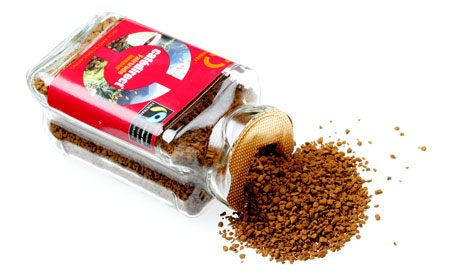
But the voice of social enterprise is noticeably absent from this chorus of disillusion. Surely now is the moment to confidently communicate our message: not that there is some half-baked idealistic alternative to capitalism out there somewhere, but that we are proving day in and day out that business models based on ethical behaviour and social impact work better than business models based on greed and exploitation. Social enterprises such as Cafédirect consistently take market share from multinational companies that devote themselves exclusively to growth and profit. Ethical investment funds regularly outperform funds that deliberately set out to invest only for maximum return. We can do business better than business. And we do it, to paraphrase Cameron, not despite being ethical, but because we are ethical. But where is this message in the media hubbub? Where is it even in our own blogs and networks?
I have a long history in social enterprise. I remember the Thatcher years when every door seemed closed against us – years whose blind belief in unregulated markets set many of the seeds of the financial world meltdown we are now experiencing. I really believe that we have a historic opportunity here and now that has not existed before. The current crisis has already all but destroyed the 30-year free-market free-trade orthodoxy; Ed Miliband is openly looking for a fairer and more balanced form of capitalism; the powerful new social forces of environmentalism, anti-globalisation (or, if you're in middle-England, localism), and above all the internet, are shaping a post-industrial revolution that stacks the cards in our favour. The new paradigm has to be business that is locally and environmentally responsible, and that fits like a glove the collaborative-community business models made possible by new technology.
Where are the exemplars of this new paradigm? It feels like the stage is set and the spotlight waiting for the star to walk on. So why are social entrepreneurs still hanging back in the wings, not quite sure it's really us they want?
Geof Cox is a freelance social enterprise developer, working throughout the UK and also Eastern Europe & Eurasia on the transformation of public and voluntary sector services to social enterprise.
This content is brought to you by Guardian Professional. To join the social enterprise network, click here.





.jpg?w=600)



