His social media reads like a saffron scrapbook. A picture with Yogi Adityanath. A Modi birthday wish. His new film marks the Sangh centenary. His character declares his RSS faith: “Swayamsewak ke dil mein shunka nahi, Shankar baste hain.” Both in reel and real life, Sanjay Dutt is blending fine with the saffron.
Except: his father was a five-term Congress MP who spent his life bridging communal divides. His sister was a Congress MP. He himself contested on a Samajwadi Party ticket. He once told a rally that police tortured him because his mother was Muslim. He even got convicted for an AK-56, hand grenades, and a 9mm pistol passed on to him through the Dawood Ibrahim network.
If Sanjay Dutt can go saffron, anyone can. Which is exactly what makes him the perfect emblem of what has happened to Bollywood.
He is not alone. Not even close.
On Modi’s 75th birthday last year, just like his 70th birthday five years ago, all three Khans, along with several Bollywood A-listers, showed up online to sing his praises. Shah Rukh. Salman. And Aamir – the same Aamir Khan who was once told to “go to Pakistan” for questioning rising intolerance. Their tributes were amplified across Doordarshan, MyGov India, and All India Radio. Arjun Rampal, who once suggested IIFA should be held once in Pakistan – three years after the 26/11 attacks – now says acting in Dhurandhar felt like “taking revenge for the Mumbai attacks”.
Something has happened to Bollywood. An industry that gave India Garm Hava, Ardh Satya, and Rang De Basanti now churns out coordinated birthday tributes and a procession of films – The Kashmir Files, The Kerala Story, The Sabarmati Report – whose politics are indistinguishable from BJP campaign material.
On closer look, one reading of events suggests it is the result of a sustained effort to bring one of the world’s most influential cultural industries to heel. The meetings began in 2018. The films followed. And certain names keep appearing at nearly every turn.
This report examines patterns in Indian cinema’s relationship with political power, drawing on public records, film releases, social media archives, and interviews with industry figures speaking on and off the record. It documents meetings and associations as a matter of record; it does not assert that every individual present at those meetings endorsed a coordinated agenda. Several films that fit the broader pattern, including Toilet: Ek Prem Katha and Padmaavat, predate the meetings described here. Responses sought from named individuals and entities are noted in the text.
This is the first installment of a three-part series tracing how the world’s most-watched film industry also became one of its most politically compliant over the past few years. The second part will focus on the agents ostensibly driving the shift. The final will track the network connected to it all.
The meetings
It begins, as so much does, with access.
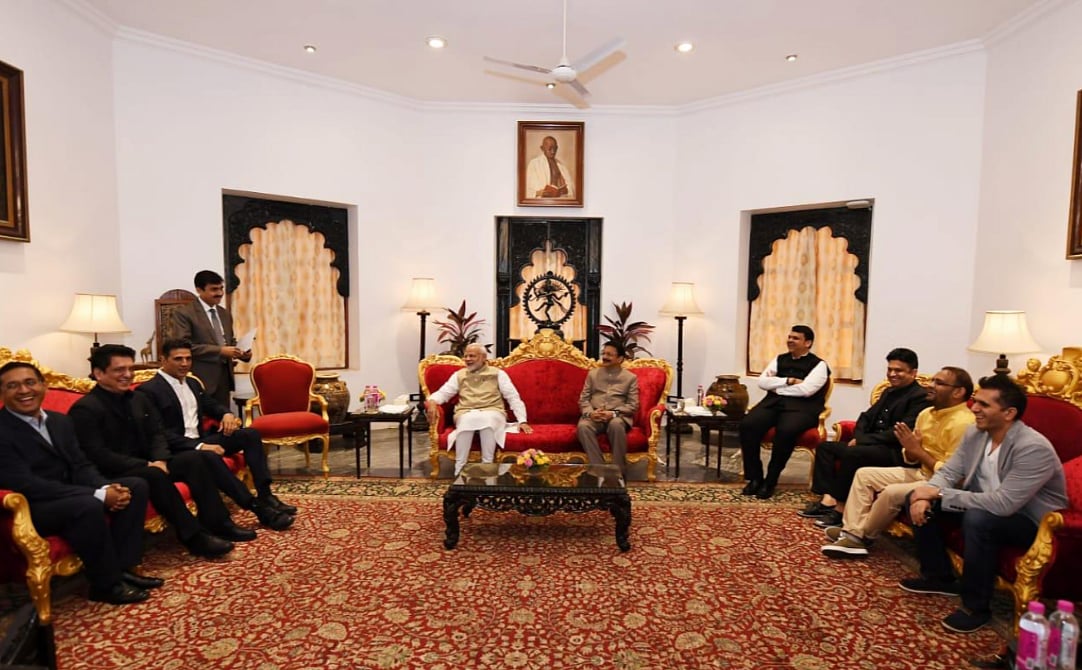
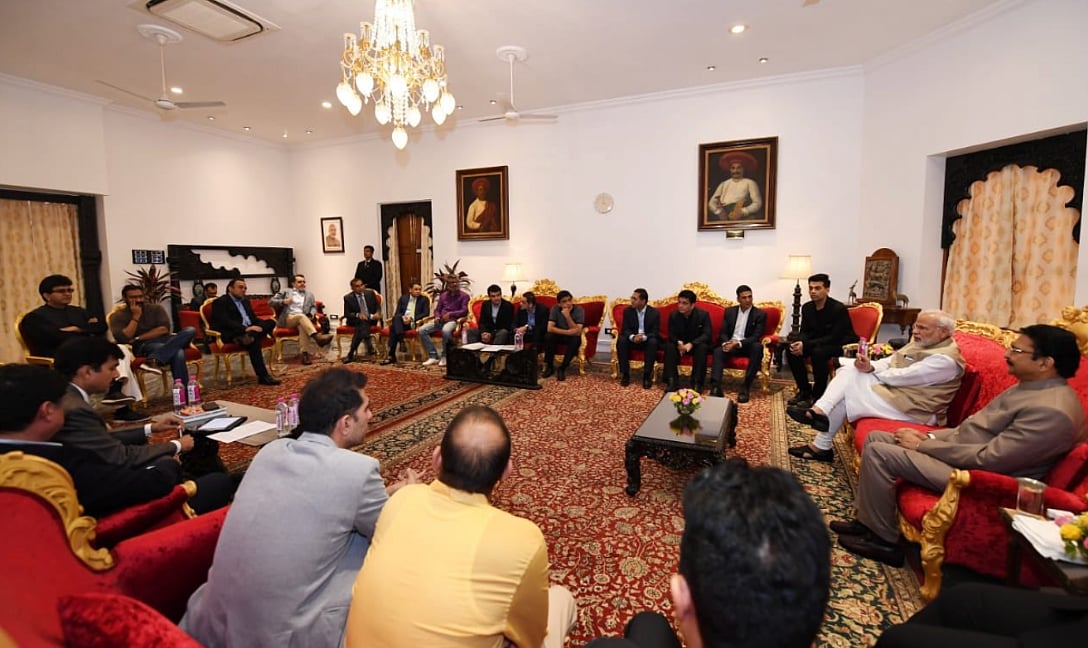
On December 18, 2018, Prime Minister Narendra Modi held court in the presidential suite of Raj Bhavan, Mumbai. Beside him were Maharashtra Governor C Vidyasagar Rao and Chief Minister Devendra Fadnavis. Across the room sat the upper tier of Hindi cinema: Akshay Kumar, Ajay Devgn, Karan Johar, Prasoon Joshi, Bhushan Kumar, Sajid Nadiadwala, Ronnie Screwvala, Nitesh Tiwari, and others.
Also present: Hiren Joshi, the Joint Secretary in the Prime Minister’s Office widely described in political and media circles as Modi’s “eyes and ears” – a man believed to have shaped pro-government messaging across television, digital platforms, and, by some accounts, newsrooms. His rumoured exit from the PMO in December last year generated considerable buzz. His presence at a Bollywood summit was noted but unexplained.
More intriguing still were two men largely unknown to the public: a lawyer named Hitesh Jain and a producer named Mahaveer Jain. Neither had an obvious reason to be in that room.
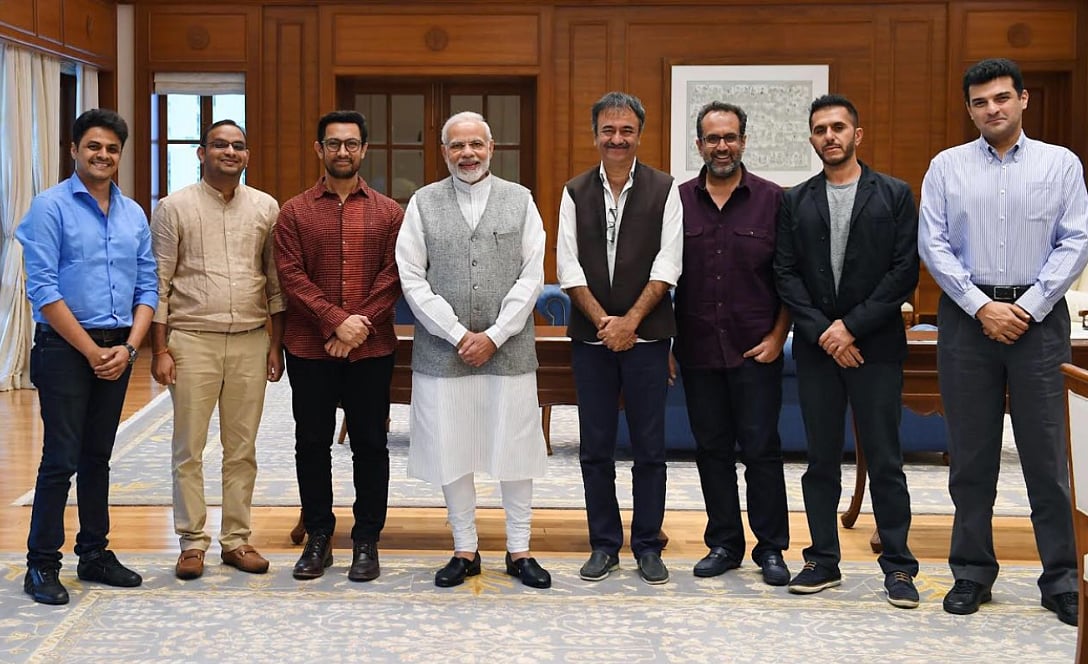
Mahaveer Jain had also attended a smaller meeting a couple of months earlier in Delhi – alongside Aamir Khan, Rajkumar Hirani, Ritesh Sidhwani, and others – where another guest was Maulik Bhagat, son of a Gujarat BJP leader and long-time Modi associate.
Then in January 2019, a private aircraft flew a younger cohort to Delhi: Ranbir Kapoor, Ranveer Singh, Alia Bhatt, Vicky Kaushal, Varun Dhawan, Bhumi Pednekar, Ayushmann Khurrana, Rajkummar Rao, Sidharth Malhotra, Karan Johar, Ektaa Kapoor, Rohit Shetty. Mahaveer Jain and Hitesh Jain were with them. The stated agenda: how the film industry could contribute to nation-building.
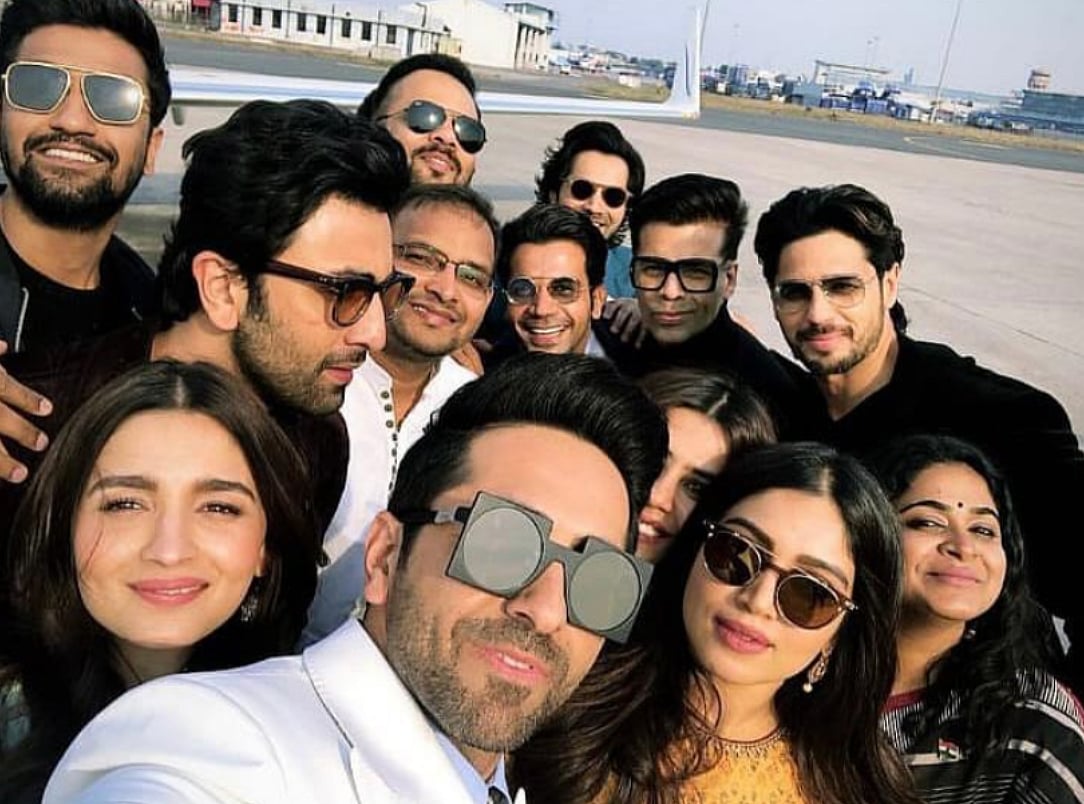
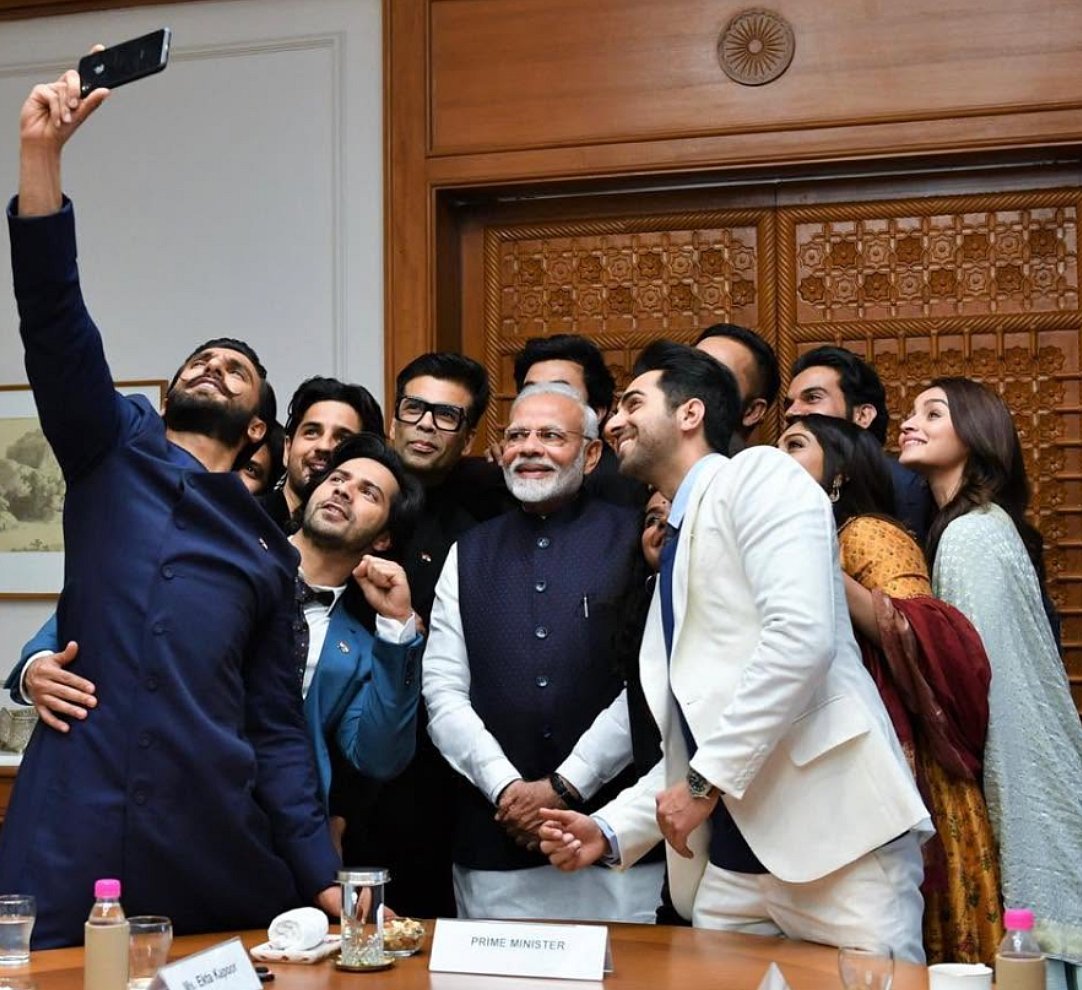
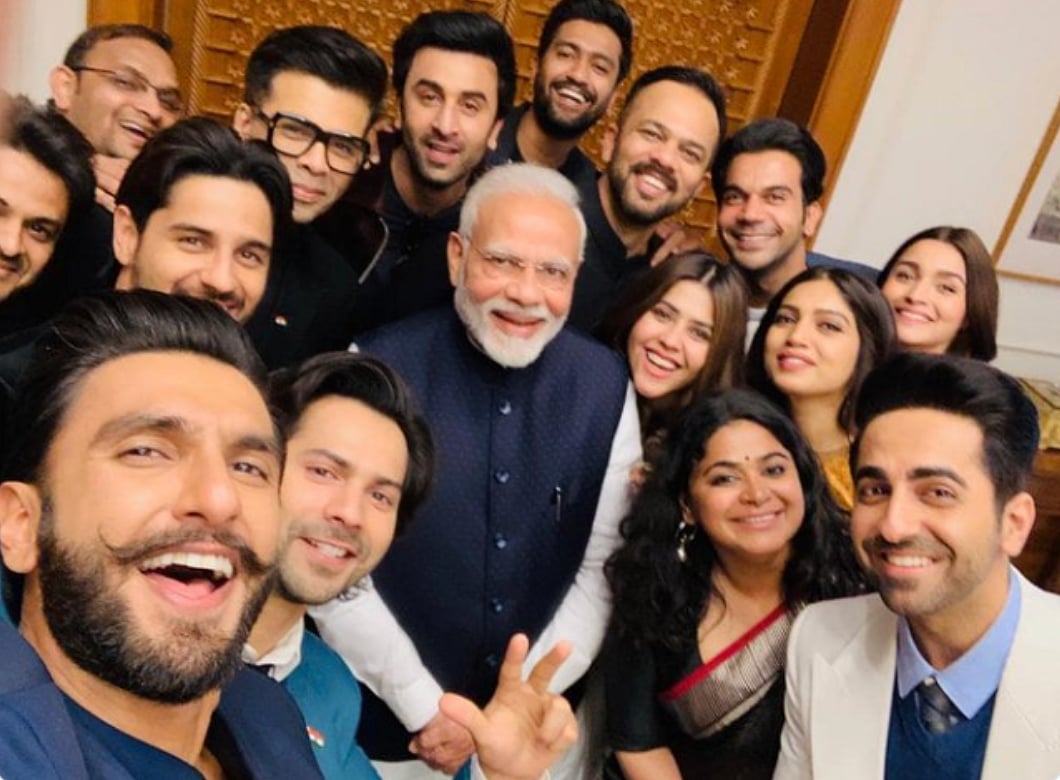
The meeting was held one day before the release of Uri: The Surgical Strike.
The group selfie that followed was dubbed the “selfie of the year” and saturated social media. Rohit Shetty captioned his post “Prime Minister’s squad”. Ranveer Singh referenced a “Jadoo Ki Jhappi”. Vicky Kaushal posted a video promoting Uri alongside the meeting photographs, and the same video was tweeted the same day by BJP IT cell head Amit Malviya, with the caption: “Have we ever heard film stars chanting ‘Jai Hind’ like this before? This is what has changed in four years!”
Nine days after the meeting, Modi inaugurated the National Museum of Indian Cinema in Mumbai on January 19. He opened with his now-famous Uri callback – “How’s the Josh?” – and urged the industry to create stories celebrating India’s freedom struggle. The Jains were present.
In March 2019, just a month before the elections, PM Modi, through his Twitter handle, tagged several Hindi film actors and urged them to spread awareness about voting.
Months later, amid the general election, Akshay Kumar conducted his “apolitical” interview. Lyricist and writer Manoj Muntashir Shukla released a song praising PM Modi, tagging Mahaveer Jain on Twitter along with others.
The BJP stormed back to power with a landslide.
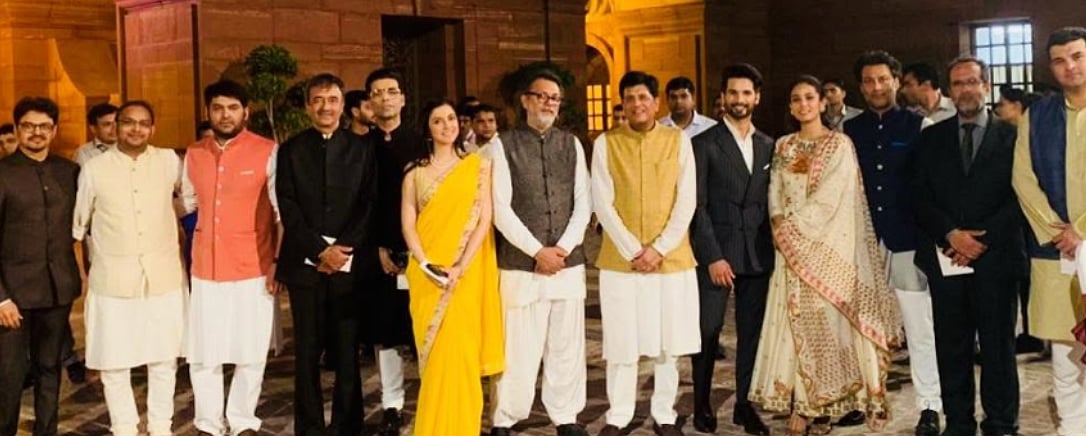
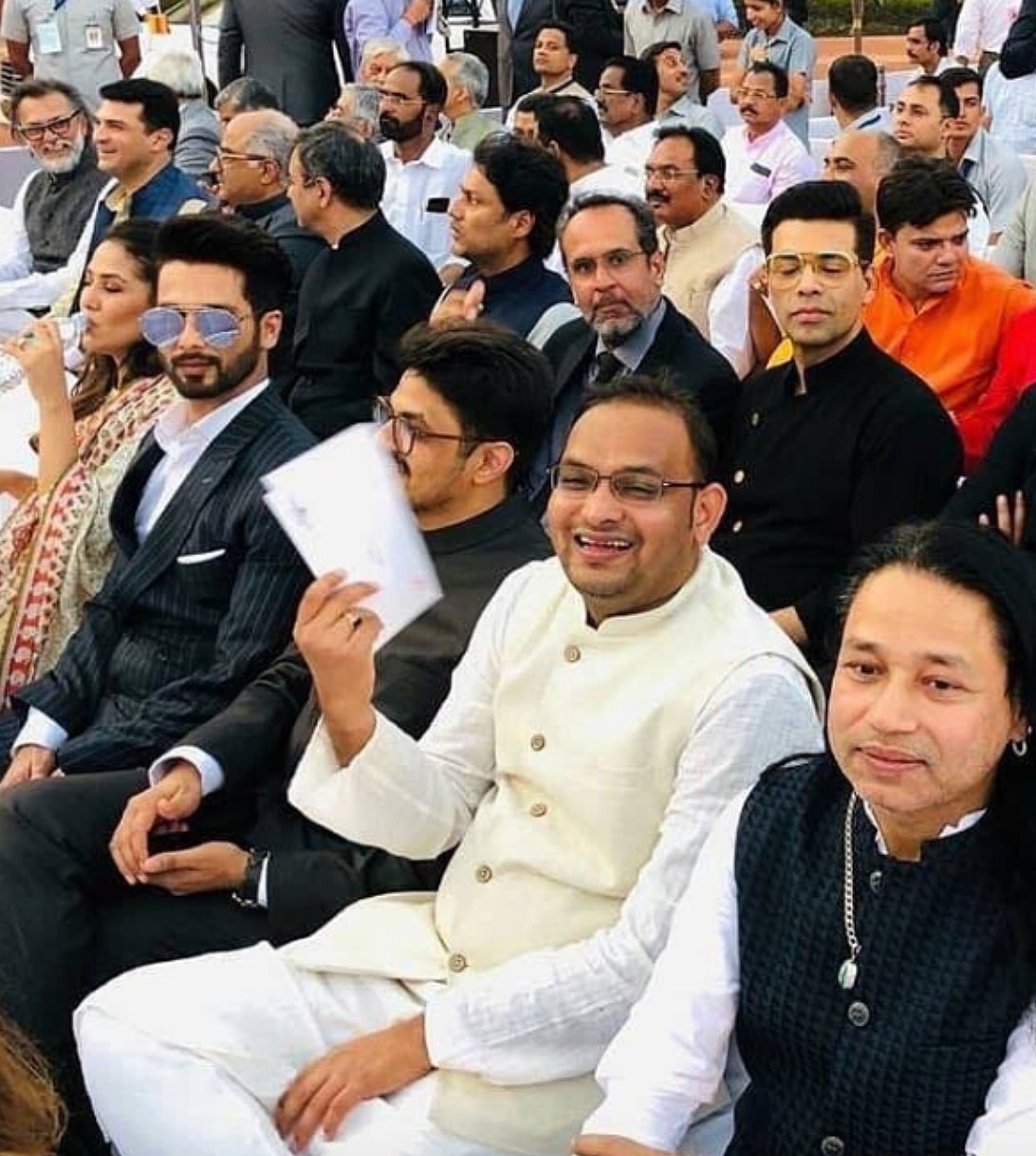
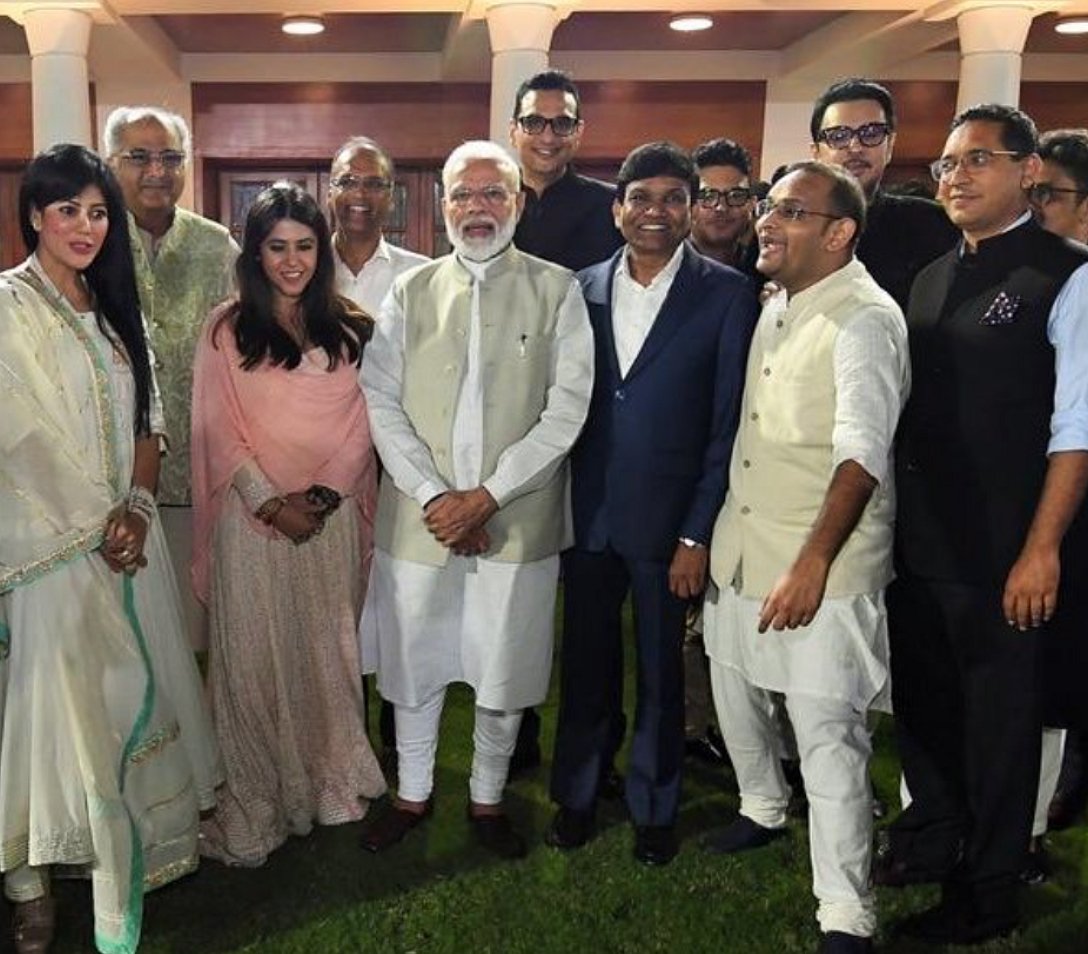
In October 2019, Modi invited the industry to his Delhi residence for the “Change Within” initiative, timed to Mahatma Gandhi’s 150th birth anniversary. Rajkumar Hirani had directed a short film featuring Shah Rukh Khan, Salman Khan, Aamir Khan, Alia Bhatt, Kangana Ranaut, and others reciting Gandhian teachings. The credits carried special thanks to Mahaveer Jain and Maulik Bhagat. Hitesh Jain was present. Mahaveer Jain personally received the arriving celebrities.
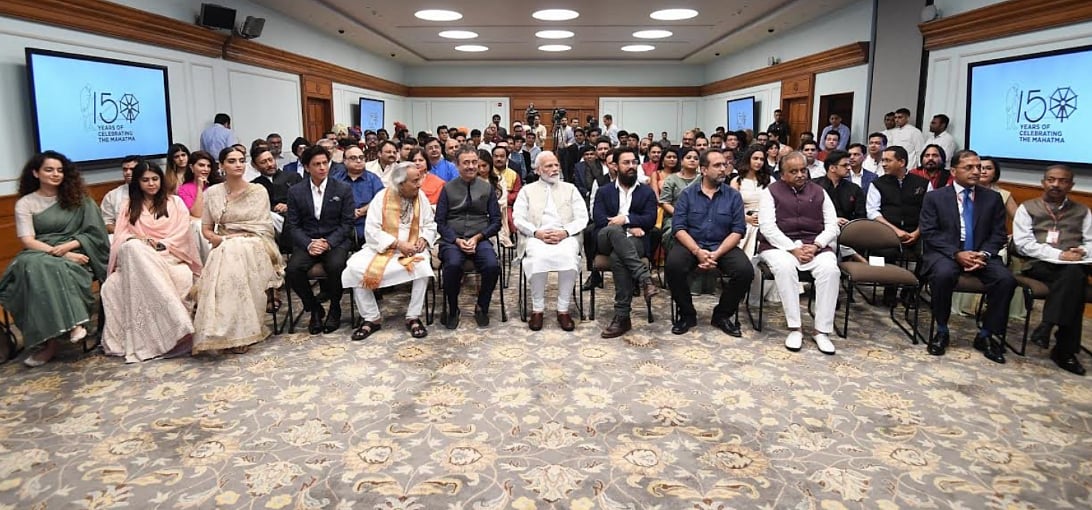
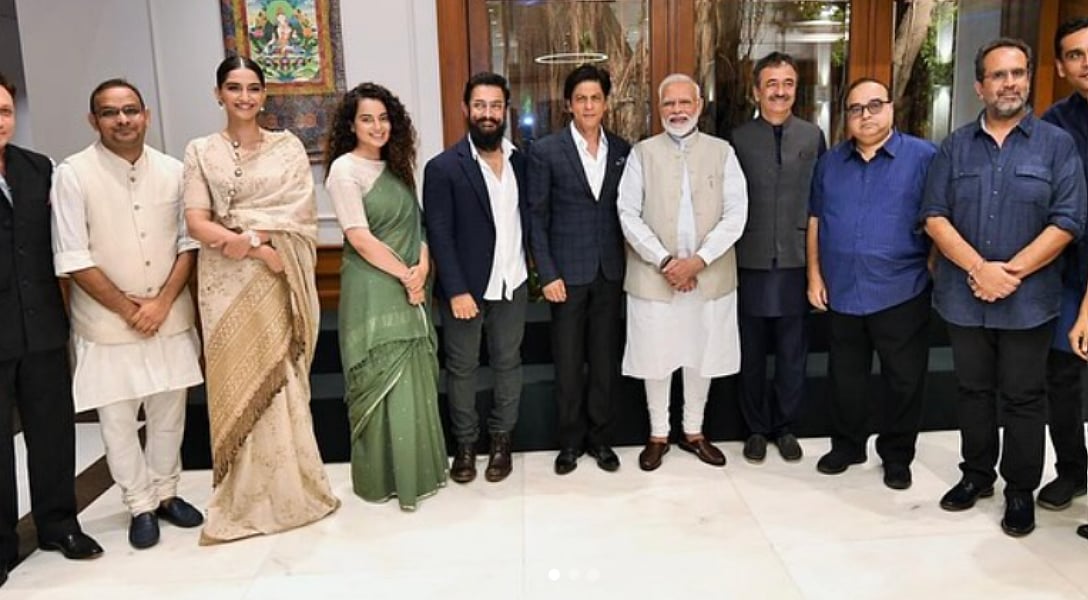
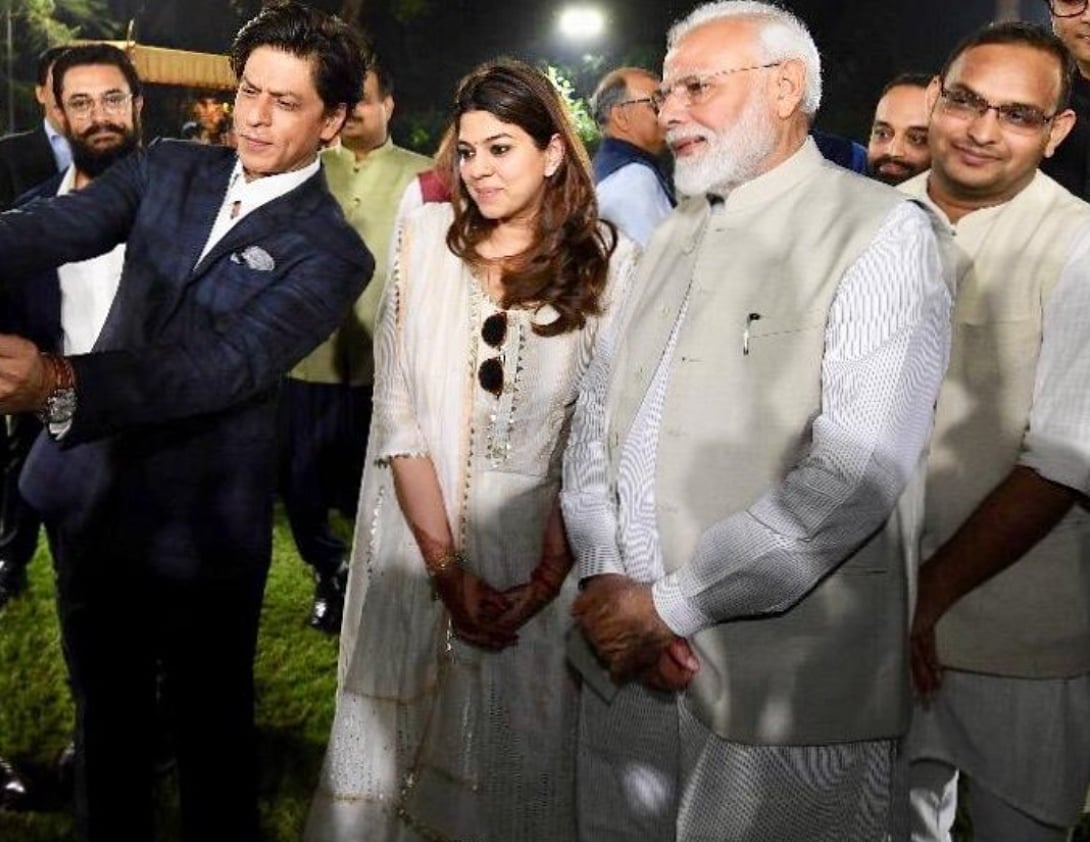
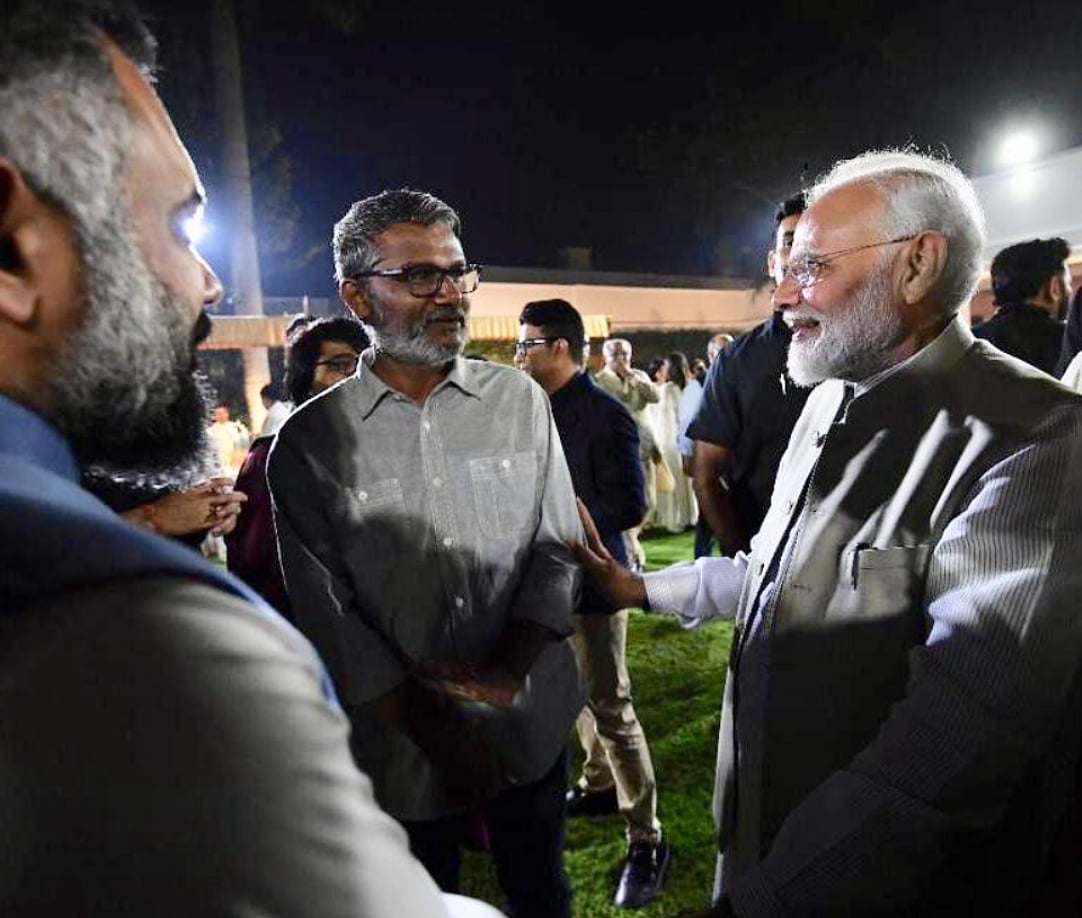
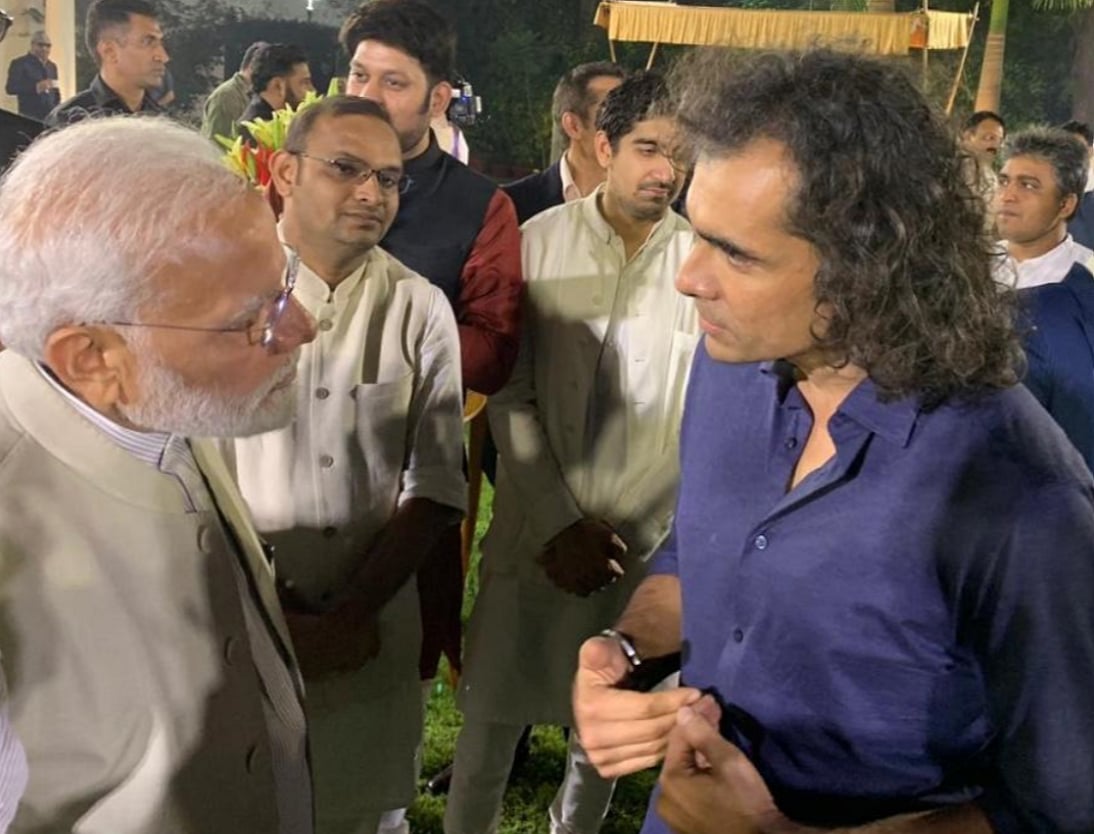
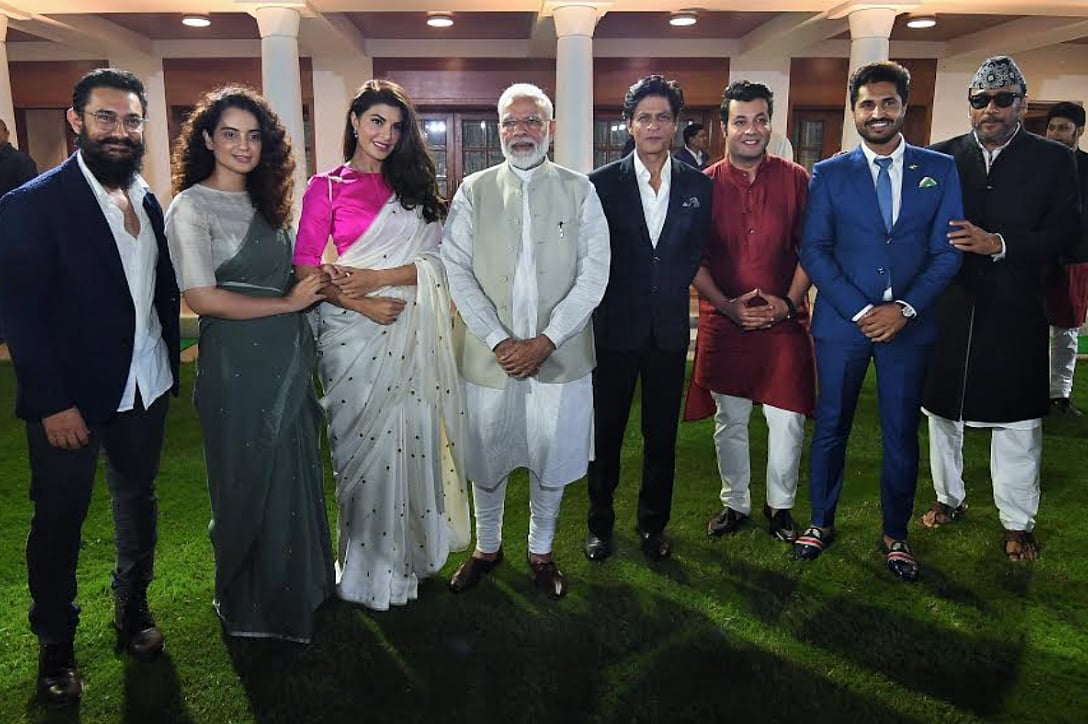
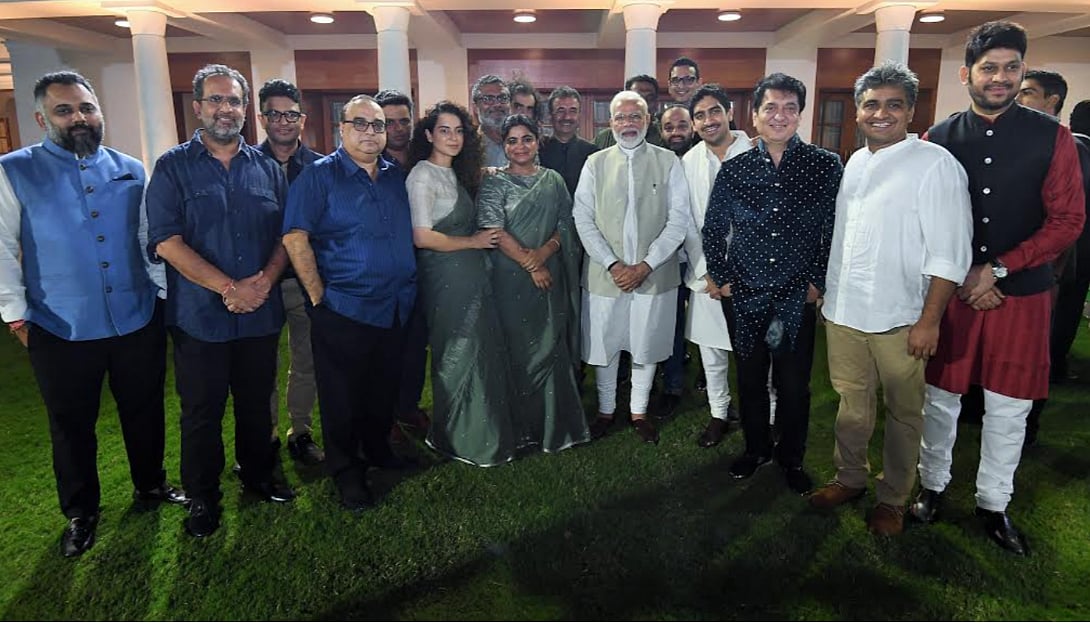
Like the January event, actors shared photographs on social media. Some praised the initiative. The PMO amplified the moment – the BJP and media chipped in. The PM urged filmmakers to tell inspiring stories about Gandhian principles, India’s freedom struggle and post-Independence journey.
What followed bore little resemblance to that mandate, but it moved fast.
In December 2019, Bhansali Productions announced a film based on the Balakot airstrike in a tweet tagging both the Prime Minister’s Office and Defence Minister Rajnath Singh. It stated that Sanjay Leela Bhansali, Bhushan Kumar, Mahaveer Jain, and Pragya Kapoor had come together to back an Abhishek Kapoor film paying tribute to the “sons of India” and their “never-say-die spirit”.
In February 2020, Ektaa Kapoor and Karan Johar announced Siachen Warriors, backed by Mahaveer Jain, Nitesh Tiwari, and Ashwiny Iyer Tiwari. Kapoor described it as a “path-breaking” film based on a true story, celebrating the courage of Indian soldiers.
By Gandhi Jayanti 2020, Karan Johar tweeted at Modi, tagging Rajkumar Hirani, Ektaa Kapoor, Sajid Nadiadwala, Rohit Shetty, Dinesh Vijan, and Aanand L Rai. He wrote that they were “humbled and honoured” to curate stories celebrating 75 years of independence under “Change Within”. He described it as the fraternity’s effort to celebrate India’s “valour, values, and culture”.
In December 2020, Johar again tagged the Prime Minister while announcing that Rajkumar Santoshi, Dinesh Vijan, and Mahaveer Jain would come together for a seven-part series on India’s freedom movement. Vijan-owned Maddock Films echoed the announcement, tagging Modi.
Nearly every announcement bore a familiar name: Mahaveer Jain. A producer initially associated with films such as Ram Setu, Uunchai, and Khandaani Shafakhana. But who he is, and what he was doing in the big rooms, is a story for Part 2 of this series.
What the films say
There was a pattern to many of the titles that emerged. The Kashmir Files. The Kerala Story. The Sabarmati Report. Article 370. Bastar: The Naxal Story. 72 Hoorain. Dhurandhar. Vaccine War, Tejas. Each built around themes tightly aligned with government messaging. But the ideological drift runs wider than the explicitly political films.
Several films have received tax exemptions over the years.
Gandhi Godse – Ek Yudh, directed by Rajkumar Santoshi, imagines Gandhi surviving his assassination and debating Nathuram Godse in prison. One of its dialogues: “Gandhi made us kneel before the Pakistanis who killed our Hindu brothers.” A character playing Godse points to a map of undivided India and declares: “Yeh hai hamara Hindu Rashtra, ek din yahan bhagwa lahrayega.”
The Kerala Story advanced the “love jihad” narrative – Muslim men conspiring to convert Hindu women. Its producer Vipul Amrutlal Shah later told the World Hindu Congress in Thailand: “We wouldn’t have been able to make this film without the guidance and support of the RSS.”
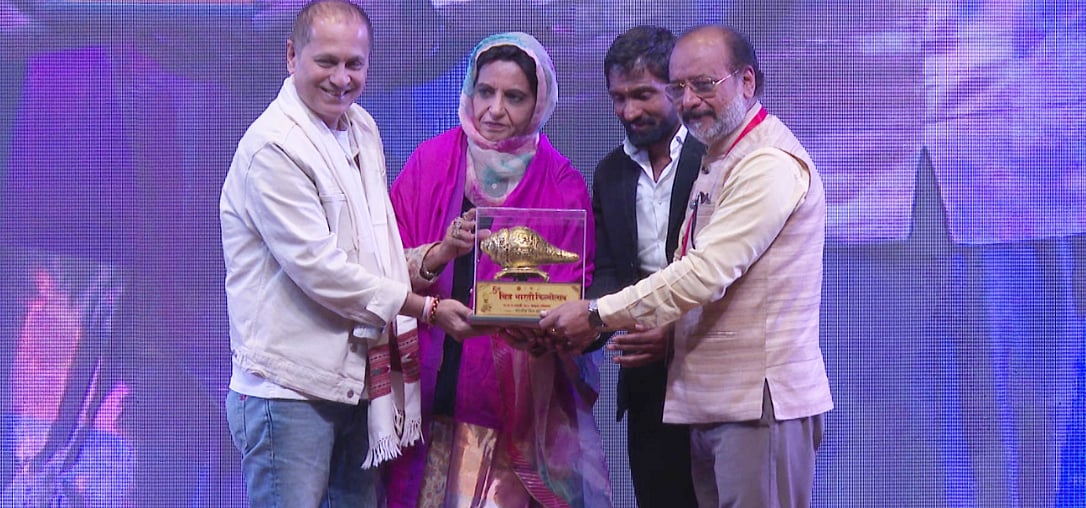
The RSS film division Bhartiya Chitra Sadhna reportedly supported the ideation and creation of this film, apart from others such as Samrat Prithviraj, Bastar: The Naxal Story, and The Kashmir Files.
The Sabarmati Report dramatised the 2002 Godhra train burning as a pre-planned conspiracy – the theory advanced by the Nanavati-Mehta Commission, which was appointed by the Gujarat government then led by Modi, and which also gave Modi’s administration a clean chit on the subsequent riots. The U C Banerjee Commission, appointed by the Ministry of Railways, found the fire was accidental though its report was quashed by the Gujarat High Court. The film portrays journalists who reported from Gujarat during the riots negatively in bad light. Modi publicly praised the film, saying “the truth is coming out”. A special Parliament screening was attended by Amit Shah and Rajnath Singh. BJP governments organised screenings in their states. The film released days before the 2024 Maharashtra assembly elections. Ektaa Kapoor later thanked Modi on social media, saying his words proved they were “on the right path”.
The Kashmir Files was called “propaganda” and “vulgar” by Nadav Lapid, the jury president at the International Film Festival of India. Modi described it as an important film revealing a suppressed truth and urged BJP MPs to watch it. Several BJP-governed states made it tax-free.
Brahmastra: Part One – Shiva, directed by Ayan Mukerji and produced by Karan Johar under Dharma Productions, positions Hindu cosmology at the centre of a mainstream blockbuster. The film received national awards. Singham Again, directed by Rohit Shetty, borrows its structure from the Ramayana. It also includes the line: “Patthar marna old-fashioned hai, yeh naye Bharat ka naya Kashmir hai” – “Naya Bharat” being a phrase closely associated with the Prime Minister. Both films sit at the softer end of the spectrum, but they reflect how the ideological frame has expanded.
Several such films have been given tax-free status by either BJP-governed states or union territories, including Article 370, Samrat Prithviraj and Dhurandhar. The prime minister has openly praised or promoted them.
What isn’t getting made
Punjab 95, directed by Honey Trehan and produced by Ronnie Screwvala, is based on the life of Jaswant Singh Khalra – a bank employee who documented roughly 25,000 alleged extrajudicial killings by the Punjab Police during the militancy years, and who was abducted from his Amritsar home by police in 1995, then tortured and killed. The film starred Diljit Dosanjh and was scheduled for release in January 2023. It was renamed as Satluj and finally premiered on streaming platform Zee5 on July 3 this year. But within two days, it was removed from the platform for Indian viewers.
The CBFC had earlier demanded 127 cuts in the 120-minute film, changed the title from Ghallughara (meaning massacre or genocide in Punjabi), and argued the film could cause law-and-order problems in Punjab. A source close to the filmmakers told us: “No law-and-order issues arose in Kashmir during The Kashmir Files, or in Gujarat during The Sabarmati Report. But CBFC claimed Punjab would be affected. The judge asked CBFC to provide this reasoning in writing, after which they introduced a new argument, that the film could hurt religious sentiments. To rule out this possibility, the film was shown to the Akal Takht and the SGPC, both of which clearly stated that there was nothing in the film that could affect religious sentiments.”
A Mumbai High Court judge, on hearing that the CBFC had shown the film to the Ministry of Information and Broadcasting, was disappointed. As the source recounted: “The judge said that everything else could be set aside – first, on what basis had the film been shown to the I&B Ministry? He said CBFC is an independent body; if the I&B Ministry decides which films pass, there is no purpose in having CBFC.”
The CBFC’s demands included removing the names Indira Gandhi and Jaswant Singh Khalra from a film explicitly about them, replacing “Trilokpuri” (where 1984 anti-Sikh riots took place) with “Khanpuri”, removing references to Punjab Police, Gurbani, the Tricolour, and words including Punjab, Delhi, Amritsar, Canada, 1984, and “sarkar”, the source claimed. The film was reviewed seven times by the revising committee – the law permits two.
When filmmakers submitted to the Toronto International Film Festival, someone allegedly pressured the producer to withdraw. An international studio came on board for a February 2025 international release; again, the producer was made to cancel. Even after Diljit Dosanjh said he wanted his name removed, and even after Trehan himself agreed the film could release without his name in the credits, there was silence, the source said. Then it was released on Zee5 and then removed.
Santosh, directed by British-Indian filmmaker Sandhya Suri, deals with caste, misogyny, Islamophobia, and police brutality. It was selected as the UK’s official entry for the 2025 Oscars and nominated at BAFTA. The CBFC denied it release in India.
Dibakar Banerjee’s Tees – a Netflix-commissioned film about three generations of a Kashmiri Muslim family, spanning 1989, 2019, and 2042 – was completed in 2022 and never released. A source familiar with the shelving said: “Netflix said it would not be appropriate to release it at that time. They said the film was brilliant, but the timing wasn’t right.”
A filmmaker told us, anonymously, “A film like Homebound was also subjected to cuts. The version I saw at Cannes was different from the one released in India due to these cuts. Similarly, Dhadak 2, which is a remake of the anti-caste Tamil film Pariyerum Perumal, was subjected to 16 cuts. While Pariyerum Perumal was a powerful, hard-hitting anti-caste film, Dhadak 2…was softened and became more centred on romance than caste issues.”
Another filmmaker said: “Films like Rang De Basanti, Haider, Udta Punjab would be difficult to make in the present climate. Even Saaransh, where a father fights the system for the remains of his son, might not be possible today…a culture of self-censorship has developed.”
The machinery of compliance
A well-known producer who held senior roles at multiple streaming platforms described receiving a call from a man who identified himself as a BJP leader working in a minister’s office. “He said, ‘We want to make a film with you on the Sabarmati Express.’ When I said I had moved on from my OTT role, he said, ‘Why don’t you make it independently? We have the entire case file ready.’” When the producer cited practical concerns, the caller offered to arrange funding from “Gautam bhai”. When the producer remained resistant, the caller even mentioned the family details of the producer. “He added, ‘The film will be made for Rs 10 crore, and you will earn Rs 100 crore, you’ll be set. Just look at The Kashmir Files.’” The producer deflected by invoking the name of a director known for opposing propaganda. “The moment I mentioned that name, the person backed off.”
A screenwriter said he was approached by an RSS functionary. This RSS functionary suggested the organisation wanted to correct misconceptions through storytelling, the screenwriter said.
An RSS functionary, who has been meeting Bollywood personalities, said “there is no doubt that films and celebrities have a significant influence on society, but that is not what interests the Sangh. Our focus is on bringing good people together.”
“The RSS’s work is to bring together people from all walks of life for activities that serve the national interest. With that objective, we have also been engaging with people from the film industry…We are welcomed much more warmly because people have started recognising the work of the RSS. At the same time, it is wrong to assume that films succeed because of the Sangh. Some people may think so, but for instance, Bengal Files did not do well. A film succeeds only if society accepts it.”
The RSS film division Bhartiya Chitra Sadhna reportedly supported the ideation and creation of The Kerala Story, apart from others such as Samrat Prithviraj, Bastar: The Naxal Story, and The Kashmir Files.
A film writer claimed OTT platforms now issue written instructions to creators: “Remove any references to the government, the ruling party, or anything that could be seen as political commentary. Even the slightest reference is flagged. It has become very difficult to pitch stories.”
A national award-winning filmmaker said: “If you look at the current financing models, 70-80 percent of OTT content is controlled by a handful of production houses. If these platforms are nudged to promote only certain stories, they are likely to comply. After all, they are businesses. If they do not align, they risk taxation issues, ED inquiries, or other forms of pressure.”
Another filmmaker, also a national award winner, pointed to what “seems to be a simple rule”. “Stay in line and you will be rewarded; step out of line, and you will face consequences.”
The birthday machine illustrates the logic. On September 17, 2025 – Modi’s 75th birthday – carefully scripted video messages from Ajay Devgn, Alia Bhatt, Aamir Khan, Shah Rukh Khan, Karan Johar, Vicky Kaushal, and others circulated not just on their personal accounts but across Doordarshan, MyGov India, All India Radio, and ANI. Some messages praised specific government policies. One noted that “Prime Minister Modi’s eyes were teary after the screening of The Sabarmati Report”. T-Series released six tribute songs. Shankar Mahadevan, M M Keeravani, Ricky Kej, and Ajay-Atul contributed compositions. Sonu Nigam and Shankar Mahadevan had already recorded Yeh Mera Hindustan, a Modi promotional song composed by Anu Malik.
A source in the industry said: “Actors are told to post such messages. Whether it’s a high-profile meeting with the Prime Minister or his birthday, they are asked to put it on their social media. It is done politely, but there are constant follow-ups until they do it.”
A prominent producer and director summarised the atmosphere: “Many stars feel they have no option. It is considered better to toe the line than risk attention from the ED or Income Tax Department. Nobody dares to oppose them. This is why many publicly wish the Prime Minister on his birthday or create songs in his praise. This trend is likely to continue.”
Newslaundry sent a questionnaire to every individual and company named in this report. This copy will be updated if a response is received.
The question that remains is who, precisely, is coordinating all of this. Who sits at the centre of the web connecting high-profile meetings, shelved films, birthday campaigns, and government-aligned productions, and how did two obscure men come to be present at nearly every significant moment in this story?
That is for the next part.
Newslaundry is a reader-supported, ad-free, independent news outlet based out of New Delhi. Support their journalism, here.