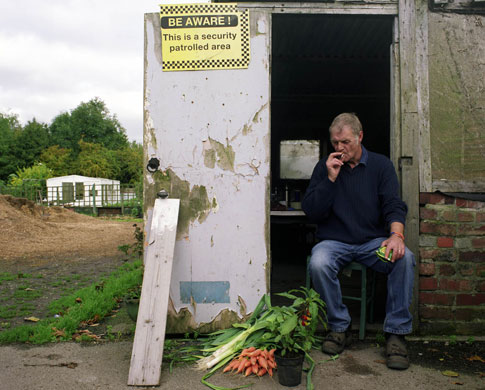
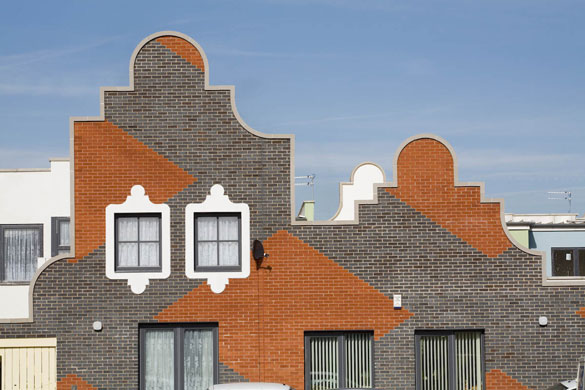
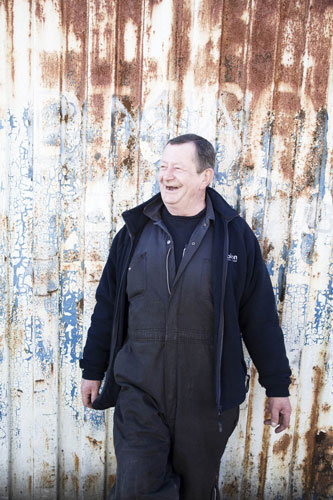
East issue 3, winter 2006: Community activist Bill Booth sits by his allotmentPhotograph: Len GrantEast issue 9, summer 2008: "Ready, hep! Trapeze lessons for the local community are about confidence building and well-being. They are also very photogenic. One participant said: 'When I showed my friends the pictures they wouldn t believe it was me. It's provided inspiration to get in shape and even got me to cut down on my smoking.'"Photograph: Len grantEast issue 4, summer 2006: The first houses to be completed in the 15-year New Islington scheme. Architects FAT, working with residents, produced the most striking facades for social housing ever built in the cityPhotograph: Len Grant
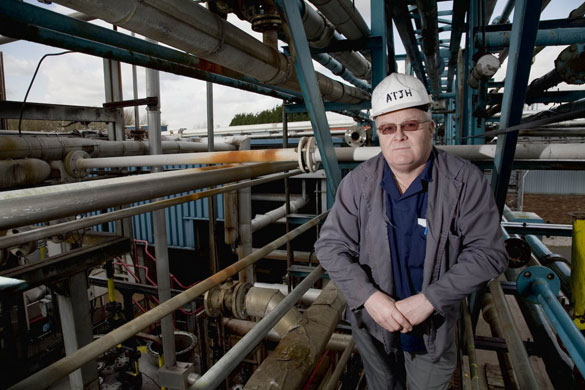
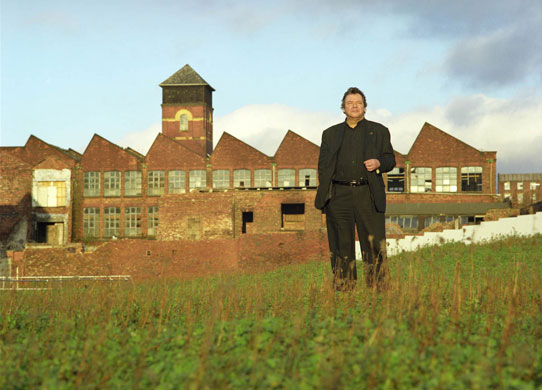
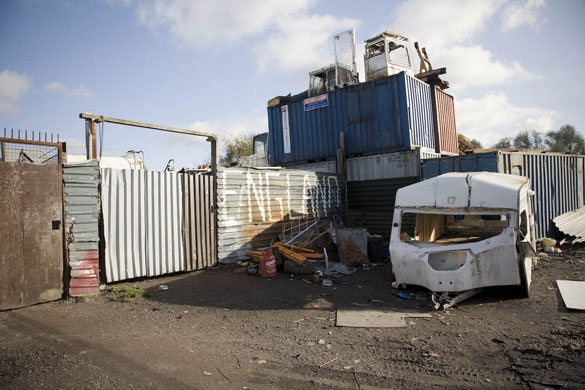
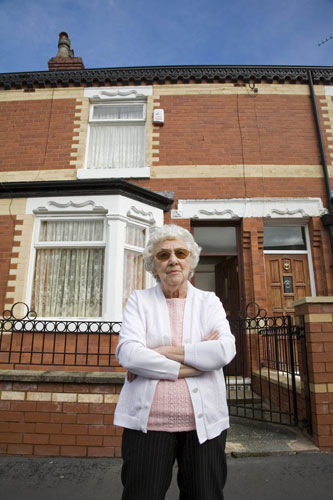
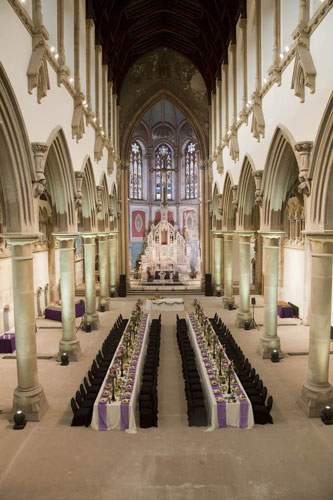
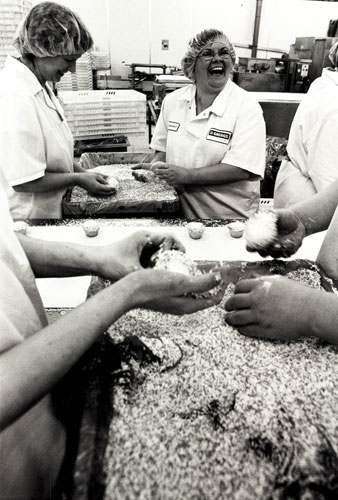
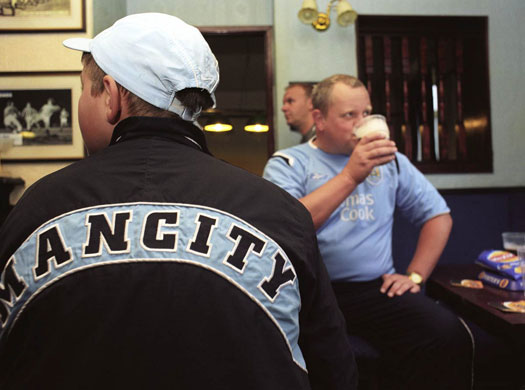
East issue 6, spring 2007: "150 years ago Frenchman Charles Dreyfus established the Clayton Aniline Company (latterly Ciba Speciality Chemicals) to produce industrial chemical dyes. For generations whole families – fathers, uncles, sons, sisters, brothers, found employment there, and listening to the stories of the remaining workers before its closure in 2007, I learnt how much industry contributes socially as well as economically."Photograph: Len GrantEast issue 5, autumn 2006: "For this issue I produced a feature on a new high-tech primary school in Beswick, although there's nothing particularly high-tech about this shot of the pupils enjoying their play area. Today, health and education are a significant part of the holistic approach to regeneration."Photograph: Len Grant"Architect Will Alsop stands on the site of Chips, his first residential scheme in the UK. The Millennium Community Project is an exercise in sustainable development, a mixture of tenures and bold new design. In the summer of 2005 there was little coming out of the ground although there were lots of plans on the drawing board. I started taking portraits of the architects and engineers."Photograph: Len GrantCurrently an industrial backwater in the shadow of the City of Manchester Stadium, planners say Holt Town will become a sustainable, mixed use community of a kind previously experienced only in other parts of Europe.Photograph: Len Grant"The tearaways in the suburb of Gorton used to call her a grass, but 76-year-old Irene Thompson, at only four feet six inches, called herself the human rottweiler. She reported thugs to the police when others were too scared, and for her community spirit she was awarded an MBE. My portrait of her showed a strong, determined woman, and her story has stayed with me for a long time."Photograph: Len GrantEast issue 7, autumn 2007: "The EW Pugin-designed Gorton Monastery sticks up over the surrounding estate like a sore (yet beautiful) thumb. For years it remained derelict, a passive victim of vandalism. I have followed its renovation over the last eight years or so and now, after the commitment of a dedicated team, it has been returned back to the community it once served."Photograph: Len GrantEast Issue 2, summer 2005: "East Manchester's industrial glory days are long gone. Nowadays tourism and leisure come before crank shafts and aero engines, but travelling around the area it is clear that things still get made here, and firms like Rolls Royce and Gregg's the bakers still employ local people."Photograph: Len GrantEast issue 10, winter 2009: "Photographing with no particular plan. That's how I approached a feature on Holt Town. I chose a sunny day, took my camera and tape recorder and wandered around for a few hours, photographing and interviewing the people I came across. It's a great approach: you never know quite what you'll end up with."Photograph: Len GrantEast issue 1, winter 2005: "In 2004 I photographed the demolition of Maine Road football stadium, Manchester City's home in Moss Side for 80 years. I was particularly interested in the economic and social implications of its demise. For the first issue of East I wanted to show that Moss Side's loss had been East Manchester's gain. Local businesses, especially the pubs, were enjoying having Man City back over on this side of town."Photograph: Len GrantEast issue 9, summer 2008: Once a contaminated dumping ground, Clayton Vale is now a much-used wildlife oasis. As I photographed her among the buttercups, Chloe Mundy said to me: "Me and my dad bring chairs and a barbecue in the holidays and camp for the whole day. We have a special place that no one else knows about. Then we find some secret passages through the woods with all the flowers. We love it here. I've seen a heron and a kingfisher and loads of butterflies."Photograph: Len Grant
Sign up to read this article
Read news from 100’s of titles, curated specifically for you.