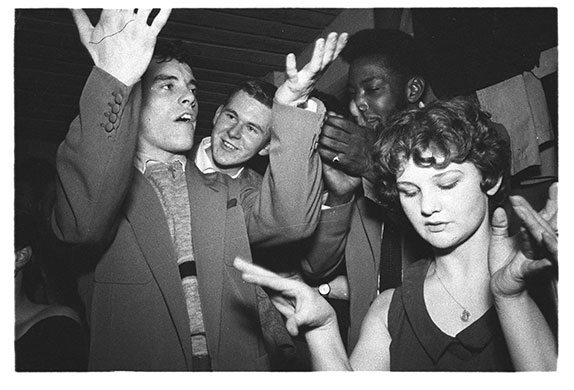
Dancers in the Cat's Whisker, a popular coffee bar in London's West End, devised a means of dancing using hand gestures because there was no space to manoeuvre.
Photograph: Ken Russell/TopFoto
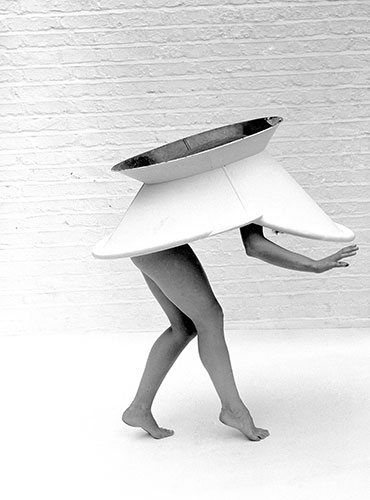
One of Russell’s many dancer friends who hung out at the Troubadour coffee bar and came to his studio to pose for a series on ‘alternative uses of the hip bath’.
Photograph: Ken Russell/TopFoto
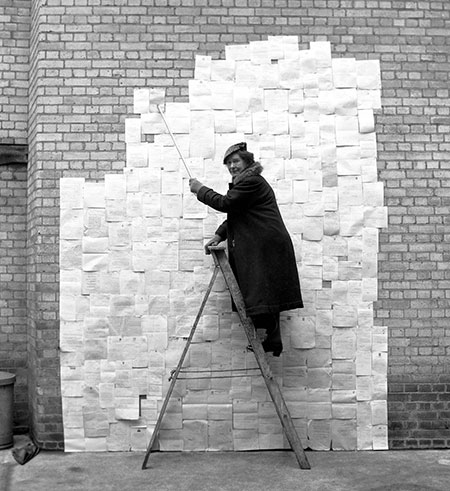
From a series entitled Zora the Unvanquished. The original caption read: ‘For 30 years, 72-year-old Zora Raeburn wrote novels and sent them to publishers. With not one acceptance, she never despaired. In her flat near the British Museum in London, where she let two rooms to pay the rent, she typed innumerable letters to publishers, libraries, film studios and radio producers. She begged on her cello in London streets then took a job as a shorthand typist to supplement her old age pension and published one of her books herself.’ Photo shows Zora with a montage of the rejection letters she received from publishers.
Photograph: Ken Russell/TopFoto
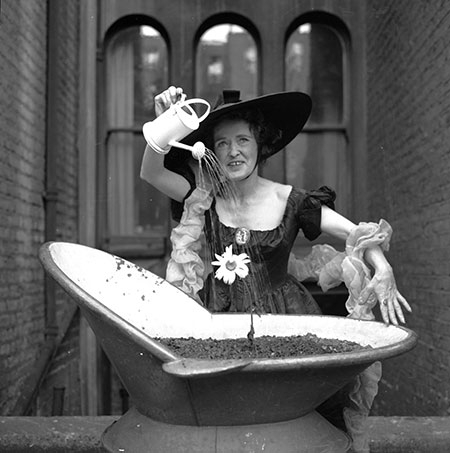
Lady in costume watering her flower in a hip bath window box.
Photograph: Ken Russell/TopFoto
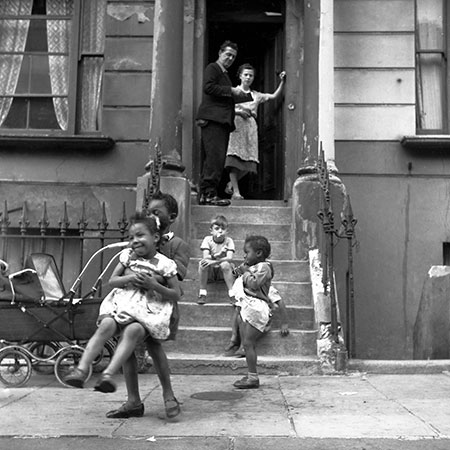
This photo was taken six years after the arrival of the Empire Windrush and the first Jamaican emigrants to the UK.
Photograph: Ken Russell/Topfoto
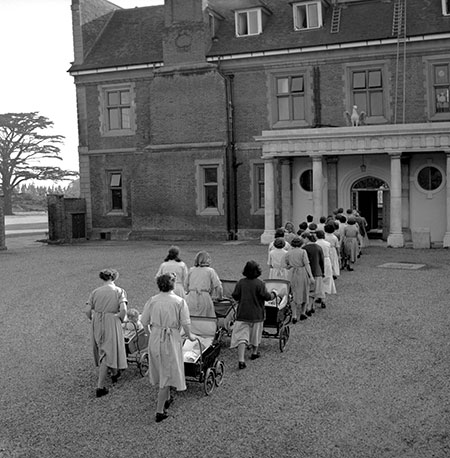
From the original caption: ‘Scenes inside Hill Hall, a women's open prison. Girls are given work to do in the gardens and the chicken runs and left to do it unsupervised, providing a moral challenge. Women with babies feed, bathe and settle them down while one acts as babysitter for the day. Some work in the shop or the laundry. Lunch is at 12 and at one, prisoners, staff and babies in prams walk in a crocodile through the surrounding lanes. There are periods of relaxation in the Great Hall or Library.’
Photograph: Ken Russell/TopFoto
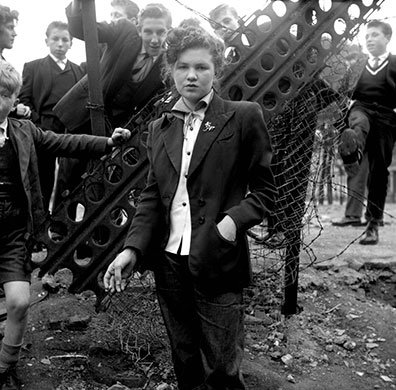
From the The Last of the Teddy Girls. This image shows 14-year-old Jean Rayner in the exploratory stage of Teddyism.
Photograph: Ken Russell/TopFoto
Photograph: TopFoto