It has been determined that we've been around for 4.5 billion years, Earth the only habitable planet in the solar system.
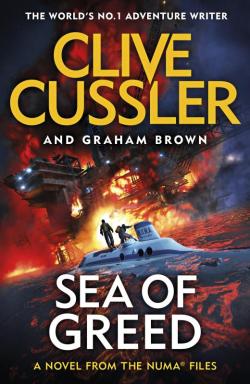
Sea Of Greed by Clive Cussler and Graham Brown Michael Joseph 402pp Available at Asia Books and leading bookshops 595 baht.
The moot question is: how much longer? The human population is rising out of control. The natural resources are diminishing. Water and air are being polluted. Earthquakes, tsunamis, drought and famine aren't uncommon.
Not to mention world wars and pandemics, the return of the Ice Age and the disappearing ozone layer, astrologers' predictions and alien invaders. The possibilities for global disaster are many, and we try not to think about them.
Yet they are grist for the novelist's mill. They can't resist revving up their imaginations to build stories around global catastrophes. Famed Yank author Clive Cussler does so in Sea Of Greed. Which one does he zero in on? Oil. It's the lubricant that keeps everything going. Wood and coal served their purpose. Wax candles won't run machinery. Solar heat and atomic power can't drive cars or trucks.
What is required is an alternative form of energy. And according to this story, super cells have been developed that do everything oil does without noise or air pollution. And they are much smaller in size. Of course, the head of the company about to offer it won't sell it cheap.
However, the US president smells a rat when told the sea of oil under us is drying up. He sends the Underwater Marine Agency to learn the truth. Which is that the oil has been contaminated, which can be fixed. Tessa, the cell company's CEO, is behind the dirty work. The penultimate chapter is a battle royal between the good guys and the bad. Cussler and co-author Graham Brown keep the action and thrills exciting, with suspense thrown in.
A gotterdammerung between good and evil is an ancient prediction. Rather than worry, this reviewer is inclined to agree with Sherlock Holmes' assertion to Dr Watson: I don't care if our planet revolves around the Sun or the Sun revolves around the Earth, as long as it doesn't affect my work.
Negative
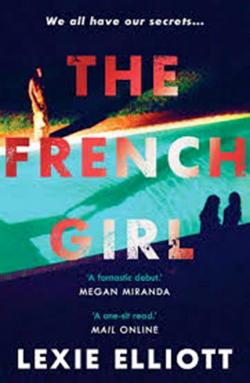
The French Girl by Lexie Elliott Corvus 296pp Available at Asia Books and leading bookshops 350 baht.
Truth be told, the films, plays and books I review have had a physical effect on me. Perhaps I should say that though they are respective, they come together to evaluate what I'm watching or reading. A gut feeling combined with expertise.
I have a good, not photographic, memory. To be sure, quite a lot of what I remember is trivia. One such is a crime-detective literary author of the mid-20th century. Ellery Queen wasn't like his contemporaries Sam Spade and Philip Marlow. While doing the usual in a murder case, interrogating suspects, the latter part of his novels had him gathering the suspects together in a room with a fireplace and reviewing their testimonies.
Each one, man and woman, appeared to be the culprit. Then he discarded the evidence against all but the guilty person. To the reader (several of the books were screened), it was a head game matching wits with him. The writer who came closest to using this format was Agatha Christie. Over the years, other scribes attempted something similar, with no success.
In her debut novel The French Girl Lexie Elliott contrives a plot of a decade-old murder in France. The six British students who had celebrated their graduation had met the victim there and can't forget her. Severine was so stunning, the males were infatuated, the women jealous. The book tells of their individual contacts with her and how the French police go about solving the crime. Kate, one of the young women, now narrates.
I've read and reviewed more crime stories than I can remember and this one had me shaking my head as my guts reacted poorly. Any of the six could have done it, not least Kate, who disliked her. Then again, was it really Severine's body? An attempt is made to kill Kate with excessive drugs in her wine. Does she die? Kate thinks she did and has an out-of-body experience. The scrivener's imagination has run away with her.
Perhaps Elliott is unfamiliar with Ellery Queen, but, as blame falls on the six back in France, it is anything but clever. Critics tend to give debut authors a break for the time and effort spent writing and finding a publisher. My concern is for the reader and the hard-earned money he is willing to shell out for a good read.