What has influenced your career?
I was born/raised in the South of England and always wanted to be a teacher - I used to hold 'classes' in our garden shed with the neighbourhood kids!
What led you to Australia, and why did you elect to do a Doctor of Philosophy at UoN?
My husband came home one night and told me we had an opportunity to go to the US or Australia because of his job. I chose Australia as I had never been here before - and we never looked back! Before we left, I was teaching in Henley, Oxford and had just completed a master's degree. A PhD was the next step so when we arrived in Newcastle, I applied for a job at the University and enrolled in a PhD.
Why did you choose an academic life?
Academic life has enabled me to extend my love of teaching, research and travel (until COVID-19 hit!). My career trajectory relates to seeking out new challenges in life and work. Having a range of different positions in universities in Australia, the Middle East and Indonesia has provided many experiences.
You are director of UoN's Executive Master of Business Administration (EMBA), offered by Newcastle Business School. What does it offer?
The EMBA offers 8 cutting-edge courses which can be completed in just over one year with graduates gaining Chartered Manager status on completion. It is an intensive program comprising 16 intensive sessions and all assignments are based on workplace projects, resulting in immediate return on investment. Applicants need either an undergraduate degree and 7 years work experience, or 10 years relevant work experience. Until now, the EMBA has only been offered at the Sydney campus. Moving to Newcastle for the first time in 2022, the EMBA provides a great opportunity for mid-senior level managers to benefit - of whom there are many in the Hunter.
Has COVID-19's emergence altered the course structure?
COVID-19 altered the delivery of the course (at our Sydney campus) as all teaching moved online. The content of the program also included consideration of the changes that were required from organisational leaders and employees following mandated lockdowns. Of particular relevance were the EMBA courses Sustainable Organisational Change and Enterprise Strategy for Global Uncertainty, where participants analyse industry reports and more on the impacts, strategies and responses before and during the pandemic and how insights gained might benefit their own companies.
Why is Mindful Leadership, co-taught by Newcastle businesswoman Charlotte Thaarup, a part of the EMBA program?
With a focus on resilience, self-awareness and leadership development Mindful Leadership has proved invaluable for EMBA cohorts during the pandemic. Charlotte is an expert in Mindful Leadership which is the foundation for the other 7 courses.
You recently co-wrote a journal article COVID-19 Crisis, Work and Employment: Policy and Research Trends. What were the key findings?
There is a definite need for more work in this area. The COVID-19 crisis highlighted weaknesses in policy and systems - particularly regarding the impact of inequality and precarious work on the more vulnerable workers.
COVID-19 highlighted weaknesses in policy and systems - particularly regarding the impact of inequality and precarious work on the more vulnerable workers.
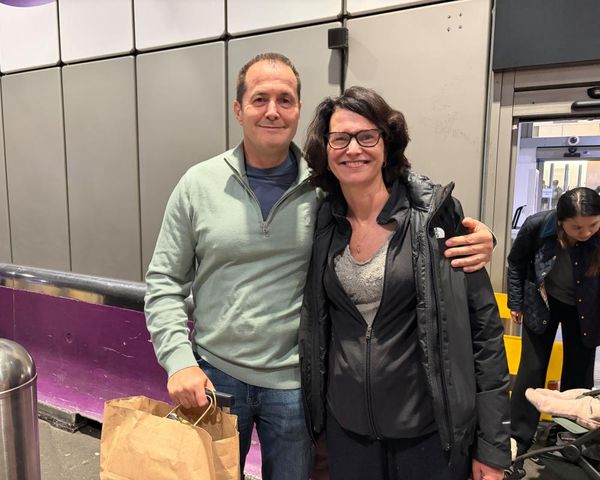
Prof Julia Collins
The paper notes that until now, governments have equated the national 'good' with economic growth, yet this approach has changed to focus on the safety and wellbeing of community. Is that the case in Australia?
Priorities have been on reducing infections - closing borders, lockdowns etc which of course affected the economy. While these measures had the desired effect, they also led to social isolation and mental health issues leading the government to introduce more subsidised mental health services through Medicare and the COVID-19 mental health at work resource kit. Many businesses have also been entrepreneurial introducing strategies enabling more connection with employees who are working remotely.
It also notes that some firms profited from JobKeeper and how government, business and other organisations need to come together to promote a more equal workplace, especially for the vulnerable. Are we seeing this happen?
Not yet, as there are approximately 13 million workers in Australia of which 2.3 million are 'casual workers' who do not receive entitlements such as paid holiday and sick leave. Vulnerable workers also include those people who are low-skilled and/or could not work from home during the pandemic.
The paper queries whether, post COVID-19, economies, companies, and workers can return to 'business as usual'...
'Normal' is likely to be different in future. For example, as ours and other studies emphasise, preferences for hybrid work models provide benefits for both employees (flexibility, no travel time) and employers (smaller workspaces, more productivity).