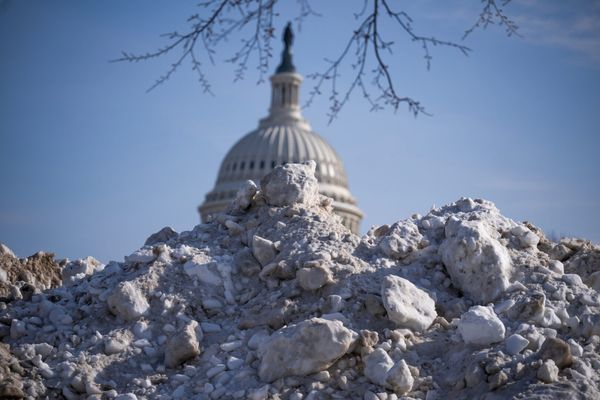
What happens between now and 3 November – and possibly beyond – will likely shape the entire world’s future. The re-election of Donald Trump, as well as being terrible news for the majority of Americans who will almost certainly vote for his rival Joe Biden, would have a damning impact on the future of the climate crisis, global health, diplomacy and more.
This, writes David Smith, is an election that could snap a nation that is already pushed to its limits. With worries over voter suppression, the efficacy of voting by mail and even the disaster scenario: Trump refusing to leave office.
Elsewhere, in the week of the first presidential debate (catch up will all the fallout from that here), the New York Times released its exposé of the president’s tax returns. Will the news that the self-proclaimed billionaire paid just $750 in federal income tax in 2016 and 2017 be a scandal too far?
This week also marked the world reaching the grim global milestone of 1m coronavirus deaths. Our team of reporters look at a handful of those deaths – and the intimate loss at the centre of a mass global health disaster.
We also look at how Uruguay is proving a safe haven for Argentinians seeking to escape the virus and, as restrictions tighten across the UK, Archie Bland heads to the City of London to see how businesses reliant on trade from workers in the capital’s financial heart are surviving after six months of office staff working from home .
We head to Hong Kong where, since the passing of June’s security law, the creep of Beijing’s authoritarianism has become clearer. As part of a new Guardian series on the fight for the city, Lily Kuo and Helen Davidson look at who is really pulling the strings on behalf of the Chinese government.
Elsewhere, we look at how the QAnon conspiracy has spread from message boards to the streets and around the world. Jamie Doward reports from a QAnon gathering in London; Julia Carrie Wong explains the impact of the spread of the antisemitic conspiracy theory and Cecilia Saixue Watt speaks to those whose family members have been taken in.
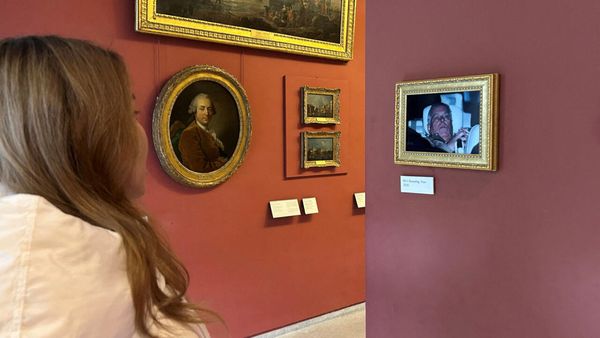
In culture, we visit a new facility in Rotterdam that turns the idea of a museum inside-out; we meet the Indian computer game publishers sticking it to Modi and review the latest from Martin Amis.