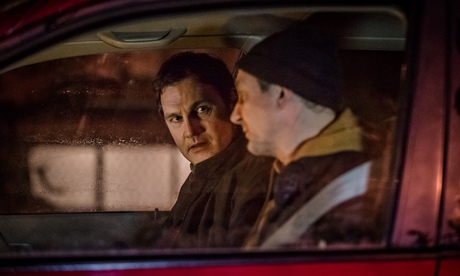
The Driver (BBC1) | iPlayer
Marvellous (BBC2) | iPlayer
Terror at the Mall (BBC2) | iPlayer
Downton Abbey (ITV) | ITV Player
When was the last time you saw a car chase in a TV drama? They used to be as common as adultery, an all-purpose narrative filler and excitement generator. When in doubt, cut to the chase. And then, as if every scriptwriter had been made to attend a road safety course, cars stopped pursuing one another at reckless speed and the chase was suddenly over.
Only to return in stunning form at the beginning of the excellent opening episode of The Driver. Without a word spoken or a plotline explained, we saw a nervous David Morrissey race away from a police traffic-control car and handbrake-turn himself into an effective getaway.
In terms of the spectacular, it may not have been the equal of The French Connection, but it was thrilling for its escape from the mundane – which also happened to be the direction that Vince, Morrissey’s minicab-driving character, was looking to take in life.
His marriage at a midlife stalemate, his wife running nowhere on her StairMaster in the sitting room, and chronically short of money, Vince was persuaded by Colin (Ian Hart), an old friend just out of prison, to meet a gang boss known as The Horse (Colm Meaney) who needed a driver.
It’s probably a good rule in life never to work for anyone whose first name is “The”. But Vince was fed up with rules. Following them had led to a life of such serial disappointment that he even fell just short of the diagnostic points required to qualify as depressed.
Morrissey is a powerful actor, by which I mean he is at his most natural – in State of Play, for example, or Blackpool – when he is able to impose his considerable physical presence on a role. Here, though, he was a grey-faced picture of a man struggling to find his inner strength.
It made for tense drama, although – aside from that first scene – very little happened. Yet such was the quality of the performances, the sharpness of the writing (by Danny Brocklehurst and Jim Poyser) and intelligence of Jamie Payne’s direction that every frame grabbed the attention.
The mark of good dialogue is that it tells you something without informing you that it’s told you something – the best, as heard here, does that and also manages to entertain, has a rhythm and sounds natural. When Vince, for instance, asked his friend what his mother thought of his plight, Colin replied: “You know my mum, if it doesn’t come with ice and lemon, she’s not interested” – a whole social universe formed in a throwaway line.
More impressive still, the script brought something freshly menacing to the overworked field of criminal gangs. Meaney’s faux philosopher The Horse stood out as the most intriguing gang boss seen on TV since Mark Strong’s Harry Starks in The Long Firm. Contemporary drama doesn’t come much more compelling than this. Episode two will have its work cut out to maintain the standard.
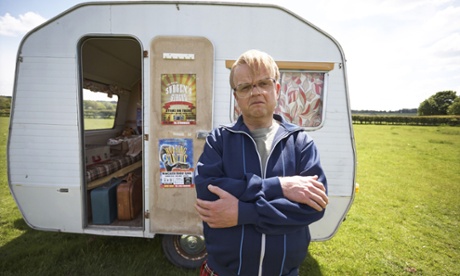
There’s a widespread tendency to focus on actors to the exclusion, often, of the people who put the words in their mouths and who film those mouths as they regurgitate those words. But when it comes to an actor like Toby Jones, the attention appears entirely justified.
It’s not that Peter Bowker’s script for Marvellous – a biopic of the inimitable Neil Baldwin – wasn’t, in its own wryly touching way, quite marvellous. It’s just that Jones realised its potential with such poignant insight into character that it’s impossible to imagine anyone else playing the part.
Baldwin, who has learning difficulties, is one of life’s authentic eccentrics, a man who takes life at its best estimate and has found that life has repaid the compliment. A part-time clown, he made himself a friend of bishops, politicians and celebrities, an unpaid stalwart of Keele University and, under the managership of Lou Macari, an integral member of Stoke City football club’s support staff.
His life has been a triumph of unselfconsciousness, which is easier read about than captured. But in a story fraught with the danger of sentimentality, Bowker located a sort of comic truth about an innocent at home and Jones made that truth both funny and movingly real.
How can the same eyes and ears that can appreciate the sweet verities of Marvellous be put to use absorbing the bloody nightmare of Terror at the Mall? Because there were points in this extraordinary documentary – which employed extensive CCTV recordings of the al-Shabaab attack last September on Nairobi’s Westgate mall – when you had to question your motivation in watching it. Was it macabre voyeurism to bear witness to the mass slaughter – 67 people shot dead, including 12 children and three pregnant women, and hundreds injured – or a necessary update on the actuality of the turmoil out there, where many people don’t share Baldwin’s cheerful outlook on life?
That’s not an easy question to answer, just as this was not an easy film to watch. But nor was it exploitative. Instead it carefully documented what took place last year, mixing security footage with interviews with survivors and a couple of the handful of courageous police officers and civilians who entered the mall to fight the terrorists.
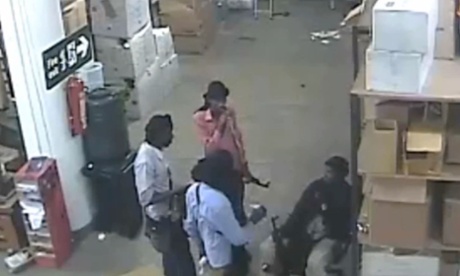
The portrait that emerged was of four young terrorists who, as with their counterparts in Mumbai in 2008, acted like programmed automatons, shooting dead anyone and everyone, all in the name, of course, of God.
In a moment that said too much and not enough about modern day conflicts, a terrorist, running low on his phone minutes and eager to receive more murderous advice from his handlers abroad, asked a terrified shop assistant if there were any mobile scratch cards. She directed him to the appropriate aisle. In return he asked her religion. She said Christian and, without hesitation, he shot her dead.
Meanwhile outside, the Kenyan army took three and half hours to come up with a plan. Unfortunately the plan was to go in and shoot indiscriminately, thus killing one of the brave policemen already in the building. They promptly retreated, having failed to encounter the terrorists.
The most uplifting account, in a story that offered little for optimists, came from a Muslim civilian who risked his life to take on the terrorists and save a European man bleeding to death. Amid the horror, his was a voice that went a long way to restoring your faith in humanity.
For restoration of a different kind there was the return of Downton Abbey, where as ever most of the action involved people entering and leaving rooms. Where they came from and where they were going to, who knows? All we really needed to grasp was that a Labour government had been elected and Molesley had been dying his hair.
The rest was the usual round of characters announcing that they were either arriving or departing. As ever, no one had time to stay put. No sooner had they walked in, they found an urgent reason – such as meeting someone in another room – to walk out.
As Carson said, coming over all Nietzsche: “The nature of life is not permanence but flux.”
Or to put it another way, one door closes and another opens. At Downton that’s more than a platitude – it’s the main plot device.