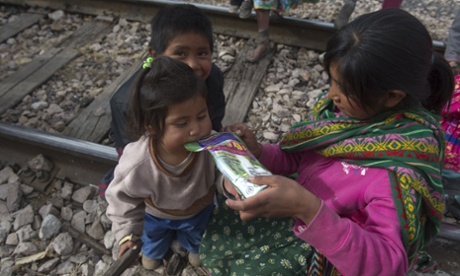
Global attention to the scourge of malnutrition is growing. And this attention is evolving from a focus on acute malnutrition that accounts for more than a third of child deaths per year, to include an appreciation of chronic forms of malnutrition that impair the growth and development of the hundreds of millions of those that survive.
These forms of undernutrition are deepened further by ‘hidden hunger’, also known as micronutrient deficiencies, which afflicts more than 2 billion individuals, or one in three people globally.
Together, the consequences of undernutrition are disastrous, leading to intellectual impairment, poor health and death, undermining the resilience of families, and wellbeing of communities and entire nations.
But undernutrition only presents one side of the coin – one element of a much larger problem, a problem that is manifest as a rapid upsurge in overweight and obesity numbers affecting rich and poor countries alike.
Rates of overweight and obesity have risen across the globe at an exceptionally fast pace. Overweight and obesity used to be considered a burden for high-income countries. But in 2011, 69% of the global burden of overweight children under 5 years old were in low-and middle-income countries, the same countries still battling undernutrition.
It has been estimated that there are more than 500 million obese people worldwide, and that number isn’t slowing down. If we look at countries like China and Mexico, obesity rates have doubled in less than a decade. A new burgeoning middle class in rapidly urbanising communities means a very quick change in lifestyle, and with that obesity rates have soared within a really short space of time.
Mexico has overtaken the US as the country with the highest ratio of overweight and obese people. No single factor is to blame. People’s diets have and will continue to change dramatically – people are consuming more calories – mainly processed foods including trans fats and sugar. People are also moving less and fast food advertising (in which in many countries there is no legislation) plays a huge part also.
Mexico has had to act quickly due to the implications of a society in which over 30% of the population are obese. Last year, there was an introduction of 10% ‘soda tax.’ While this alone won’t solve the epidemic, the message was loud and clear from the government. Mexico has started to see the benefit with a reduction in the number of sodas purchased. More importantly though, is its encouragement of behaviour change – getting people to think about their health and take responsibility for their diets. It’s certainly a start.
Addressing the ‘multiple burdens’ of malnutrition is within every country’s interest. Asia and Africa lose 11% of their GDP every year as a result of malnutrition, while China loses over 1% of its GDP due to obesity. Malnutrition is a concern for us all, not just those in the development and nutrition community. In addition, we now are witnessing an upsurge in non-communicable diseases like cancers, heart disease and type II diabetes, placing a huge additional burden on health services, societies and economies; often those the least equipped to cope with multiple burdens of malnutrition and its consequences.
Focusing on early life stages and maternal health, when good nutrition has the most impact, is crucial to tackling all forms of malnutrition. Infants who experience poor nutrition in the first 1,000 days of life are at an increased risk of being overweight in later life. It’s important therefore, that we focus on hard-to-reach groups such as adolescent girls and women before they become pregnant. Adolescent girls, in particular, are difficult to reach through the public health system so we need to find innovative ways which involve influencers outside of the government system.
Earlier this year, here at GAIN we developed a Malnutrition Map, a unique online tool revealing the global burden of malnutrition in all its forms. We believe that one way to tackle the multiple burdens of malnutrition is to start by having a deeper understanding of the data. The map includes data from more than 30 countries representing low, middle and high incomes and provides an easy path to country-by-country statistics and insights on nutritional challenges.
Armed with this data we can go to policy makers and governments to ensure solutions are implemented and are properly adhered too. There isn’t one solution to the overlapping issue of undernutrition and obesity, we have to work together to meet the demands of a changing world and the burden that places on the food system now and for the future.
Dominic Schofield is director and senior technical adviser of policy and programmes at GAIN Canada.
Content on this page is paid for and provided by GAIN, a sponsor of the Guardian Global Development Professionals Network.