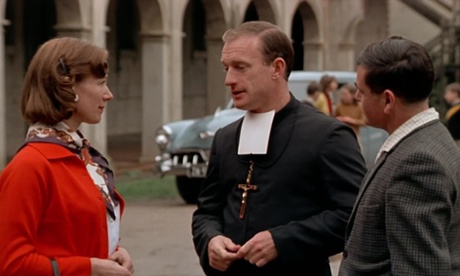
The first feature film from veteran director Fred Schepisi, 1976’s The Devil’s Playground, explores the myriad of ways men deal with sexual repression in the Catholic church. Decades later it remains powerful, confronting and full of hot button issues, although time has made it feel more subtle.
If the same film were made today it would be either praised or criticised (perhaps both) for not directly taking on the church’s greatest controversy – and a 2014 television sequel did exactly that. But, at least on the surface, the 70s were more innocent times and The Devil’s Playground is set in 1953, when child sex crimes that rocked the Vatican were many years from being exposed.
It was a deeply personal and semi-autobiographical project for Schepisi, who like his characters spent his adolescent years in a seminary. And while a sense of trauma spills out of it, the film is not about finger pointing or levelling blame towards an arguably crooked institution. Rather, Schepisi’s focus is on the conflicted ways people react in circumstances governed by rules that run counter to natural impulses.
The opening act is largely focused on 13-year-old Tom Allen (Simon Burke) who is teased for wetting the bed and scolded by a brother for showering without his swim wear. Tom is harangued: “You’re disgusting, exposing yourself. Where’s your modesty? If you’re to be a little brother of Mary you must learn that your body is your worst enemy.”
The same brother implores Tom to purge himself “of temporary temptations, and practise self-denial, self-examination, self-discipline.” It is that kind of pumped-up polemic that presumably encouraged the creation of a secret underground extremist clique within the seminary, consisting of boys who whip themselves and pour boiling water over their bodies in attempts to achieve “purity”.
As the running time progresses the scope of the film widens, becoming less Dead Poets Society-esque and more focused on adults exploring, debating and rubbing up against the practices of the church. Brothers shoot pool, drink scotch and debate the moral and logical reasoning behind the church’s position on sexual desire, particularly its attitude towards masturbation.
One suggests the boys “shouldn’t be here if they can’t control themselves.” Another objects: “What’s so wrong with masturbation anyway? If you don’t do it yourself it comes out of its own accord. For years I fought against it. All you learn is to hate your body.”
Scenes like this make it clear Schepisi doesn’t see the church as a collection of drones or yes men, establishing that critical thought exists – and that there is much to be critical of.
The director’s next film, The Chant of Jimmie Blacksmith (adapted from a book by Thomas Keneally, who appears here in a small role as a smiley priest) achieved greater recognition from critics. However, the perspective of the film (a white author writing from the point of view of an Indigenous protagonist) came under question.
The Devil’s Playground has aged better. The seminary backdrop provides a context that at times feels cryptic and cultish; somewhere just to the left of reality. And while the film’s lack of devotion to one central character divides it unevenly, reducing its overall impact, several individual scenes are hard to shake.
One of them, terrific as a stand-alone vignette, follows a priest visiting a public swimming pool. In his periphery vision he sees flashes of nudity in the women’s change rooms; we watch his nervous eyes absorb swimsuits and images of the female body. It concludes with the brother sitting alone in a toilet cubicle, clutching a towel, oozing distress and self-loathing.
Not a word needs to be spoken for the scene’s messages to be perfectly communicated. It’s a great example of one of filmmaking’s enduring mantras: show, don’t tell.