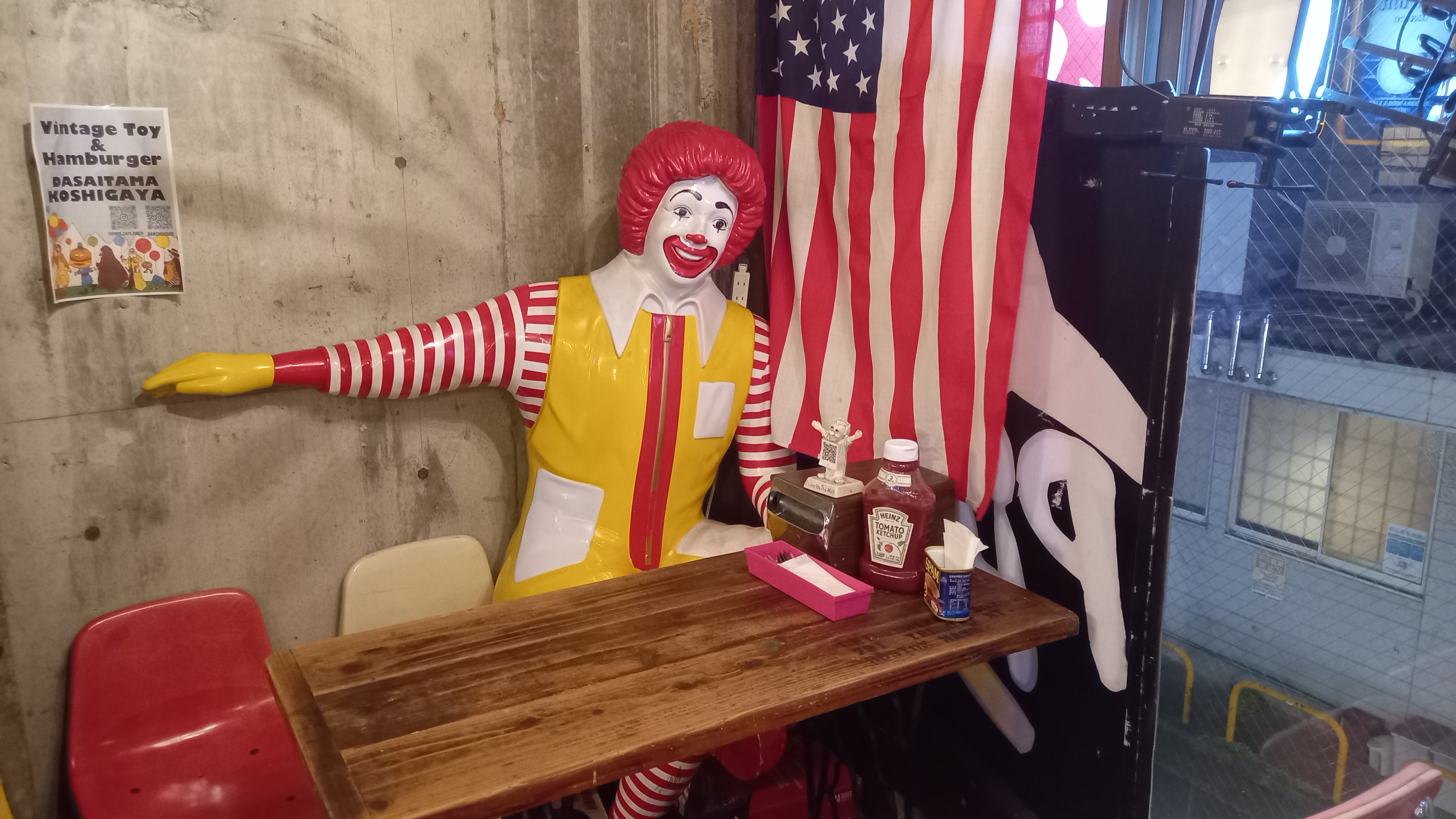
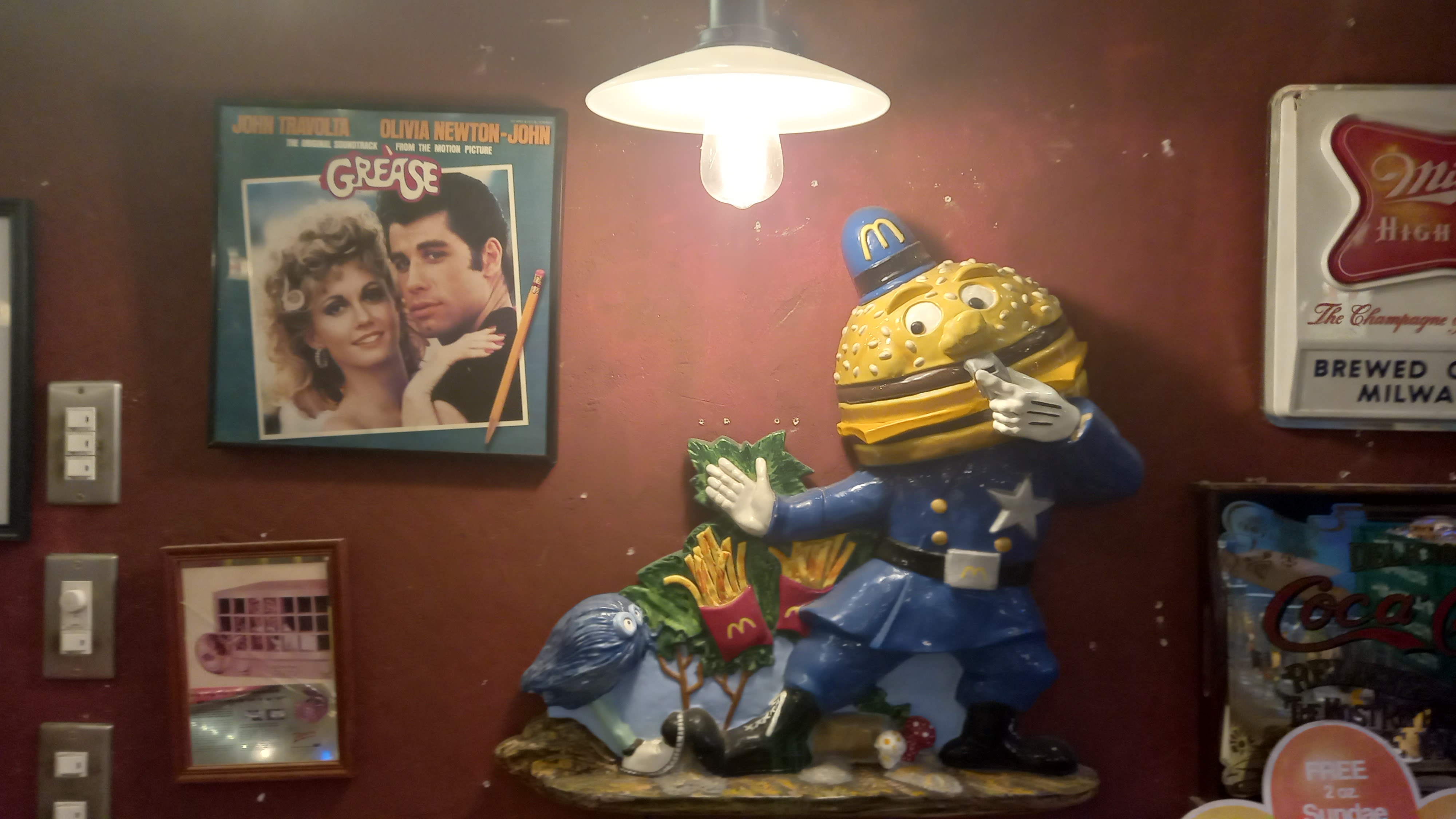
I was in a restaurant in Saitama, Japan, recently, and couldn't stop staring at the walls. The owners of Toy Box Diner have spent years collecting vintage fast food ephemera: trays, posters, cups, packaging, toys and point-of-sale material from the golden era of Americana, from Disney to McDonald's, all packed into a warm, chaotic, life-affirming space. The eyes of Ronald McDonald, Mayor McCheese, Grimace and the Professor all follow you around the room. It's joyful and ridiculous, in equal measure.
Sadly, those artefacts document a design language that no longer exists. Bright primary colours, expressive characters, hand-painted murals and an unapologetic commitment to fun? Walk into a McDonald's restaurant today and you'll find none of that – it's at odds with those iconic, vibrant golden arches.
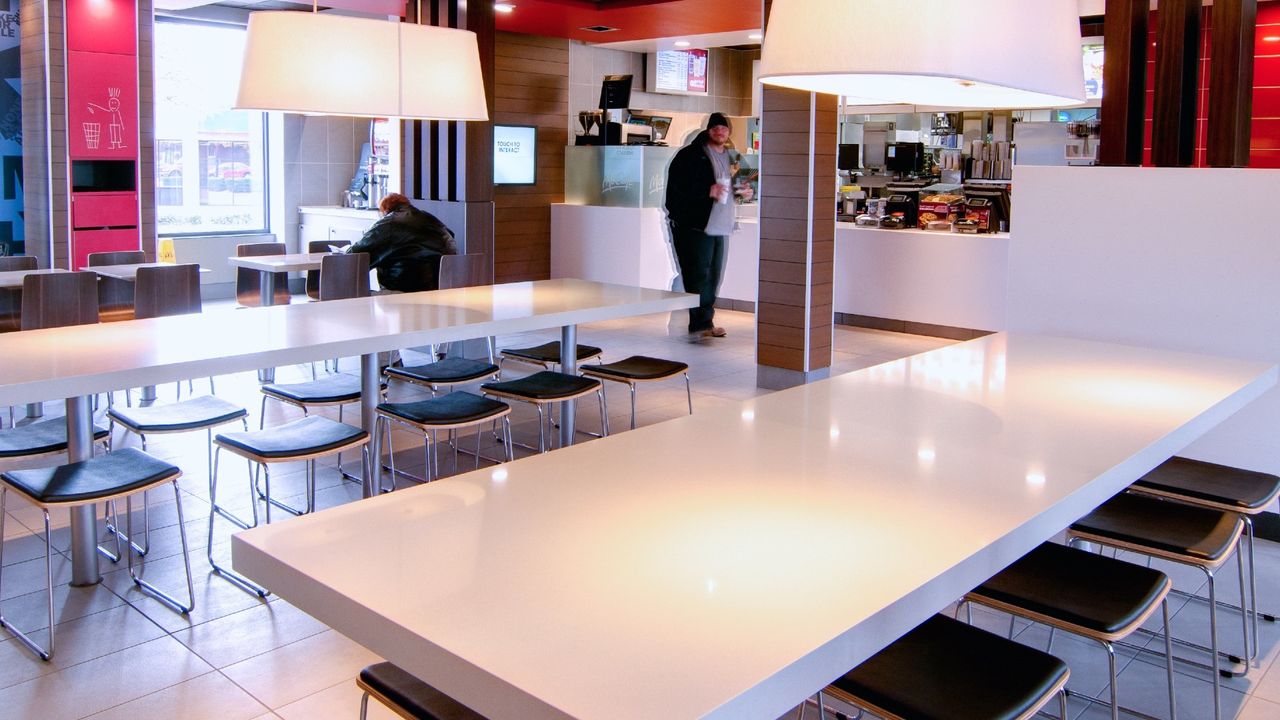
Instead, you're greeted with monochrome surfaces. Steel fixtures. Muted tones. The particular kind of silence that descends on spaces where human warmth seems to have been entirely forgotten.
What we've lost
I grew up in the 1980s visiting McDonald's as a rare treat, and I remember the heady sense of excitement. The colours, the smell, the characters. The sense that something joyful was happening. But honestly, I can't imagine kids feeling that way now in a modern McDonald's.
So how did we get here? Well, the change hasn't happened overnight. McDonald's began distancing itself from playfulness in the early 2000s, chasing a more "adult" demographic and competing with the rise of coffee chains.
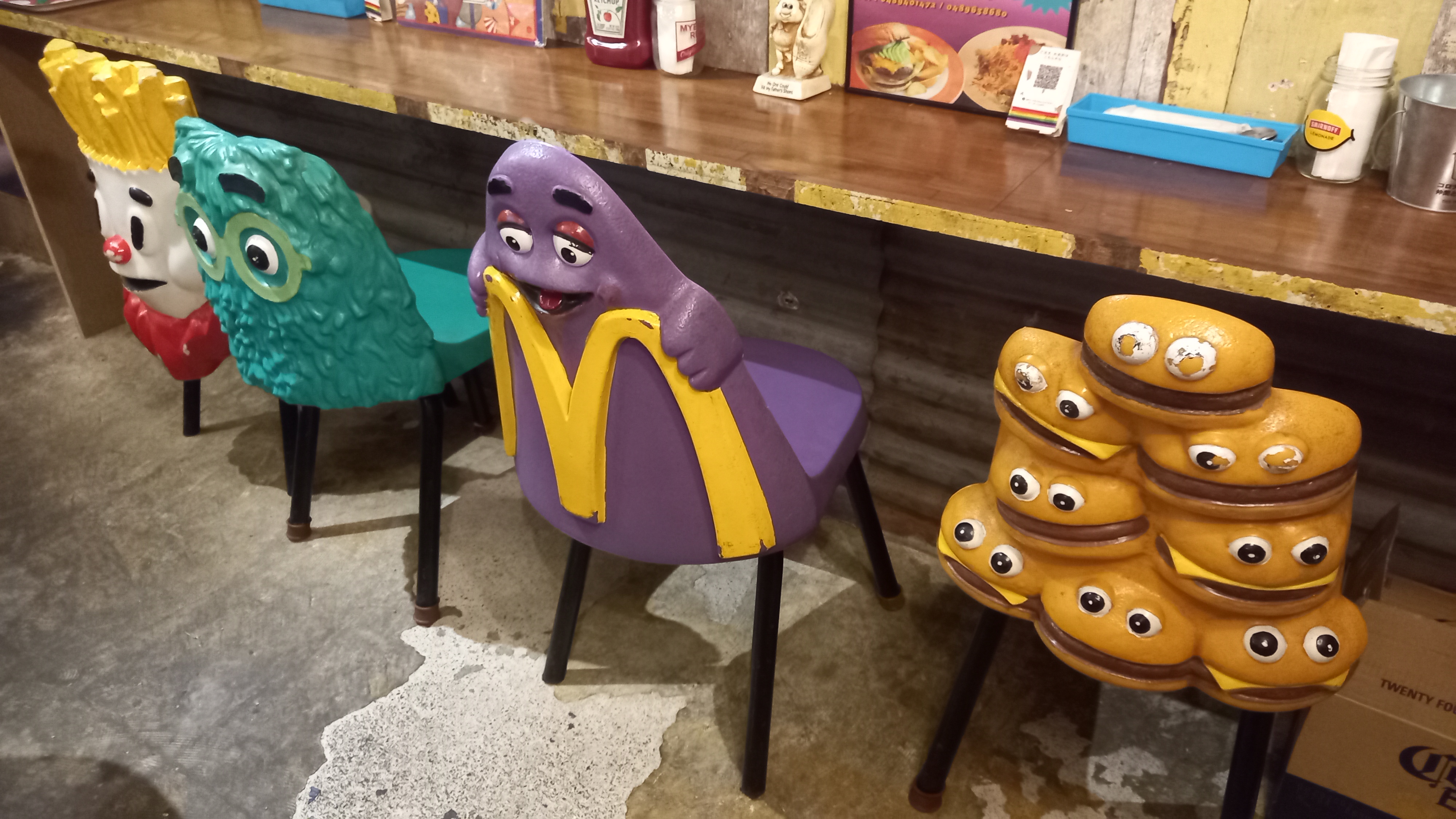
Since then, Ronald McDonald has been quietly retired. The McDonaldland characters have disappeared. The murals, the themed seating, the indoor playgrounds: gone. All replaced by a standardised aesthetic that could belong to any corporate canteen, anywhere in the world.
When it comes to modern McDonalds, there's little creative courage in evidence. The new aesthetic feels like a deliberate choice to strip out personality, reduce maintenance costs and signal a kind of aspirational blandness. It's the same impulse that gave us the grey open-plan office, the monochrome rebrand and the sans-serif logo that could belong to literally anyone.
McDonald's wanted to appeal to adults, to compete with Starbucks and the fast-casual market. The excellent, free WiFi, the wider tables, the kiosks: these are all aimed at a customer who wants to work rather than play. But in my eyes, the result is a space that doesn't feel welcoming to anyone in particular.
McDonald's now feels like a transit zone, somewhere to pass through rather than a place to be. You couldn't imagine a birthday party here, or a child's face lighting up as they walk in. The design has been optimised for throughput, not excitement and wonder.
The McDonald's story isn't unique, of course. It's part of a broader flattening: a corporate preference for the inoffensive, the easily maintained and the globally scalable over the distinctive and the human. The same logic that stripped the colour from McDonald's is the logic that makes every high street look identical, every app feel interchangeable and every rebrand less interesting.
I'm not saying that McDonald's should look exactly as it did in 1982. What I am saying is that the original designs, with all their exuberance and weirdness, was impressively creative work. They took a position. They had a point of view. They committed to something. The current design commits to nothing except being easy to clean and impossible to object to.
Global sales are on the rise right now, and McDonald's will no doubt argue their design strategy is working for that very reason. But I'm not so sure.
Yes, a brand as deeply engrained into our culture as this can probably cruise for some time on force of habit and nostalgia. Especially during a cost of living crisis when everyone's looking for the cheapest option. But eventually, I reckon, that forward momentum will start to run out of steam.
Customers are vocal on social media about what's been lost. Children are lacking the sense of wonder that prompts them towards pester power. And overall, the McDonald's brand has never felt less distinctive. Which makes this a useful case study in what happens when you mistake neutrality for sophistication, and bland efficiency for good design.
Want quirky McDonald's trivia? See the only blue arches in the world.