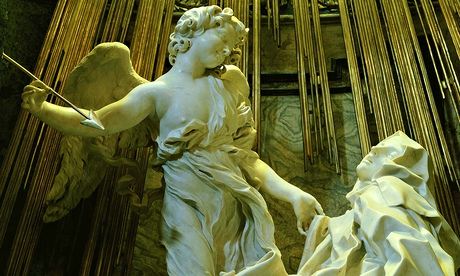
Jonathan Jones is missing the bigger picture by concentrating on the gruesome depictions of Christ during the Counter-Reformation (The deep roots of our right to offend, 21 February). This sort of treatment was encouraged by the church precisely to promote the new, flesh-abasing mysticism of a Catholic church desperate to lure the flock back by means of fierce emotionalism. Not for nothing has Bernini’s Ecstasy of Saint Teresa been described as a magnificent piece of theatre. But the Council of Trent ruled inadmissible in churches any form of nudity or beautiful figures likely to arouse carnal desire, and mythical or classical themes were discouraged. Even the pagan figure of Charon in Michelangelo’s The Last Judgment came under criticism. I’m sorry, but, to me as an atheist, this still looks like censorship.
David Redshaw
Gravesend, Kent
• Jonathan Jones is mistaken in thinking that the Muslim objection to images of Muhammad, whether respectful or disrespectful, is about aesthetics. I could design a plain non-aesthetic placard reading “Jesus sucks”, and I could walk up and down outside my nearest cathedral holding my placard – and nothing would be done about it.
Ruth Grimsley
Sheffield