Get all your news in one place.
100’s of premium titles.
One app.
Start reading
The Guardian - UK
The Guardian - UK
Environment

The Deep: Plunging into the abyss at the Natural History Museum

The Deep Sea World: Interactive exhibition at the Natural History Museum in London
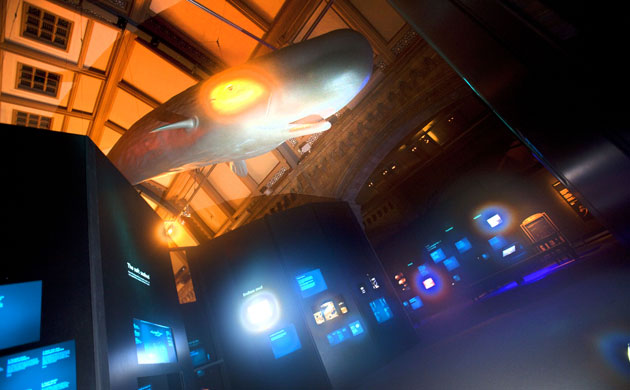
A sperm whale. This species is a deep diver, holding its breath and diving thousands of feet down to feed on deep sea squid and fish. Sperm whales spend 90% of their lives in the deep where they can't be seen.
Scientists believe the deep sea could be as rich in biodiversity as the planet’s tropical rainforests. Exploration has revealed an environment full of strange creatures that are perfectly adapted to survive in their hostile home thousands of metres down
Photograph: Graham Turner/Guardian
The Deep Sea World: Interactive exhibition at the Natural History Museum in London
A coelacanth (Latimeria chalumnae). This strange-looking species is one of the oldest fish in the world and considered to be a living fossil. It was thought to have become extinct 65 million years ago but in 1938 a fisherman caught a coelacanth off the coast of South Africa and a second specimen was captured off east African in the 1950s. Since then, live coelacanths have been sighted and photographed many times in the wild. They are found throughout the Indian Ocean from the south-west coast of Africa to Indonesia and live as deep as 700m
Photograph: Graham Turner/Guardian
The Deep Sea World: Interactive exhibition at the Natural History Museum in London
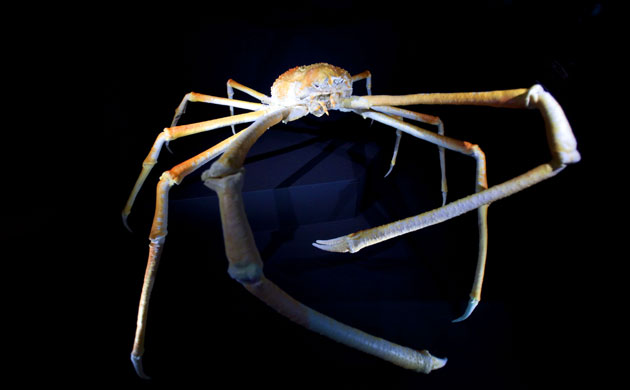
The Japanese giant spider crab (Macrocheira kaempferi) lives up to 400m deep. This is the largest crab in the world, with a maximum leg span of four metres. It is edible, and a large fishing industry has sprung up to harvest them. To try to conserve the species, fishing is forbidden during the spawning season, when the crabs move into shallower water and are much more vulnerable
Photograph: Graham Turner/Guardian
The Deep Sea World: Interactive exhibition at the Natural History Museum in London
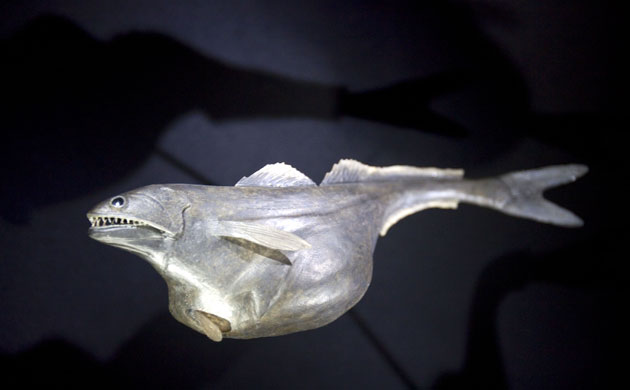
A black swallower (Chiasmodon niger) is noted for its ability to swallow fish larger than itself
Photograph: Graham Turner/Guardian
The Deep Sea World: Interactive exhibition at the Natural History Museum in London
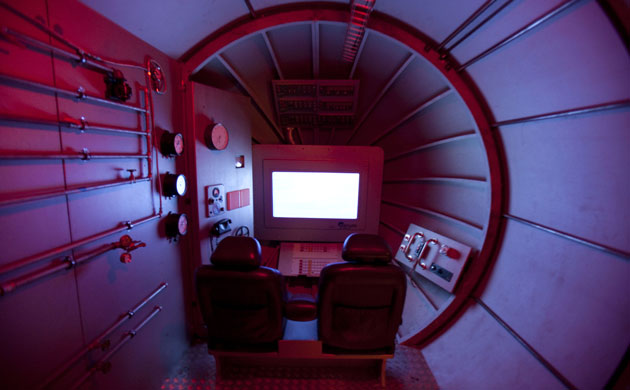
An interactive exhibit of the inside of a male sperm whale skeleton. The Deep combines astonishing imagery, real specimens and life-size interactive installations, the NHM says
Photograph: Graham Turner/Guardian
The Deep Sea World: Interactive exhibition at the Natural History Museum in London
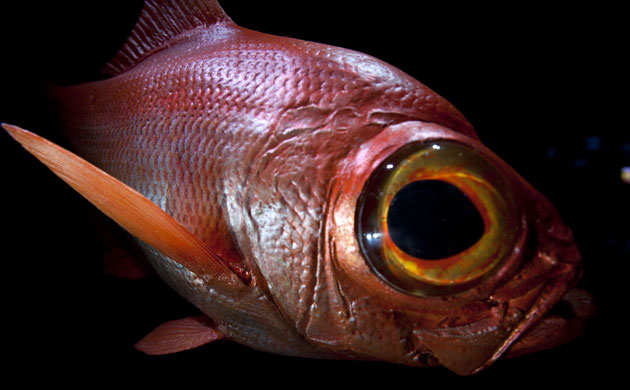
The Alfonsino (Beryx decadactylus) is found in depths from 180-800m in most temperate and tropical marine waters worldwide. In the twilight world between 200-1,000m there is hardly any light. Fish like the Alfonsino have have very large eyes to detect the limited light
Photograph: Graham Turner/Guardian
The Deep Sea World: Interactive exhibition at the Natural History Museum in London
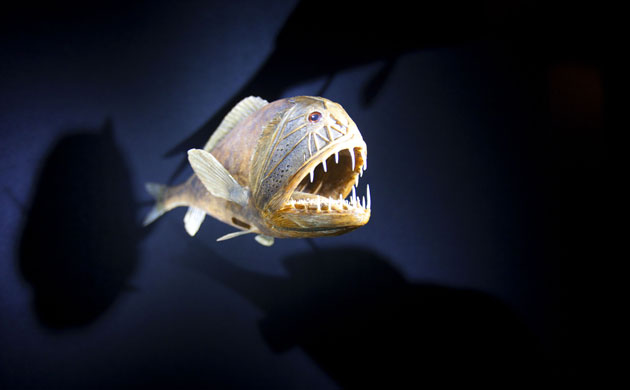
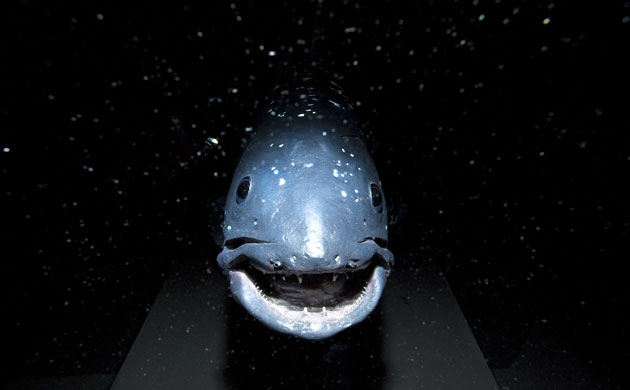
Fangtooth (Anoplogaster cornuta) can be found at depths of up to 4,000m. It has a big mouth armed with enormous teeth to ensure its prey can’t escape. This species occurs relatively near the surface when young while adults descend into the pitch black bathypelagic zone
Photograph: Graham Turner/Guardian
The Deep Sea World: Interactive exhibition at the Natural History Museum in London
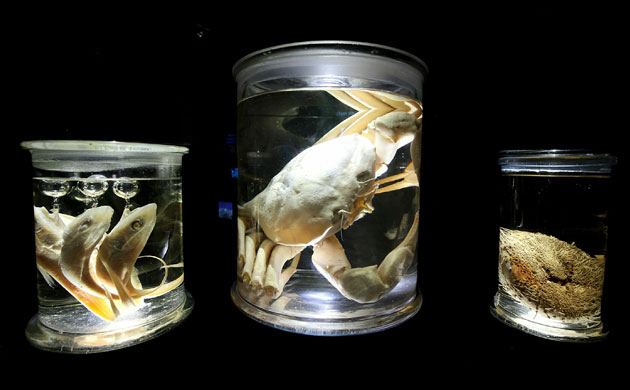
Jars containing blackspot grenadiers (left), a deep sea red crab (centre) and sea urchins (right) at the new exhibition
Photograph: Dan Kitwood/Getty Images
The Deep Sea World: Interactive exhibition at the Natural History Museum in London
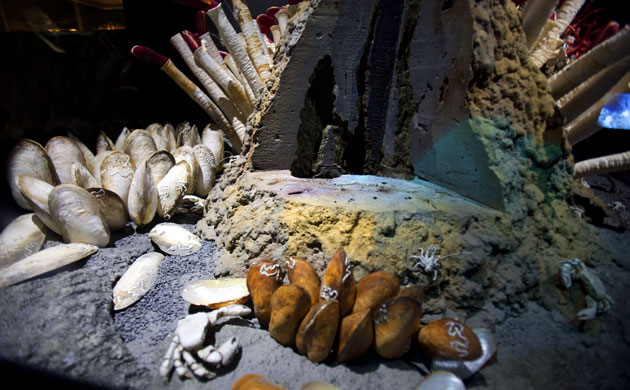
A cross-section of a deep-sea vent. In many areas of the deep sea, mineral-rich water at temperatures of more than 300C escapes from the seabed. Pressure is so great that the water can’t boil and doesn’t bubble. The minerals colour the water black and deposits form vents and funnels metres high. It is a hot and poisonous environment but varied life – tubeworms, clams and shrimp – inhabits them
Photograph: Graham Turner/Guardian
The Deep Sea World: Interactive exhibition at the Natural History Museum in London
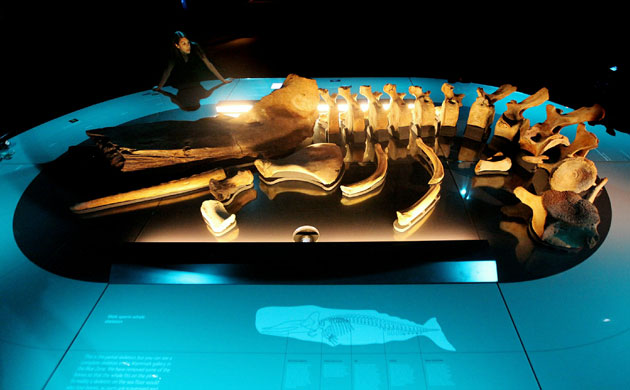
A museum employee stands besides a 17m-long skeleton of a sperm whale
Photograph: Dan Kitwood/Getty Images
The Deep Sea World: Interactive exhibition at the Natural History Museum in London
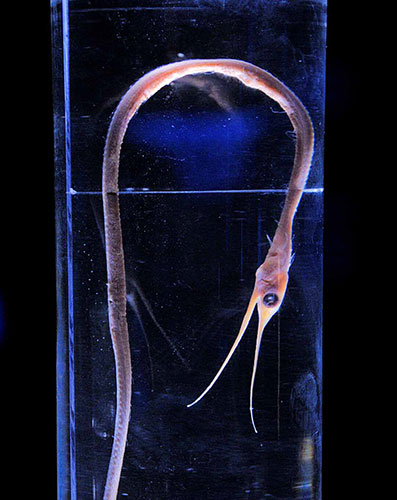
Slender snipe eel (Nemichthys scolopaceus). Bioluminescence, gaping mouths, stretchy stomachs and seeming invisibility are just some of the adaptations that help deep sea creature survive
Photograph: Derek Adams/Natural History Museum
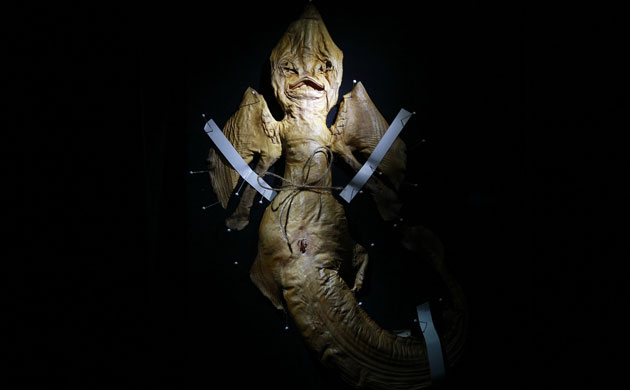
The Deep Sea World:  Interactive exhibition at the Natural History Museum in London
A guitarfish. The body of the fish has been trimmed and narrowed or slit and then dried. The ‘eyes’ are actually the nostrils of the fish
Photograph: Stefan Wermuth/Reuters
The Deep Sea World: Interactive exhibition at the Natural History Museum in London
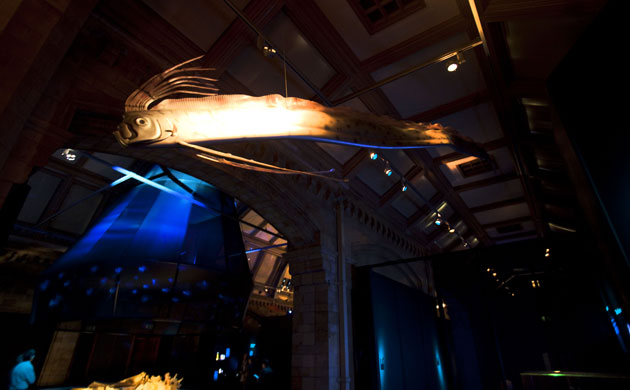
A sea serpent. Scientists believe that this creature of the deep is responsible for many sea serpent legends. One of the world's longest fish, the oarfish can reach lengths of 17m. It has dorsal fins along its back, giving it a spiny sea serpent-like appearance
Photograph: Graham Turner/Guardian
Sign up to read this article
Read news from 100’s of titles, curated specifically for you.
Already a member? Sign in here
Related Stories
Top stories on inkl right now
One subscription that gives you access to news from hundreds of sites
Already a member? Sign in here
Our Picks
Fourteen days free
Download the app
One app. One membership.
100+ trusted global sources.