Get all your news in one place.
100’s of premium titles.
One app.
Start reading
The Guardian - UK
The Guardian - UK
Sport
Tom Jenkins

The decline of Welsh rugby union – in pictures

rugby in Wales: The decline of Welsh club rugby
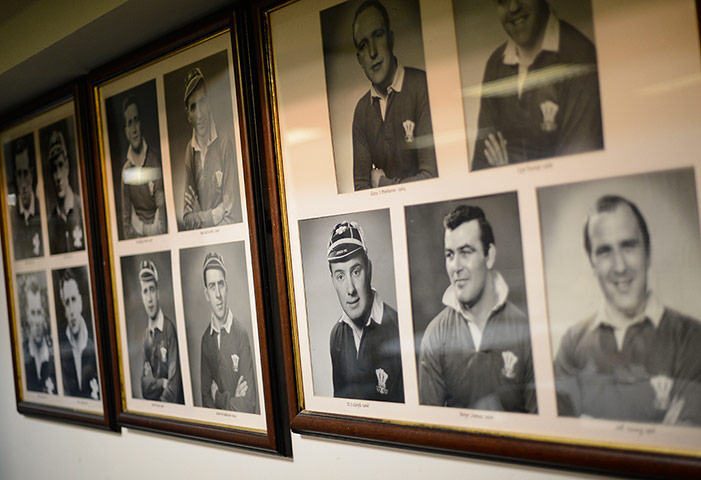
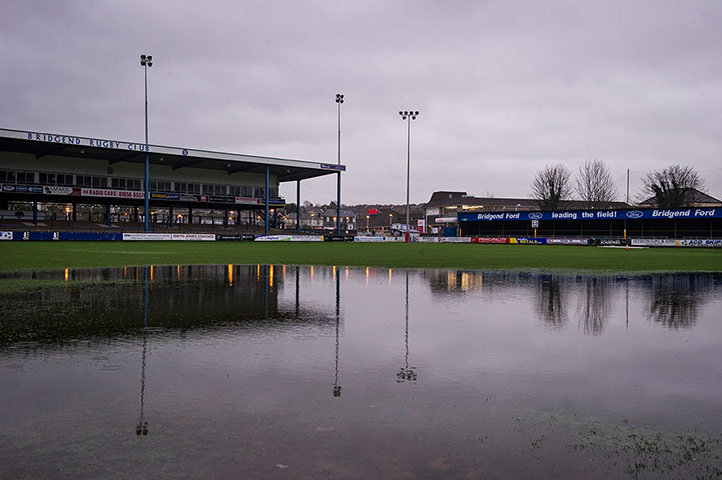
On a bleak afternoon in Bridgend, writes Don McRae, with rain slanting across the flooded rugby pitch at Brewery Field, the famous old faces stare down from the walls of an empty clubhouse. JPR Williams looks haughtily imperious, captured forever in full flow, while JJ Williams seems quietly elusive.
Photograph: Tom Jenkins for the Guardian
rugby in Wales: The decline of Welsh club rugby
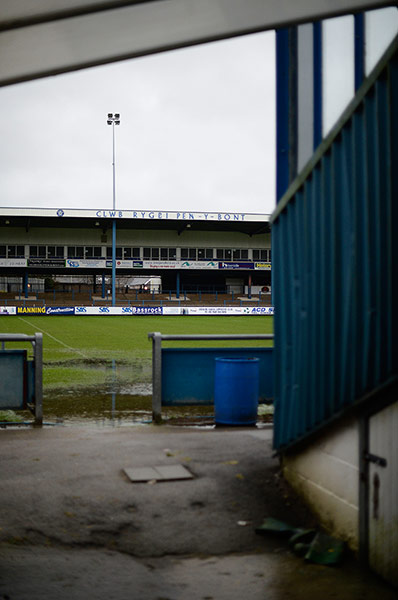
Yet the great Bridgend teams that played New Zealand and Australia, memorably beating the Wallabies in 1981, belong to a different time. Outside, in the real world, the faulty drainage that has resulted in two small lakes forming on the pitch seems a more apt illustration of a struggle to survive the deep-rooted crisis in Welsh rugby.
Photograph: Tom Jenkins for the Guardian
rugby in Wales: The decline of Welsh club rugby
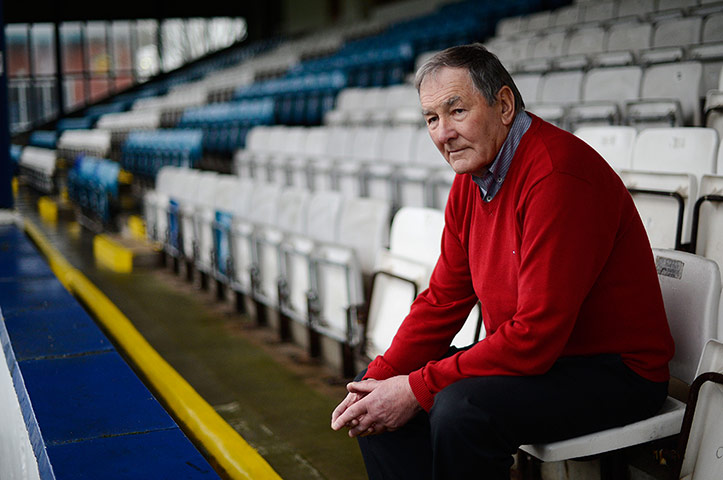
Derrick King, the Bridgend chairman who has been involved with the club for over 60 years, says: “There is an undisputed fact we should not forget. Bridgend has produced, since 1948, more internationals and British Lions than any other part of Wales. [But now] what’s happening in Welsh rugby is very sad. The passion for rugby is fading.”
Photograph: Tom Jenkins for the Guardian
rugby in Wales: The decline of Welsh club rugby
In 2003 the union controversially introduced regional rugby as a tier above the club game. It was a fatal blow for many clubs. “There was such disillusion that Bridgend went downhill from that point. We suffered terribly and for the first time in 125 years we were relegated," King says.
Photograph: Tom Jenkins for the Guardian
rugby in Wales: The decline of Welsh club rugby
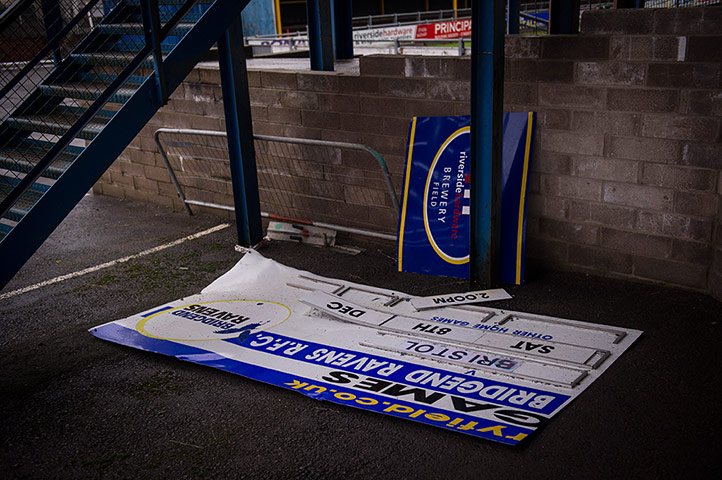
Bridgend hauled themselves back into the Premiership, but only two days later were told that four of the 12 Premiership clubs would have to be axed. Bridgend – alongside Pontypool, Tonmawr and Camarthen – were to be the victims. Backed by their regional masters, the Ospreys, Bridgend managed to overturn the ruling. Camarthen, supported by their regional equivalent in the Scarlets, were also successful as a revised 10-team league was agreed. But Pontypool and Tonmawr had no such luck
Photograph: Tom Jenkins for the Guardian
rugby in Wales: The decline of Welsh club rugby
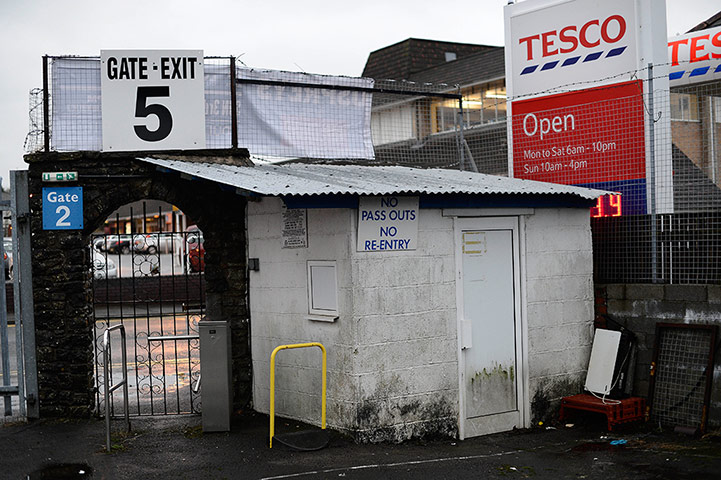
Many people in Bridgend are now more attracted by the success of Swansea City. Beating the likes of Arsenal and Chelsea, and in the Capital One cup final, Swansea have transformed perceptions of football in these rugby heartlands. Cardiff City, meanwhile, are 10 points clear in the Championship – and even Newport County might return to the Football League next season
Photograph: Tom Jenkins for the Guardian
rugby in Wales: The decline of Welsh club rugby
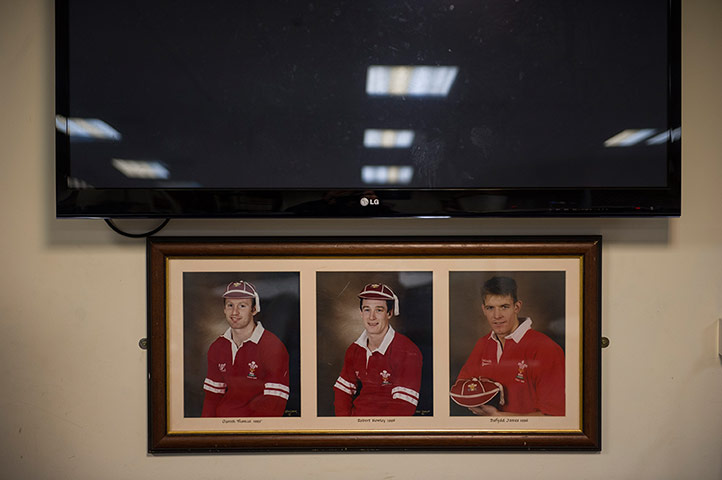
An old-fashioned photograph of Rob Howley, shyly wearing his first cap in 1996, sits inside the Bridgend ground. He is presently Wales’ interim coach as the Six Nations champions begin the defence of their title at home to Ireland this weekend. Ten months ago Wales won their third Grand Slam in eight years – and yet the fact that they have since lost seven successive internationals seems unsurprising when set against the plight of iconic clubs like Bridgend
Photograph: Tom Jenkins for the Guardian
rugby in Wales: The decline of Welsh club rugby
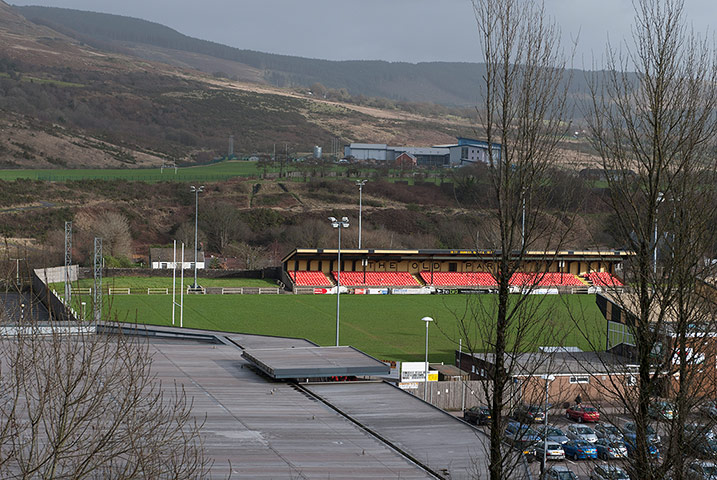
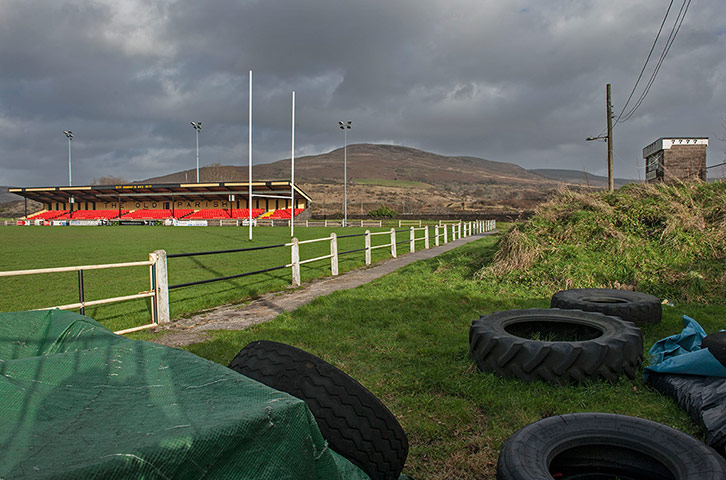
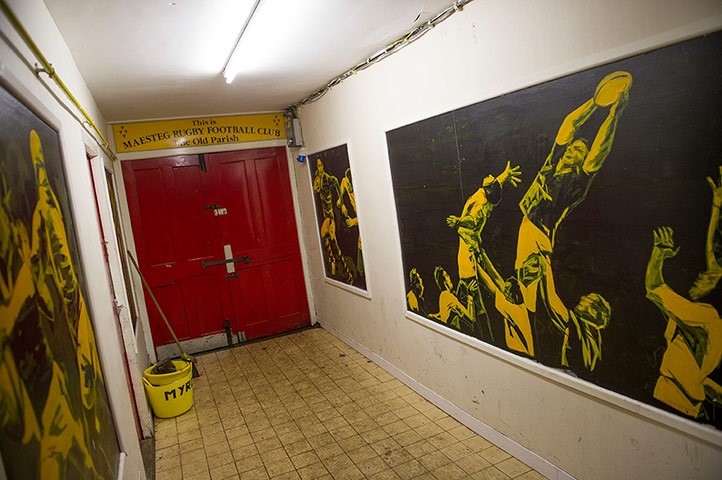
Twenty minutes down the road, winding into the Llynfi valley, Bridgend’s once-fierce local rivals were called The Invincibles. In 1949, Maesteg did not lose a single game. King used to relish their Boxing Day fixtures but, with Maesteg now three divisions below Bridgend, in Division One West, those ancient battles are over.
Photograph: Tom Jenkins for the Guardian
rugby in Wales: The decline of Welsh club rugby
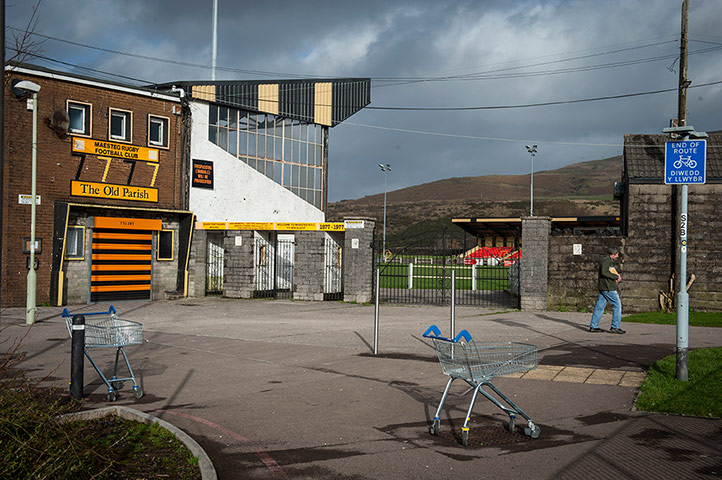
Maesteg’s chairman, David Morgan, endorses the views of his Bridgend counterpart. He’s 30 years younger than King, but Morgan is just as disconsolate. Explaining how the club will endure almost three months without a home fixture, due to the weather and a sudden reduction of teams in their league, Morgan says “the union don’t give a toss. We’re all of the opinion that Welsh rugby is going to the dogs.”
Photograph: Tom Jenkins for the Guardian
rugby in Wales: The decline of Welsh club rugby
“We began this season with four players, which eventually dwindled to just one. The others all left because some clubs are paying £50 or even £100 a man every match. But at least we’ve got Webby as our coach. I don’t know what would happen if we lost him,” says Morgan.
Photograph: Tom Jenkins for the Guardian
rugby in Wales: The decline of Welsh club rugby
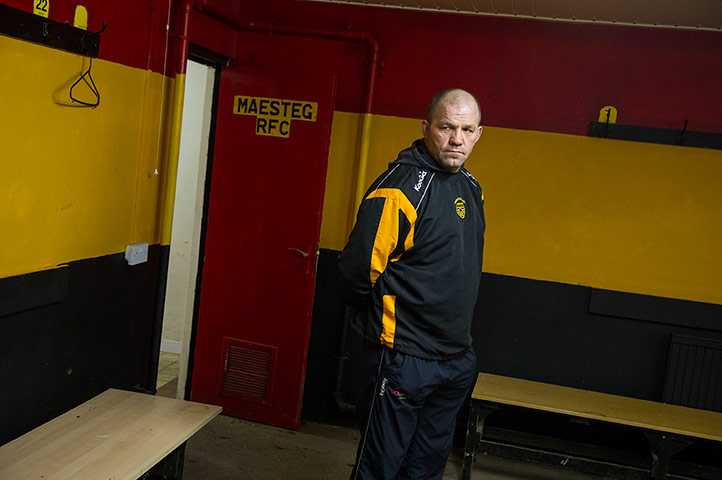
Richard Webster, Maesteg’s coach and a former Welsh international, British Lion and Heineken Cup winner with Bath, says: “It’s hard. I’ve got 10 boys who are incredibly keen – but I get so frustrated that they’re let down by others who don’t really care. When I played we had 40 guys at my club with that desire. Now we have 10. In another 10 years how many will be left? Five?”
Photograph: Tom Jenkins for the Guardian
rugby in Wales: The decline of Welsh club rugby
Webster says: “I played for Bonymaen – it’s a nasty place, cold and wet, at the top of the mountain over Swansea. My heroes were the giants who played rugby for Bonymaen. I would have done anything to have worn the club shirt. I’m not big-headed but I’ve done a bit in rugby. But show my CV to most of these kids and they don’t want to know."
Photograph: Tom Jenkins for the Guardian
rugby in Wales: The decline of Welsh club rugby
"I said to one kid: ‘Run around the posts’ He looked at me, put his hands in his pockets, and said ‘Fuck Off.’ Another turned up and I said ‘You can’t train until you take our your earring.’ He said ‘It’s not an earring’ and pulled out a fag butt he’d pushed through the hole in his ear."
Photograph: Tom Jenkins for the Guardian
rugby in Wales: The decline of Welsh club rugby
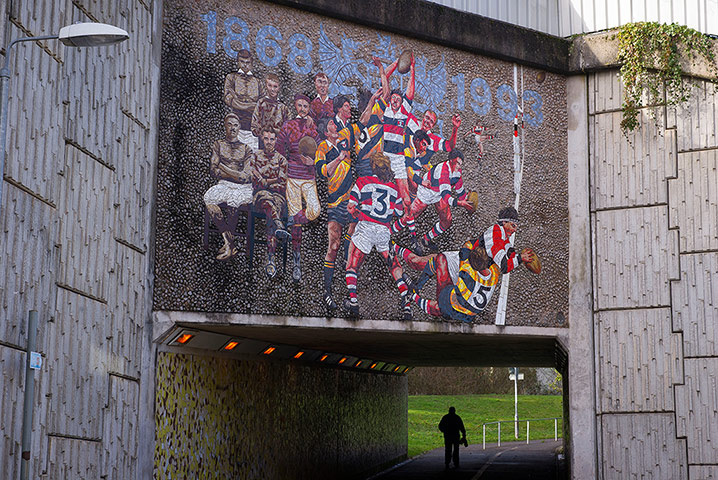
Driving away from Maesteg and heading down the M4, past Cardiff, the slow death of club rugby in Wales is palpable. Beyond the valleys and heartlands, it’s hard to summon any enthusiasm for their regional replacements. The Cardiff Blues, Dragons and Scarlets are known as the M4ers – they carry none of the history of a proud old club like Pontypool (pictured in this memorial, which shows Pontypool scoring a try against their bitter old Gwent rivals Newport).
Photograph: Tom Jenkins for the Guardian
rugby in Wales: The decline of Welsh club rugby
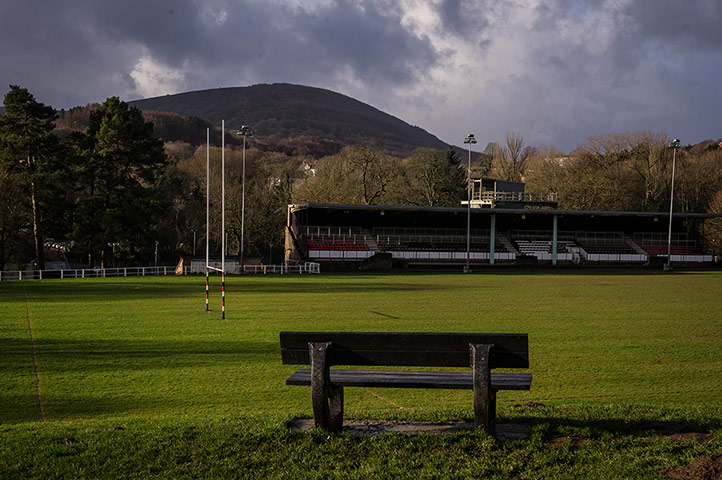
Without a clubhouse, and on the brink of extinction last August, it feels a cause for good cheer that Pontypool have somehow survived their enforced relegation and catastrophic court case against the union. The injustice feels raw when set against the long history of Pontypool who, in 1881, were one of the union’s founding members.
Photograph: Tom Jenkins for the Guardian
rugby in Wales: The decline of Welsh club rugby
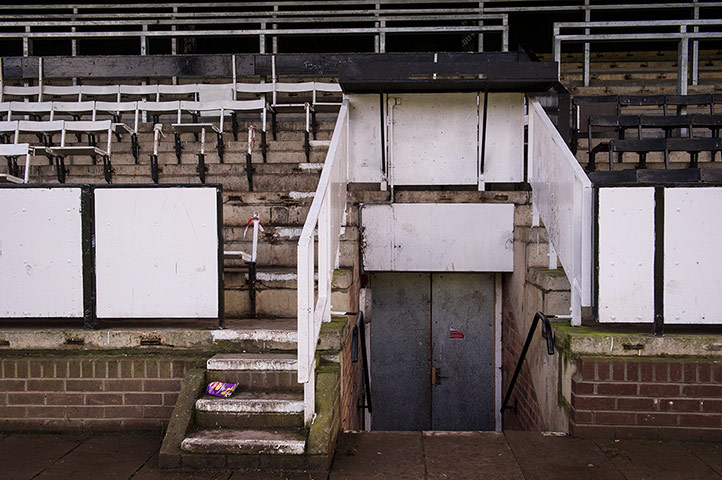
The flaws of regionalism are obvious, says senior Pontypool player Mike Barber, who points out that any attempt to force proud English clubs like Bath, Bristol and Gloucester to merge into one region would be equally disastrous.
Photograph: Tom Jenkins for the Guardian
rugby in Wales: The decline of Welsh club rugby
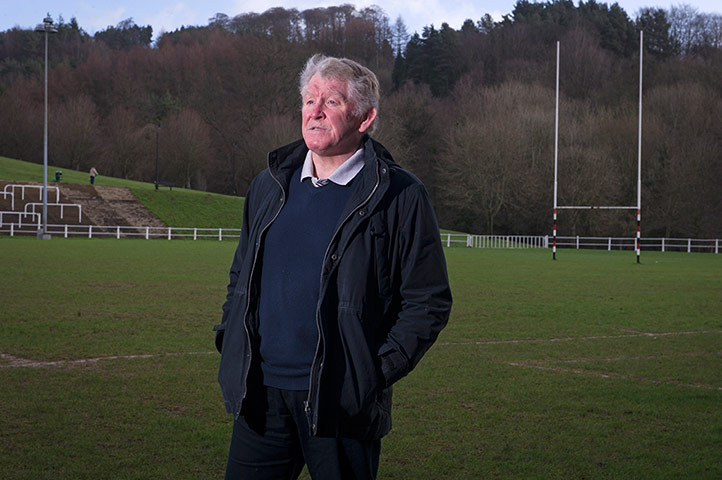
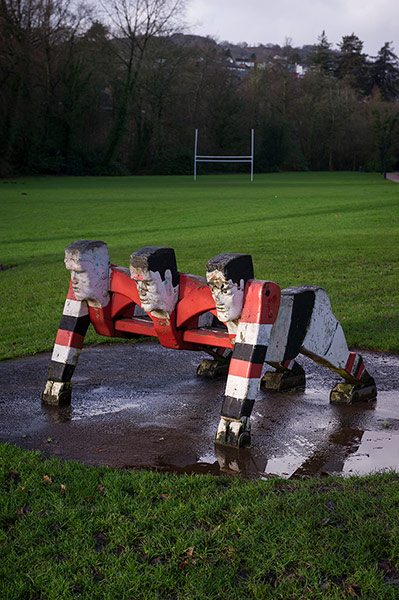
Graham Price, ex Pontypool, Wales and British Lions player, now chairman of Pontypool, says that in the halcyon days “the union kept out of club rugby. They organized the cup and the internationals, which were great, but they let the clubs organise their own structure. It was successful, relevant and very meaningful. Things started to go wrong when the union got involved. In their wisdom they split the old merit table down the middle. They put 10 clubs in the first division and 10 in the second division. But we retained the same fixtures so the matches became meaningless and instead of getting 10,000 on a wet Wednesday, the crowds started to stay away. People slowly got out of the habit of watching rugby.”
Photograph: Tom Jenkins for the Guardian
rugby in Wales: The decline of Welsh club rugby
“It’s different now,” he says, “but I still think rugby remains our national game. And you feel that most of all right here, despite everything, in Pontypool.”
Photograph: Tom Jenkins for the Guardian

Sign up to read this article
Read news from 100’s of titles, curated specifically for you.
Already a member? Sign in here
Related Stories
Top stories on inkl right now
One subscription that gives you access to news from hundreds of sites
Already a member? Sign in here
Our Picks
Fourteen days free
Download the app
One app. One membership.
100+ trusted global sources.