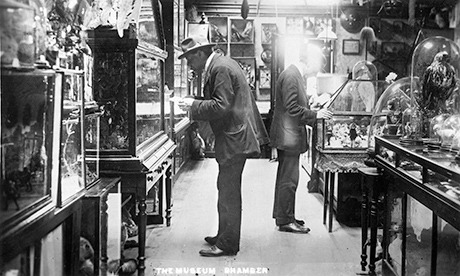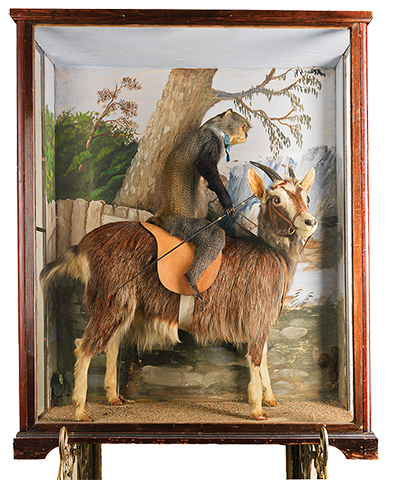
Potter's museum charmed and delighted locals and tourists alike for almost 150 years. Although most famous for his anthropomorphic tableaux, there were several other pieces that captured the public imagination. One of the favourite items with visitors, and the subject of one of the museum's coloured postcards, was the Monkey Riding a Goat: a vervet monkey rather improbably depicted carrying a riding crop and seated astride a goat. According to the Bramber Museum's guidebook, both animals had come to an untimely end. The monkey, probably an escaped pet, reportedly died of shock when a bucket of cold water was thrown over him. The goat lived in a nearby park but frequently escaped
Photograph: Alan Kolc/Pat Morris/Joanna Ebenstein
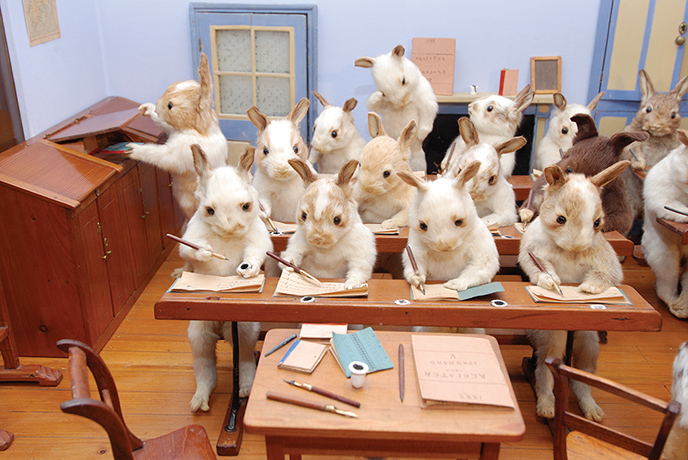
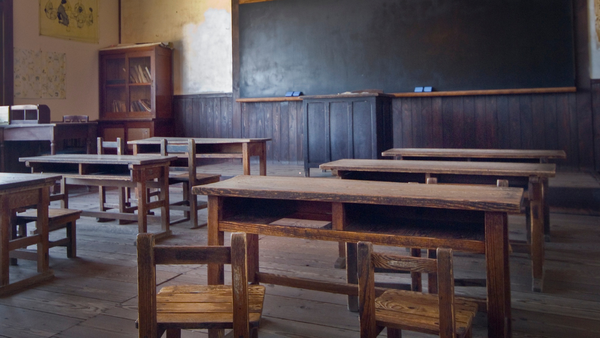
Potter wanted 50 baby rabbits for the village school, but despite asking around in the local villages, he could only get the 48 that are here engaged in scholastic activities. The pupils are about a month old, the two teachers somewhat more
Photograph: Pat Morris/Joanna Ebenstein

Potter made all the slates, pencils and furniture himself, but asked his wife Ann to create the tiny clothes seen in the needlework group. The inkwells were carved from small sticks of chalk. Four classes are in progress, and one of the pupils in the writing class has blotted his copybook and is standing on the bench in tears, probably having been caned for his carelessness Photograph: Dr Pat Morris/Joanna Ebenstein
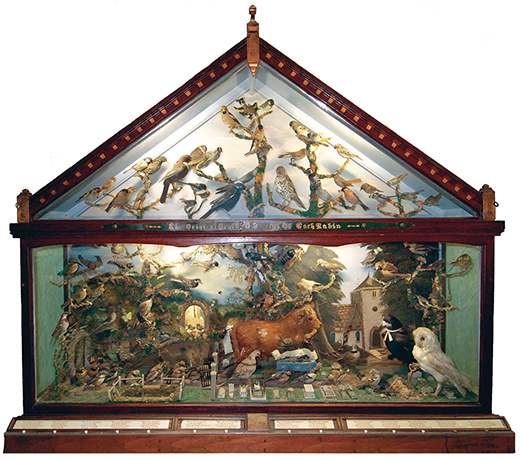
This tableaux is nearly two metres long and took Potter about seven years to build in his spare time. It features almost 100 British birds, some shown crying with glass tears in their eyes. Four species are included that are now rare or extinct in Sussex (red backed shrike, cirl bunting, wryneck and hawfinch), and also several canaries and at last one other aviary species Photograph: Dr Pat Morris/Joanna Ebenstein
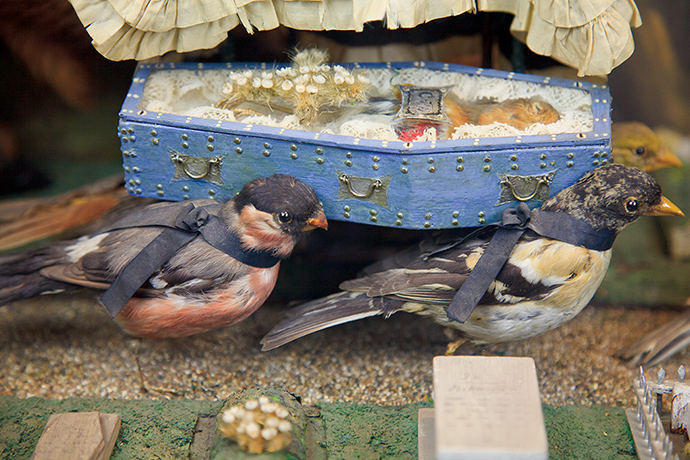
All the characters in the poem's 14 verses are present – bar the kite, which would have been difficult to obtain in 19th-century Sussex and awkwardly large among all the smaller birds Photograph: Pat Morris/Joanna Ebenstein
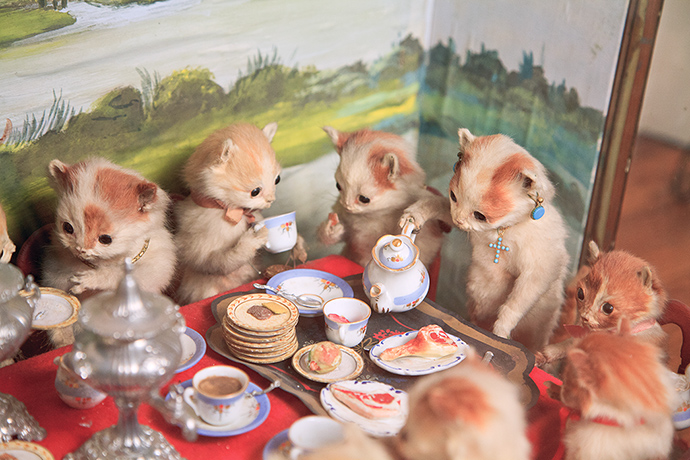
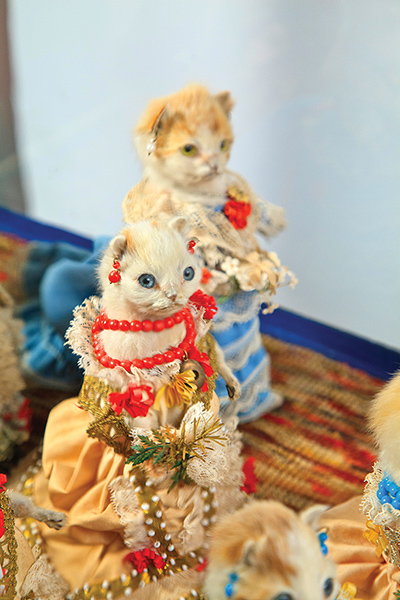
Twenty kittens wearing little morning suits or brocade dresses, and even frilly knickers (although these are not visible). The clothes were made by one of Potter's neighbours and by his daughter Minnie. This was the last tableau made by Potter, and the only one in which the animals were dressed Photograph: Pat Morris/Joanna Ebenstein
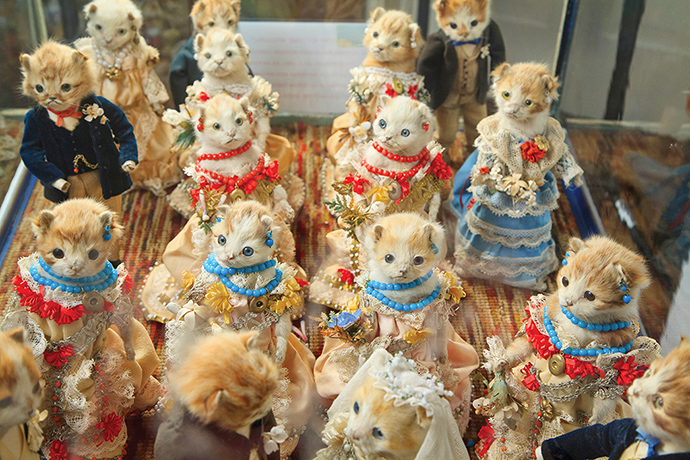
Many of the birds Potter mounted were brought in by visitors who had found them dead under telephone wires or killed by local cats. Most of the kittens came from a farm nearr Henfield, where a number of cats roamed freely. It was customary for cat owners, in those days before the spaying or neutering of cats was widely performed, to keep one of the kittens and destroy the rest: the proprieters of Henfield farm donated their disposed stock to Potter Photograph: Pat Morris/Joanna Ebenstein
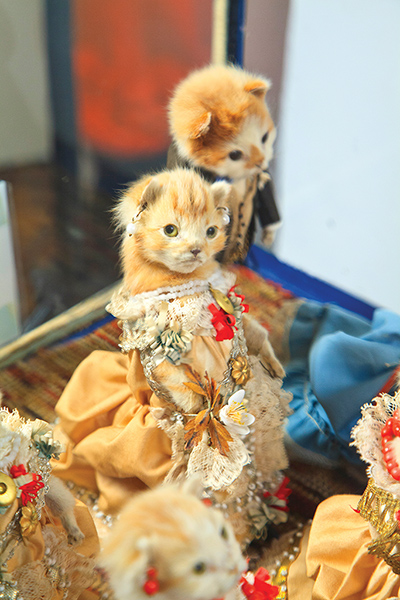
This case was always one of the most popular in the collection and was occasionally lent out to exhibitions at other museums, including the Victoria and Albert Museum and the Liverpool Museum Photograph: Pat Morris/Joanna Ebenstein
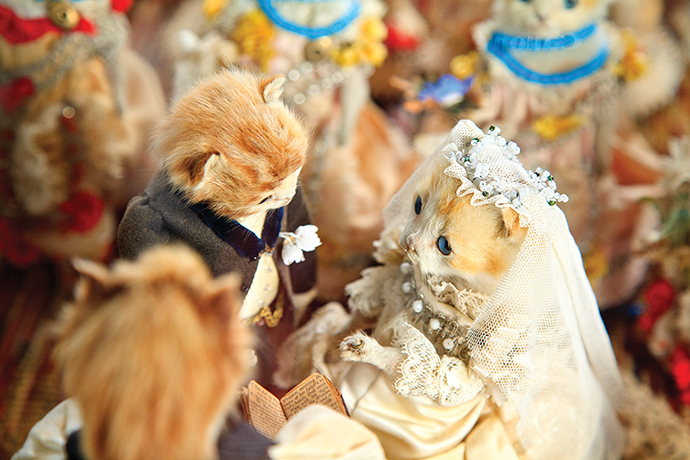
The bride wears a long veil and carries a posy of orange blossoms. A feline vicar watches patiently as the bridegroom, with his head tilted intently to one side, places a golden ring on the bride's finger Photograph: Pat Morris/Joanna Ebenstein

The title of this scene and the Lower Five was taken from a popular song of the day. These tableaux were keenly observed social commentaries, with a clear class distinction between the two scenes and their animal occupants. The 18 toffs in the squirrel's club, some with expanding waistlines, had a servant bringing champagne and other drinks on a tray Photograph: Dr Pat Morris/ Joanna Ebenstein
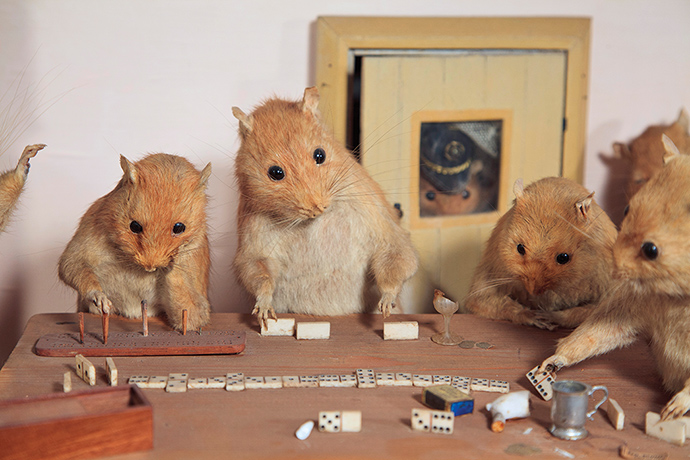
In contrast to the squirrels' club, the Lower Five was a rather scruffy rats' den. It is depicted as being raided by the local policemen, who see money on the table, clear evidence of wicked gambling over a game of dominoes Photograph: Dr Pat Morris/ Joanna Ebenstein
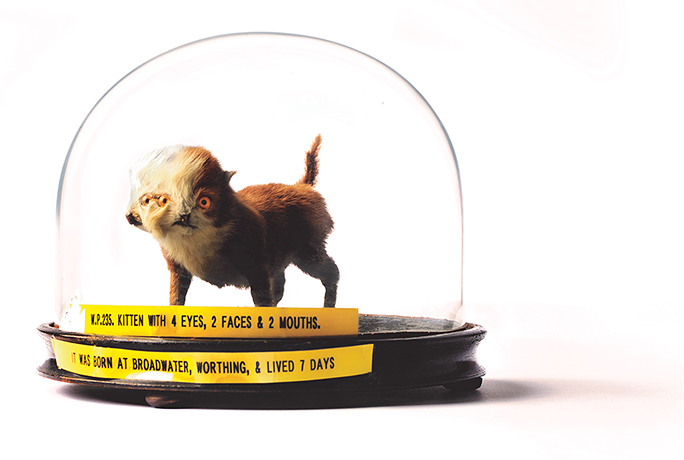
The museum was also home to other curiosities – this two-headed kitten with four eyes lived for only seven days (the yellow label was added by Wendy Watts when the collection was housed at Jamaica Inn) Photograph: Dr Pat Morris/ Joanna Ebenstein
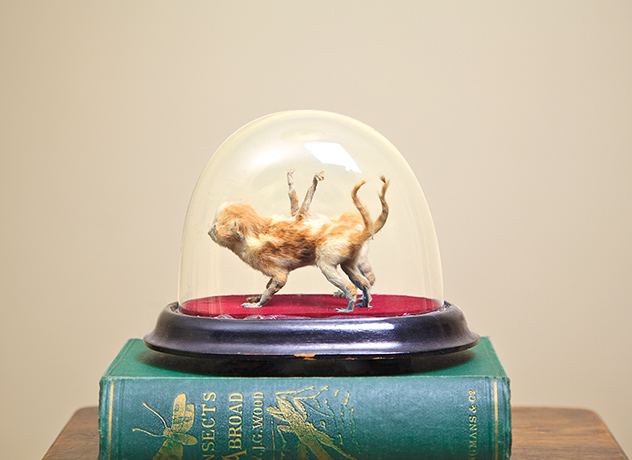
A kitten with two bodies, fused at the head, two tails and six legs underneath with two more on its back from incompletely separated twins Photograph: Dr Pat Morris/ Joanna Ebenstein