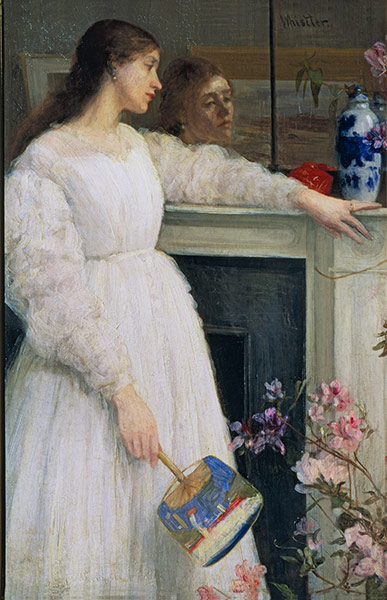
In his portraits Whistler brilliantly danced on the border between British middle-class taste for good likenesses and his knowledge of French impressionism to create a nuanced, musical art of mood that suggests the preludes of Wagner Photograph: Tate, London
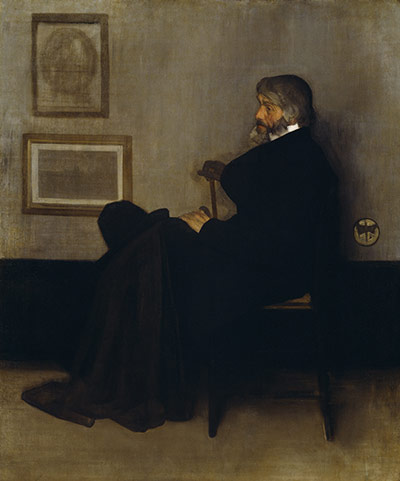
The historical essayist Carlyle was one of the brooding visionary intellectuals of the Victorian age, but here Whistler sets him in a dreamy impressionist arrangement of colours that tames his rage Photograph: Glasgow Museums
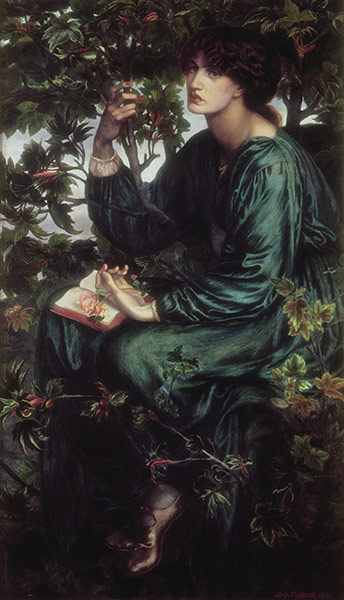
Jane Morris, the lush sex symbol of Victorian Britain, inspired this Rossetti painting that turns her into a modern Mona Lisa, at once real and unreal Photograph: V&A Images
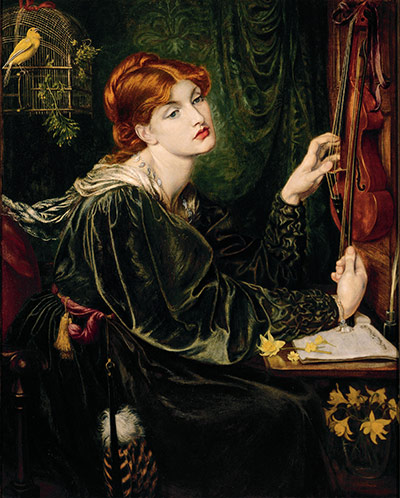
While Walter Pater was working on his aesthetic book The Renaissance, Rossetti painted this flamboyant recreation of Renaissance art, successfully evoking the richness of 16th-century Venetian painting Photograph: Delaware Art Museum, Samuel and Mary R. Bancroft Memorial
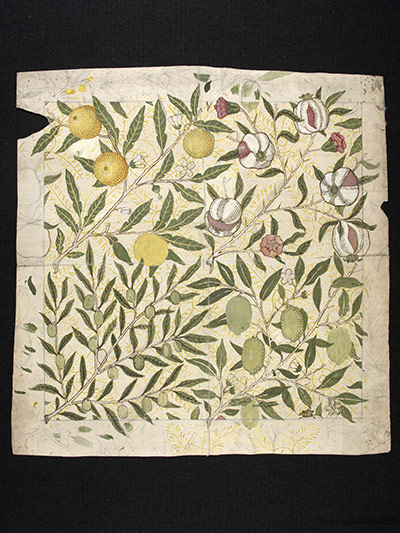
No aesthete was more radical than William Morris, a disciple of Marx and author of the utopian socialist fantasy News From Nowhere, yet today his designs are cherished as visual comforts Photograph: V&A Images
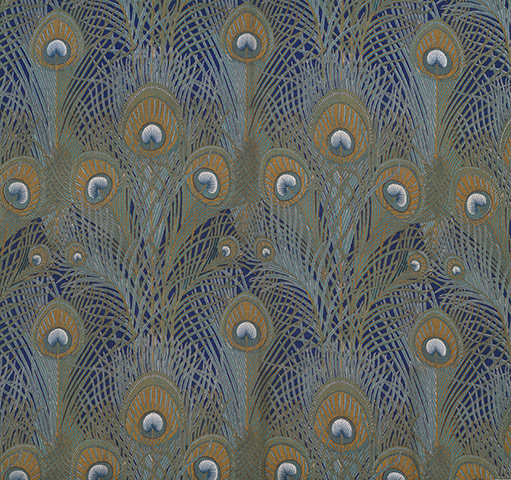
Liberty prints are a living legacy of the aesthetic movement, and this early classic evokes the famous Peacock Room that Whistler designed as a vision of luxuriant grace Photograph: V&A Images
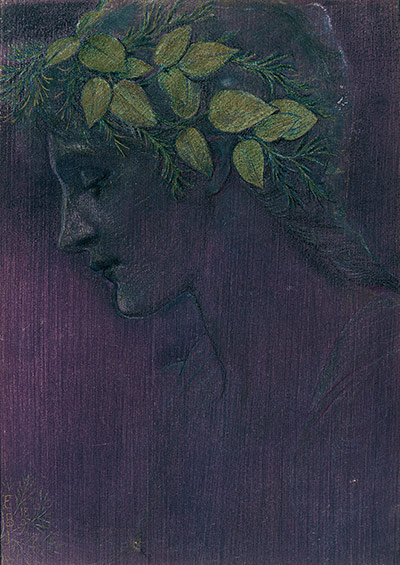
Burne-Jones evolved from the aesthetic movement to be recognised across Europe as a symbolist and his visionary art bears comparison with that of Munch, Klimt and Odilon Redon, who similarly sought to create modern myths
Photograph: Cecil French Bequest
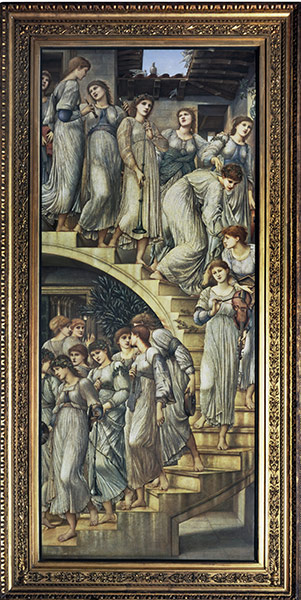
The repetitive, cyclical procession of maidens in this painting influenced Marcel Duchamp, who quotes it in his early sensation Nude Descending a Staircase Photograph: Tate, London
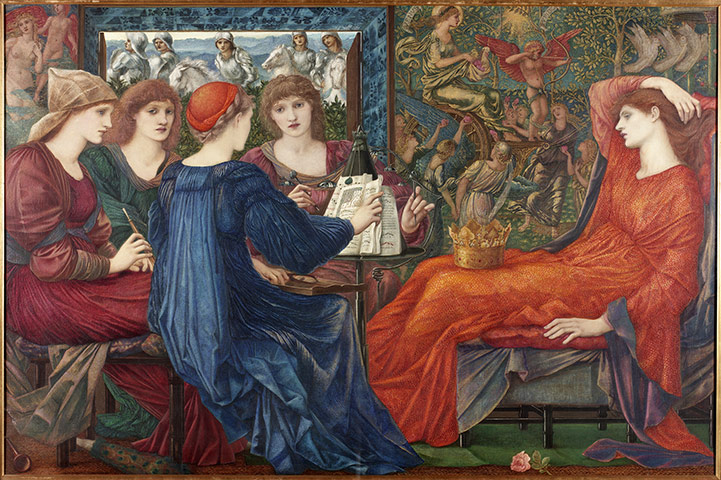
This painting, with its ethereal air and rich tapestries, illuminates the fantasy of the Arthurian middle ages that Burne-Jones worked with William Morris to recreate in Victorian homes Photograph: Laing Art Gallery
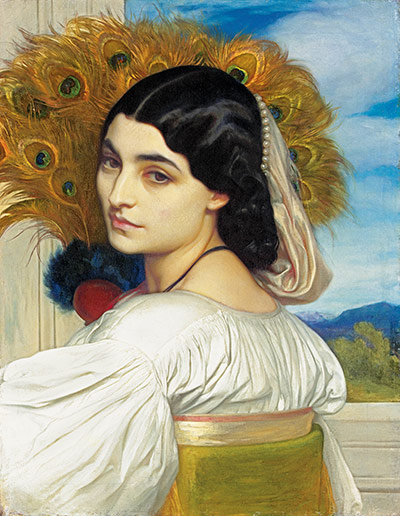
Leighton's paintings – the title of this one is the Italian word for 'peacock' – are somewhat slavish in their recreation of Renaissance beauty, but his house near Holland Park in London is a wondrous time capsule of aesthetic delights Photograph: Private Collection c/o Christies