Whenever a handful of shows close prematurely, hard-pressed hacks trot out the old piece about "West End in crisis". What is significant, however, is that the crisis is always caused by some external factor: The hot weather. The cold weather. The Olympics. The World Cup. And now it's apparently all the result of the credit crunch. The one possibility never discussed is that some shows close early because they are crap.
It happened again this week with the news that Riflemind, Girl with a Pearl Earring and Eurobeat are all being pulled from their respective theatres. But is this really the fault of the credit crunch?
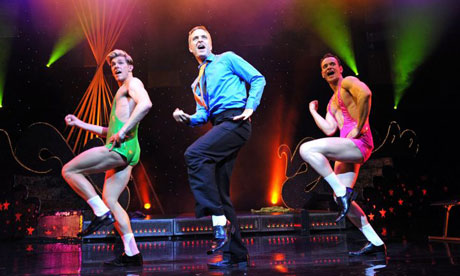
Riflemind, dealing with a rock group's reunion, was variously described as "an unexpected dud" (Observer), "poorly constructed, dismayingly unfunny" (Daily Telegraph), and "aggressively dull" (Evening Standard). With reviews like those, the surprise is not that the show is closing 10 weeks early but that it staggered on for a month. Similarly, Girl with a Pearl Earring was greeted by a critical chorus of barely-stifled yawns. And although Eurobeat, which sends up the Eurovision song contest, generally got a more upbeat response, discerning critics instantly saw through it. As Robert Shore pertinently asked, "Can you parody something that's already self-parodic?"
Obviously tighter spending is bound to have an effect on theatre in the long run. But it may be a positive one in that commercial producers are less likely to confront us with vacuous rubbish and that audiences will opt for genuine quality.
In fact, the real story of London theatre this autumn is the popularity of first-rate drama. Try getting a ticket for Ivanov at Wyndham's, Waste at the Almeida or Creditors at the Donmar. Pinter's No Man's Land and Pirandello's Six Characters in Search of an Author, both directed by Rupert Goold, are also doing excellent business in the West End. As for the RSC Hamlet, starring David Tennant, I'm told that when booking opened at the Novello there were all-night queues snaking round the Strand. Clearly the credit crunch didn't have an effect on them.
You could argue that these are all accredited classics, often garnished with star-names. But David Hare's new play at the National, Gethsemane, has virtually sold out. And it's noticeable that Christopher Shinn's political drama, Now or Later, has had its Royal Court run extended by two weeks because of audience demand. Whenever I go to the Young Vic, the Soho or the Lyric Hammersmith, I'm also struck by presence of palpably excited, late-teenage audiences demolishing the journalistic myth that theatre is a passé pastime for old fogeys. My firm and unshakeable belief is that there is a huge hunger for good drama, whether it takes the form of re-imagined classics or new writing with a sharp political edge.
There is no evidence to suggest the credit crunch has affected that one jot. And, if straitened economic circumstances help to clear West End stages of the lazy, the meretricious or the second-rate, then I can only say that it will be a damned good thing.