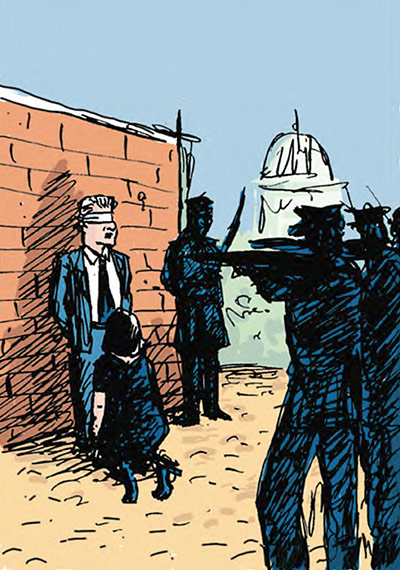
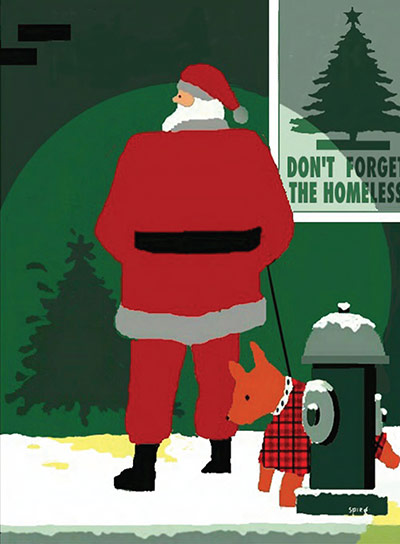
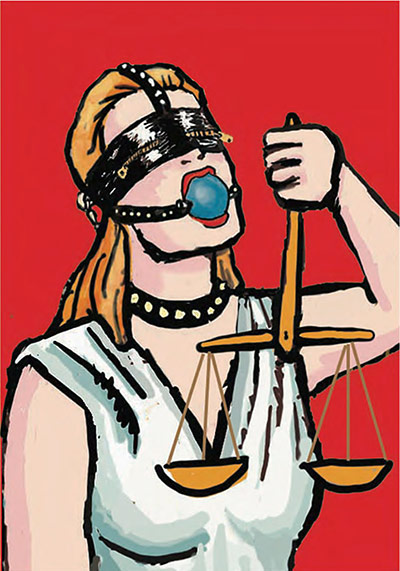
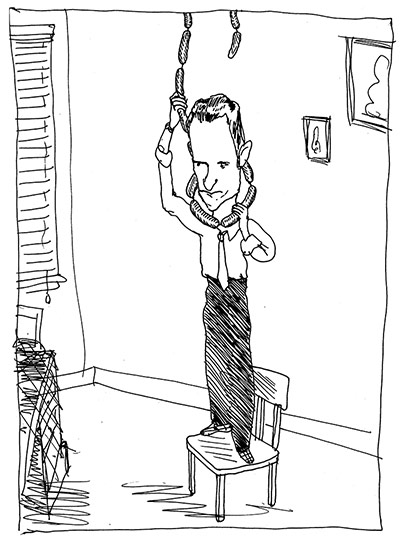
At the height of the Monica Lewinsky affair, Art Spiegelman proposed this sketch titled "Clinton’s Last Request." “When a word like ‘blow job’, which you never dreamed of finding in the paper is now on the front page every day,” he explains, “I had to find a way for my image to be as explicit without being downright salacious.”Photograph: Art SpiegelmanIn a sketch rejected early on, Art Spiegelman used a jolly Santa to make a point about remembering those in need. When the first version of his image was turned down, Spiegelman tried to assuage the editors’ qualms by turning Santa around, leaving room for ambiguity about who had splashed the Christmas tree on the wall. Then, told that the reference to the homeless was what was offensive, Art switched to Santa honouring a bar. It still was a no-go, so Art used it as his Christmas card that year.Photograph: Art Spiegelman/New YorkerFollowing the Starr report on the Clinton/Lewinsky affair, Art Spiegelman drew this sketch. The week it would have appeared, Larry Flynt, publisher of Hustler, threatened to expose the indiscretions of 11 congressional Republicans.Photograph: Art Spiegelman/New Yorker
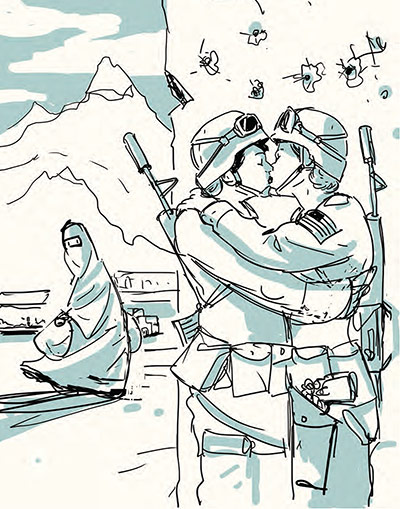
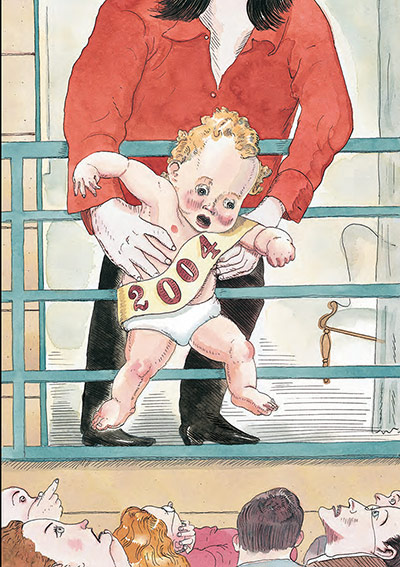
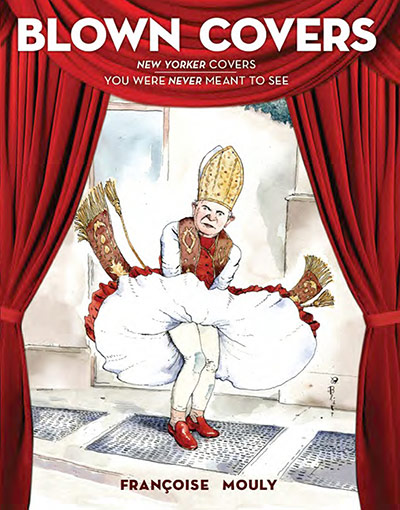
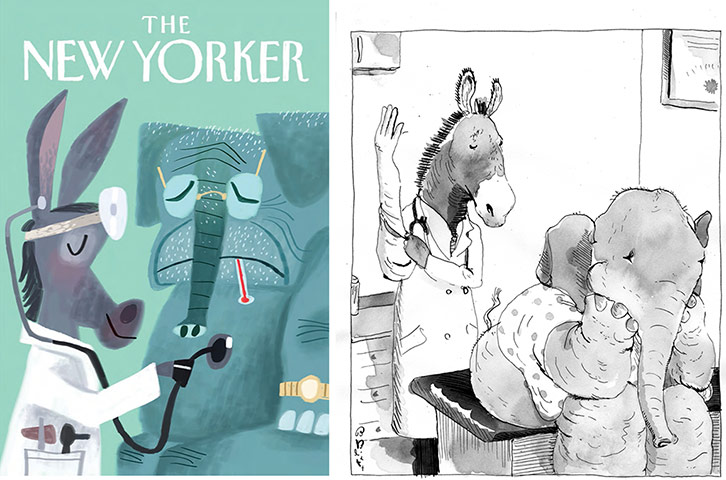
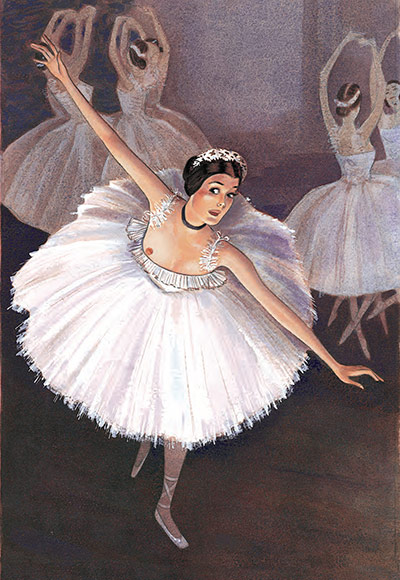
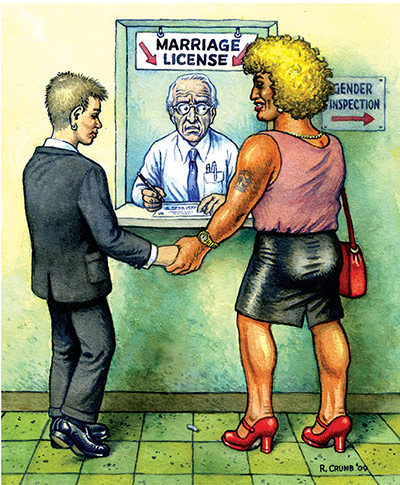
Every cover is a Rorschach test. Zohar Lazar's image of gay US soldiers in Afghanistan kissing can be seen as either a celebration of tolerance in a repressive place or an example of America imposing its values where they are not welcome – or both.Photograph: Zohar Lazar/New YorkerFor New Year’s Eve 2004, Barry Blitt proposed an image alluding to a widely publicised incident. Blitt’s image did not show its main subject, but it did take advantage of the easily identifiable Jackson palette: red shirt, white skin, pitch-black hair. And, though Blitt is counting on readers to know the reference, he departs from the facts of the case: whereas the covered baby face was memorable, Blitt makes a full reveal the centre of his composition. The onlookers at the bottom look and point up, and so do we. As the new year starts, we are right there, in the centre of the image, mirroring the baby’s horrified expression.Photograph: Barry Blitt/New YorkerWhen this image by Barry Blitt came in, David Remnick, the editor who makes all the final decisions was off on a trip, but he asked me to show it around. My colleagues all laughed yet they concluded it didn't "work" because neither the pope nor the scandals plaguing the Catholic church had anything to do with Marilyn Monroe. "Oy Vey!" said the artist, Barry Blitt, and we moved on.Photograph: Barry Blitt/New YorkerWhen President Obama finally pushed a comprehensive healthcare reform bill past the reluctant Republicans, both Lou Romano (left) and Barry Blitt (right) proposed Democratic donkey doctors examining Republican elephant patients – but Blitt's is a tad naughtier.Photograph: Lou Romano/Barry Blitt/New YorkerSometimes it seems like artists are poking fun at the more sedate New Yorker covers of the olden days, though the artist here, M Scott Miller claims that the inspiration for this "jeté" is an experience common to anyone who follows classical ballet.Photograph: M.Scott Miller/New YorkerA “sexting” scandal forced congressman Anthony Weiner, one of the Democrats’ most effective liberal voices, to resign from the House of Representatives in June 2011. Weiner participated in his own demise by fervently denying he’d sent lewd photos of himself to various women (though it was later proven he had). The whole mess was so sordid that the media – and Barry Blitt – didn’t hesitate to indulge in “weiner jokes.” In the end though, the timing of a double issue prevented us from running a cover on that topic.Photograph: Barry Blitt/New YorkerRobert Crumb proposed this wedding cover in 2009, but we turned it down feeling that it was out of step with its times. “I don’t know if gay couples dress like that – in my mind I was more concerned about drawing them so that you couldn’t tell what gender they are. But then, you can do stuff that you think is just funny and unintentionally offend people,” explains Crumb. He says his intention is “to bring to the surface the underlying cancer that’s within all of us whether we know it or not – and for people to see that and maybe laugh at the absurdity of it.”Photograph: R.Crumb/New Yorker
Sign up to read this article
Read news from 100’s of titles, curated specifically for you.