One morning in mid-May, Lek Thongsuk unfolded the plastic bag where she keeps all the family's money and counted 524 baht. She knew, without much calculation, that it would last a day, maybe two. Her son was out driving a city garbage truck, the family's primary source of income.
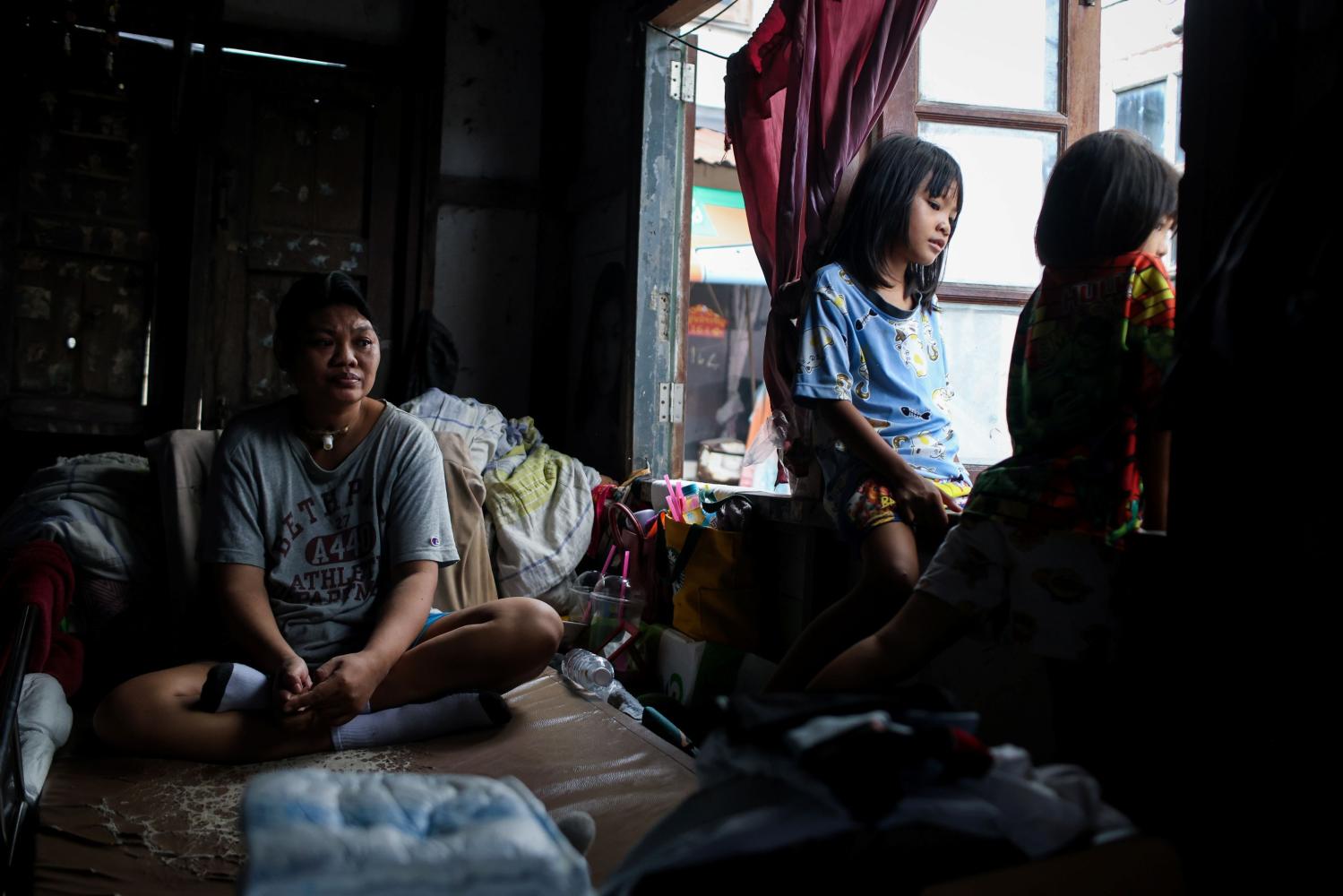
When her son is working, the 60-year-old grandmother acts as the head of the household for the seven left at home. Her daughter-in-law, who lost the ability to walk after suffering a stroke nearly three years ago, is able to sit up and gesture for water or food, but unable to rise.
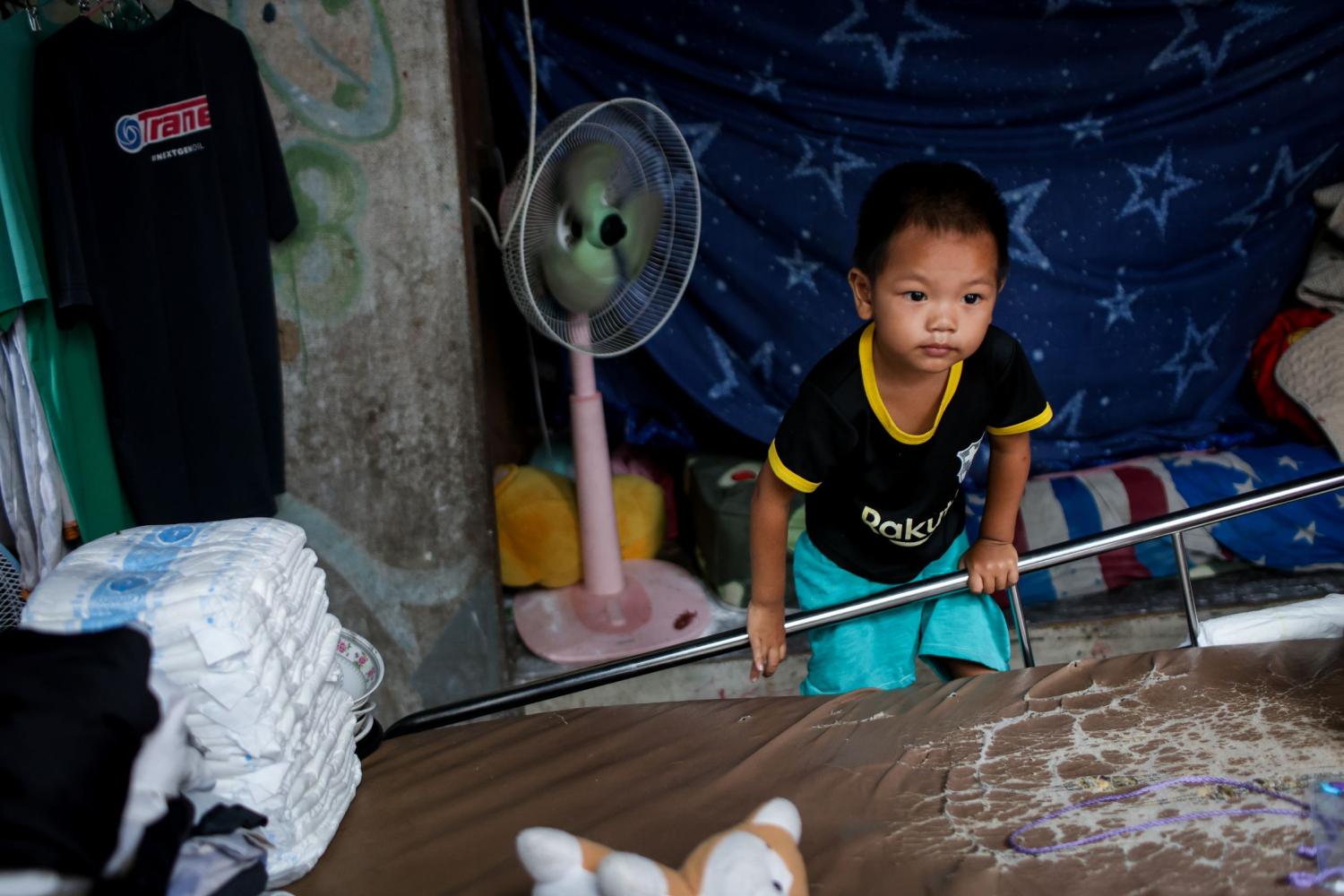
Five grandchildren, ranging from a teenager to a toddler not yet three, depend on Lek for every meal. "The money is never enough," she says.
The family of eight rents a one-storey house in On Nut, surviving on her son's 12,000 baht monthly salary and whatever they earn sorting the recyclable cans and bottles he brings home -- up to 4,000 baht in a good week. It is never enough.
"If we get 1,200 baht, I'll buy rice, instant noodles and canned fish so we have food at home for the days we can't afford fresh food," says Nantiya Thongsuk, the 13-year-old second daughter. Her responsibility is managing the shopping for dinner.
That 1,200 baht should be available to the family, at least in principle. Of the five children, the two eldest are teenagers already in school. The three youngest are aged seven, five and nearly three, but only two of the youngest children are eligible for Thailand's Child Support Grant.
The grant provides 600 baht per child per month for disadvantaged families with children under six. Of the three younger children, the seven-year-old has just aged out of the programme without ever receiving a single payment -- her window closed before they had the opportunity to open it.
The two youngest can still be enrolled but they haven't because no one in the family has had the time to apply.
Registering for welfare turns out to be yet another challenge for those who need it most. The Thongsuk family is far from alone -- across Thailand, some of the poorest households remain unseen by a system meant to support them from the very start.
The obstacle is not ignorance. The family knows about the grant. The obstacle is time, paperwork and a verification system that was designed to confirm poverty but which, in practice, penalises the people it was meant to protect.
Her son understands the process well enough to navigate it. But taking a day off to do so costs more than they can spare and his schedule barely allows for rest, let alone bureaucratic errands.
Kankamol Sincharoen, Social Policy Specialist at Unicef Thailand, hears stories like this often.
"These families are already struggling," she says. "They should not have to prove their poverty."
While around 2.1 million children were receiving Thailand's Child Support Grant as of May, Unicef estimates that 34% of eligible children remain excluded from the programme. For many families living on the edge, that can mean missing out on much needed support during the earliest and most critical years of a child's life.
To qualify, each household member must earn less than 100,000 baht annually. Salaried workers can use payslips as proof, but most families who need the grant work in the informal sector and lack official income documents. They must instead obtain a signed endorsement from a community leader or local official confirming they are poor.
In cities, this often creates a particular trap.
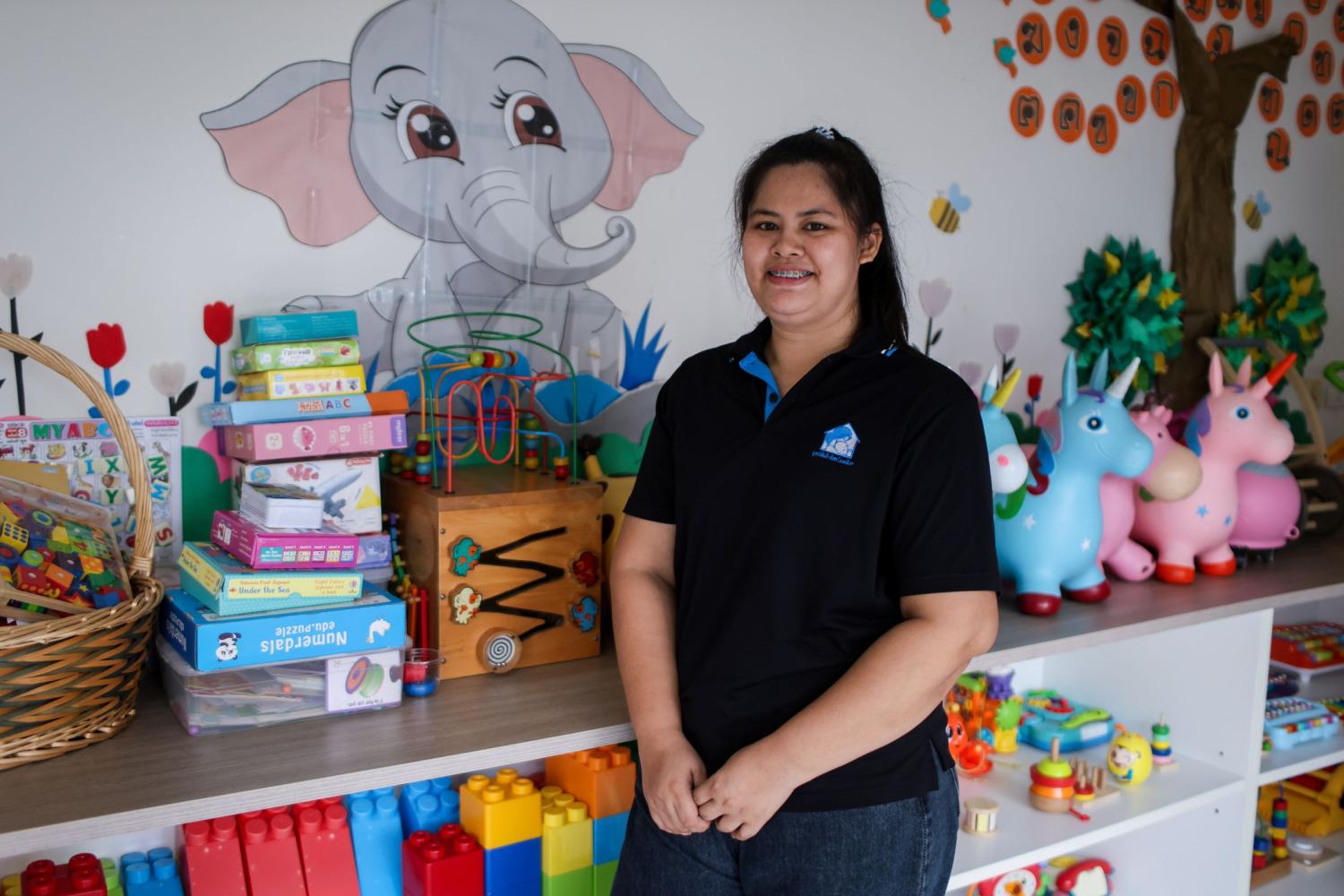
Wasinee Sangsuy is a teacher at an early childhood development centre in On Nut who has spent a decade helping disadvantaged families in Bangkok access social welfare. She has seen the trap up close. Many of the parents she works with are recent arrivals in the community who have moved for work and know almost no one.
"Certainly not a community leader," she says. "Without a trusted contact who can sign the form, the whole application stalls."
The delays can stretch far beyond what any family should have to endure. Wasinee recalls one family that needed nine months to get their documents ready. Another waited 20 months because of a clerical error that caused their application to vanish into the system.
When the mistake was eventually found, the family received all the backdated payments in a lump sum. For families who manage their finances well, the grant can mean even more -- some families Wasinee has worked with set parts of the money aside, building a small education fund for when their child starts school.
She considers the Thongsuk family a particularly painful case. The father works for a government agency. In a better-functioning system, he might have been among the first identified as eligible.
"This family should not have to prove they are poor, because they genuinely are," Wasinee says.
Kankamol points to a structural flaw at the root of the system's problems. Because Thailand lacks comprehensive income data, means-testing the grant forces families to produce documentation that informal workers don't possess, then wait an average of six months after submitting before any money arrives.
Unicef proposes policy reforms to address these problems.
Option one: rather than requiring poor families to prove their poverty, flip the burden -- screen out the wealthy and let everyone else receive the grant.
Option two: integrate all child benefits into a single tiered system with full coverage -- higher amounts for families in informal sector and lower amounts for those who already receive child allowance from the social security fund.
"Because fewer children are being born, investing in each one matters even more," Kankamol says. With Thailand's birth rate continuing to fall, quality human capital built from the earliest months of life is what will sustain the country's future.
Back in On Nut, Nantiya helps with household chores, sorts recyclables and saves a few baht from her school allowance to top up mobile data so she can reach her father when he is away. She hopes to finish school and go on to university even if it means taking on a part-time job to help pay her way through. Yet she speaks about the future with remarkable practicality.
"I don't dream of anything," she says, her face still, gaze steady and unreadable. "I just live with reality every day."