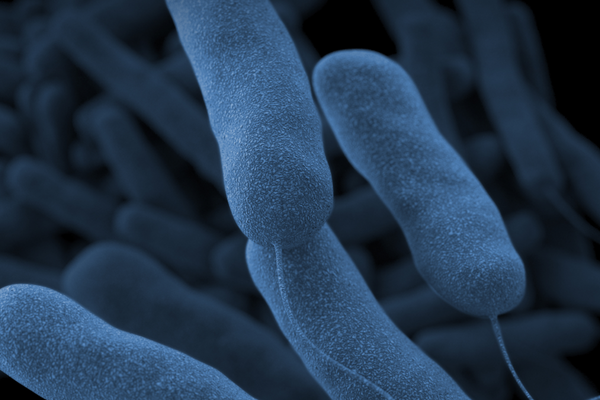
LOS ANGELES _ The coronavirus sweeping through China and spreading across the globe has health authorities on high alert. It's not just because the virus has infected more than 1,300 people, killed 41 and forced millions to be quarantined. It's also because this particular virus has never been seen before.
Any time a "novel" virus appears on the scene, things immediately become much more complicated. Here's why:
PREVENTION
Vaccines take years to develop, and since this virus is brand new, researchers will have to start from square one. People haven't had a chance to develop the natural immunity they'll need to protect themselves if they become infected. That means hand-washing and masks are their best options.
DIAGNOSTICS
At first, doctors had no surefire way to tell whether someone was infected with the virus known as 2019-nCoV or if they had a more run-of-the-mill flu. In the early days of the outbreak, physicians simply reported cases of pneumonia-like illness to local health authorities. As a result, it took several weeks for the World Health Organization to learn of the trending cases in the central Chinese city of Wuhan.
Once the virus' genome was sequenced and released, the U.S. Centers for Disease Control and Prevention and other agencies around the world were able to develop real-time diagnostic tests. Now that these tests are more readily available, the number of new infections appears to be skyrocketing. It may seem scary, but it doesn't necessarily mean the virus is spreading faster or making people sicker.
An accurate diagnosis helps doctors decide on the best treatment for their patients. But in the case of a novel virus, it also helps epidemiologists track the pathogen's spread so they can take measures to contain it.
Also, until officials have a better count of the number of people infected, they won't be able to calculate the coronavirus' death rate.
CONTAINMENT
Public health officials rely on past knowledge of a virus to make decisions about how to respond to it. For instance, experts who have studied severe acute respiratory syndrome, or SARS, and Middle East respiratory syndrome, or MERS _ both coronaviruses _ have a sense of their characteristics: How easily do they jump from human to human? Do they weaken over time, or gain momentum? Since 2019-nCoV is new, questions like these don't have reliable answers.
Like all viruses, this coronavirus is capable of mutating quickly. That means much of the information scientists have gathered may only be temporarily accurate.