

We all value our time, and grocery stores have expertly monetized this desire by transforming the produce section into a hub of ready-to-eat convenience. Shoppers walking through the aisles are greeted by walls of plastic containers filled with diced onions, spiralized zucchini, and perfectly cubed melon. These items promise to shave precious minutes off dinner preparation. They are offering a tempting shortcut for the busy home cook. However, this convenience carries a massive financial penalty known as the “convenience tax.” The tax serves as one of the most significant yet overlooked drains on a household’s grocery budget. While grabbing a container of pre-sliced peppers feels efficient in the moment, a closer look at the math reveals that you are paying a staggering premium.
The Staggering Markup Math
The price difference between whole produce and its pre-cut counterpart is not merely a few percentage points; it is often exponential. Consider the common watermelon. A whole melon might cost six dollars during peak season, providing a substantial amount of fruit. In contrast, a small plastic container holding perhaps one-eighth of that same melon often sells for five dollars or more. When you crunch the numbers, you are paying a markup of nearly eight hundred percent, effectively just for the labor of slicing through a rind. Grocery stores capitalize on consumer laziness or intimidation by charging restaurant-level labor costs for simple tasks.
The Shelf Life Problem
Beyond the financial cost, pre-cut produce suffers from a drastically reduced shelf life. Whole fruits and vegetables come equipped with natural protective skins that lock in moisture and keep out bacteria. Once a knife slices through that skin, the clock starts ticking immediately. Pre-cut items degrade much faster than whole produce, forcing you to consume them within a day or two to avoid spoilage. In contrast, a whole onion or squash can sit on your counter for weeks without issue. Relying on pre-cut options increases the likelihood of food waste, meaning you are not only paying more upfront but also risking the loss of the product entirely if your meal plans change.
The Hidden Nutrient Loss
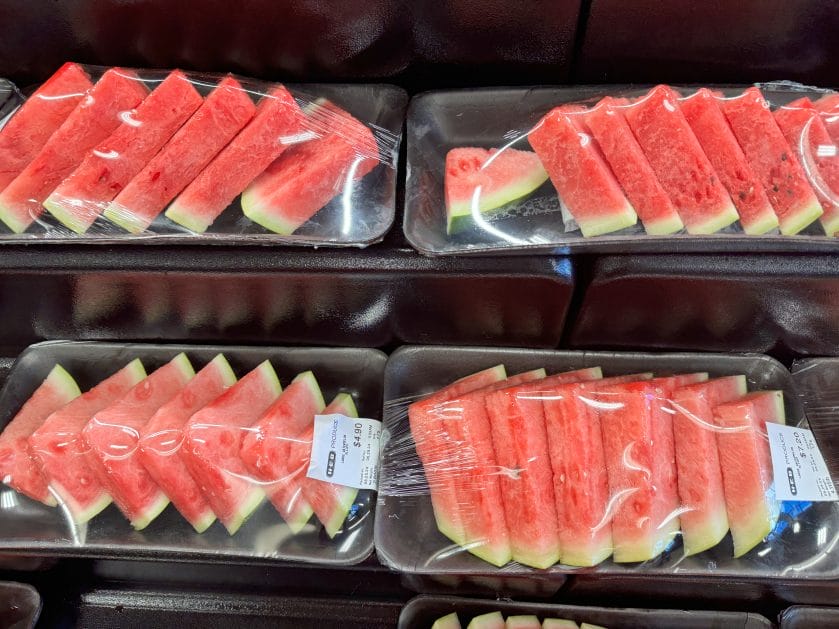
Nutritional value is another casualty of the convenience tax. Vitamins and antioxidants begin to degrade the moment they are exposed to oxygen, a process known as oxidation. Cutting fruits and vegetables breaks down their cell walls and drastically increases the surface area exposed to air. Consequently, a container of sliced peppers or diced sweet potatoes loses nutritional potency every hour it sits on the refrigerated shelf. By the time you get that convenient container home, it contains fewer vitamins than the whole counterpart sitting just a few feet away. You are essentially paying a premium price for a nutritionally inferior product.
The Safety and Sanitation Risk
Food safety experts often warn that pre-cut produce carries a higher risk of contamination than whole foods. Whole produce requires minimal handling before it reaches your cart, whereas pre-cut items pass through processing machines and human hands. This increased handling creates more opportunities for pathogens like Salmonella, E. coli, and Listeria to contaminate the food. Furthermore, the moist, enclosed environment of a plastic container creates an ideal breeding ground for bacteria. Buying whole produce allows you to control the washing and cutting process in your own kitchen, significantly reducing the risk of foodborne illness.
The Environmental Cost
There is also the issue of excessive packaging. Whole produce often requires no packaging at all, or perhaps just a thin reusable bag. Pre-cut produce, however, relies heavily on single-use plastic clamshells and containers to maintain freshness. This unnecessary packaging drives up the cost of the item and contributes significantly to household waste. Choosing whole items supports a more sustainable food system by eliminating the plastic tax that comes wrapped around your convenience food.
Mastering the Knife
While there are valid use cases for pre-cut produce, such as for individuals with mobility issues or disabilities that make chopping difficult, it remains a budget trap for the average shopper. The most effective way to beat this tax is to invest in a sharp chef’s knife and practice your skills. With a little experience, chopping an onion takes less than a minute, saving you significant money over the course of a year. By doing the prep work yourself, you ensure that your food is cheaper, fresher, tastier, and safer than anything coming out of a plastic box.
What to Read Next
Why You Should Stop Buying Pre-Cut Fruit at the Grocery Store Immediately
5 Foods That Cost More When Bought Pre-Cut
What’s the One Item You Should Never Buy Pre-Cut?
Why Some Pre-Cut Fruits Might Be Sprayed with Preservatives You’ve Never Heard Of
When Is The Best Time to Buy Perishables?
The post The “Convenience Tax” on Pre-Cut Produce: Convenience vs. Cash appeared first on Grocery Coupon Guide.