Some small companies stay small because the market they serve remains limited. Others stay small simply because the broader market has not yet recognized how large the surrounding opportunity may ultimately become.
That difference is becoming increasingly important at RenX Enterprises Corp. (NASDAQ: RENX).
For much of the past year, the company has largely been viewed through narrow categories tied to biomass recycling, composting, sustainability, or agricultural inputs. Those labels explain part of the story, but they increasingly fail to capture what appears to be forming underneath the operating platform itself. Because what RenX is assembling now looks much larger than a traditional agricultural processing business, and importantly, the growing industrial ecosystem surrounding the company may ultimately become the bigger story.
That shift becomes easier to understand once the recent developments are viewed together rather than individually. RenX recently reported $3.96 million in first-quarter 2026 revenue, more than 40% sequential growth in material sales, improved operating Adjusted EBITDA, and a return to profitability within its Logistics segment during the company’s first full quarter operating on its upgraded Myakka City processing platform.
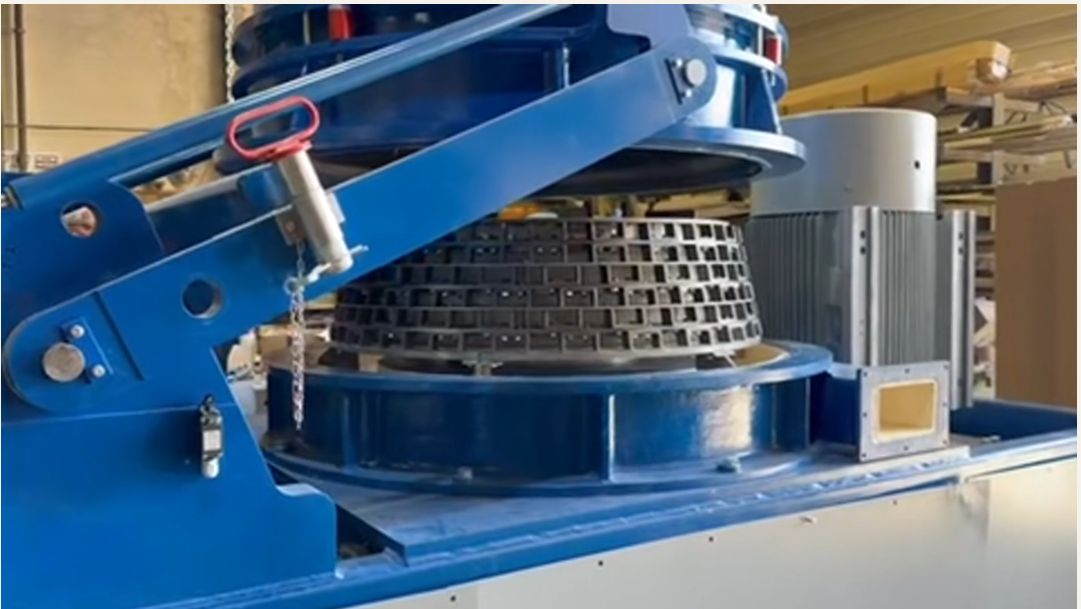
At the same time, the company has continued to expand industrial hauling relationships through Zimmer Equipment while advancing commercialization efforts for the Microtec UTM 1200 Turbo Mill, a specialized processing system operating under an exclusive U.S. licensing structure. Individually, those developments may appear operational. Together, however, they begin outlining something far more significant: a vertically integrated industrial platform that connects intake infrastructure, hauling, processing, refining, and engineered agricultural products into a single operating ecosystem.
That dynamic matters because infrastructure businesses tend to behave differently once operational flow begins stabilizing. Early-stage companies often focus on proving products. Industrial systems focus on securing recurring movement. Material comes in. Material gets processed. Material moves out. Over time, consistency, route density, utilization, and throughput become more important than novelty because repeatable flow is what ultimately creates durable operating leverage.
That leverage is now becoming visible across the RenX platform.
The Zimmer expansion may be one of the more underappreciated pieces of the broader story. Large industrial operators do not casually integrate smaller companies into recurring hauling relationships or operational infrastructure without clear economic value. Route optimization, utilization efficiency, and processing economics are closely monitored inside industrial waste and logistics systems because small inefficiencies become expensive at scale.
That is why the caliber of counterparties now entering the broader RenX ecosystem matters. Not necessarily because investors need to know every name involved, but because enterprise-scale participation itself can signal that the underlying value proposition is resonating inside much larger industrial networks. That changes how the long-term opportunity should potentially be viewed.
Something else to think about: Based on publicly disclosed hauling relationships and industrial infrastructure activity already surrounding the platform, it is increasingly reasonable to view RenX as operating adjacent to some of the largest waste, logistics, and industrial material networks in North America, including operators whose annual revenues individually exceed tens of billions of dollars.
That's not a stretch of the imagination. It's likely because enterprise-scale systems are finding seamless connections, allowing integration into smaller operators like RenX, where the economic value proposition is becoming difficult to ignore.
If the RenX model continues proving capable of integrating into large-scale waste, industrial, land-clearing, municipal, and agricultural systems simultaneously, the addressable ecosystem surrounding the platform expands dramatically. And importantly, the value proposition itself becomes increasingly scalable.
That scalability is increasingly tied to the refinement technology now being integrated throughout the RenX platform.
The company’s Microtec UTM 1200 Turbo Mill is not simply another industrial grinder. Operating under an exclusive U.S. licensing structure, the system is designed to process woody biomass into highly refined engineered substrate products with greater consistency and precision than traditional bulk compost or mulch operations. That capability becomes increasingly important as agriculture itself evolves toward more controlled growing environments that require repeatable substrate performance at an industrial scale.
That evolution is already reshaping agricultural infrastructure globally. Greenhouses, nurseries, controlled-environment agriculture operations, and engineered growing systems increasingly prioritize consistency, moisture control, aeration stability, and repeatable growing conditions across production cycles. Once agricultural infrastructure begins to prioritize standardization at scale, the companies controlling refining capacity and localized processing infrastructure may occupy a much more valuable position within the supply chain.
And increasingly, broader geopolitical realities are reinforcing that trend.
Roughly one-third of global fertilizer trade still moves through the Strait of Hormuz, highlighting how exposed agricultural systems remain to concentrated global shipping routes and geopolitical disruption. While fertilizer and engineered growing media occupy different parts of the agricultural chain, the broader lesson remains the same: localized infrastructure that can operate with greater control becomes increasingly valuable as global supply systems tighten.
That environment strongly favors domestic processing capability, and RenX appears positioned directly inside that transition. Its platform now combines organics intake, hauling infrastructure, industrial-scale grinding and screening capabilities, engineered blending systems, and advanced refinement technology into a vertically integrated operating structure increasingly aligned with where agricultural infrastructure itself may be heading.
Importantly, the company is no longer operating purely in preparation mode. Commercialization activity surrounding the Microtec platform is now advancing alongside improving operational metrics, expanding hauling relationships, increasing throughput, and strengthening logistics economics. That combination matters because it suggests multiple layers of the operating system are beginning to mature simultaneously.
For stakeholders, the larger opportunity may no longer center around individual contracts or quarterly fluctuations alone. It may revolve around the growing number of industrial materials, municipal waste, hauling, and agricultural infrastructure networks now aligning with the broader RenX operating model.
That presents a much larger opportunity than the market may currently be pricing into the business.
Because once infrastructure systems begin demonstrating recurring industrial flow while simultaneously expanding their refinement capabilities, commercialization pathways, and operational leverage, the businesses operating those systems often occupy much larger strategic categories than the market originally assigned to them.
And that appears to be the category RenX is now growing into.