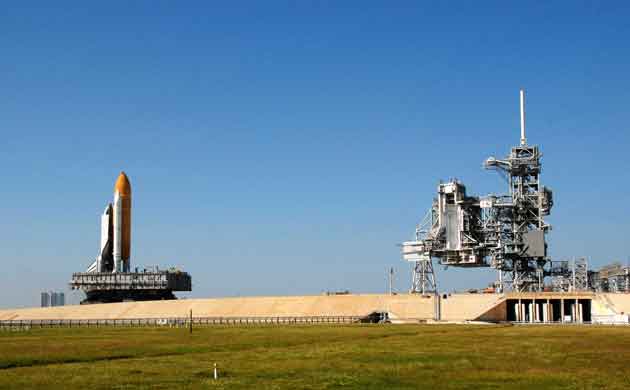
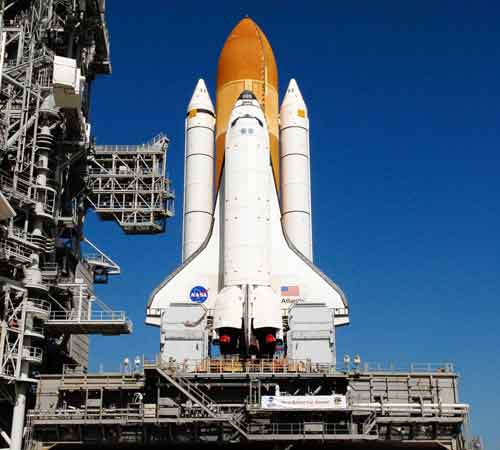
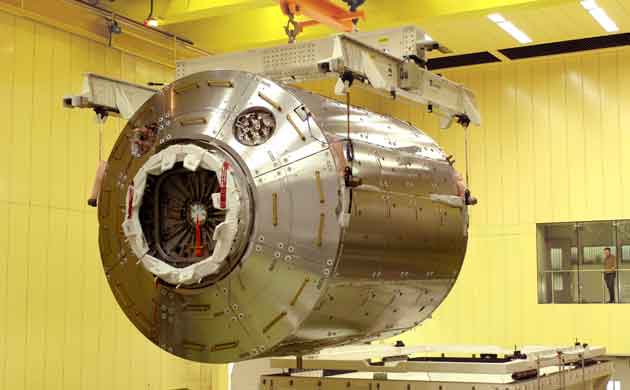
Space shuttle Atlantis at Cape Canaveral (Photo: Nasa)Photograph: ESAAtlantis, secured atop a mobile launch platform, is rolled towards Launch Pad 39A (Photo: Nasa)Photograph: ESAColumbus at the facility in Bremen, Germany, where it was built. The cylindrical module is 4.5m in diameter. During its 10-year projected lifespan, Columbus will enable Earth-based researchers and the ISS crew to conduct thousands of experiments in life sciences, materials science and fluid physics in the weightlessness of orbit (Photo: ESA)Photograph: ESA
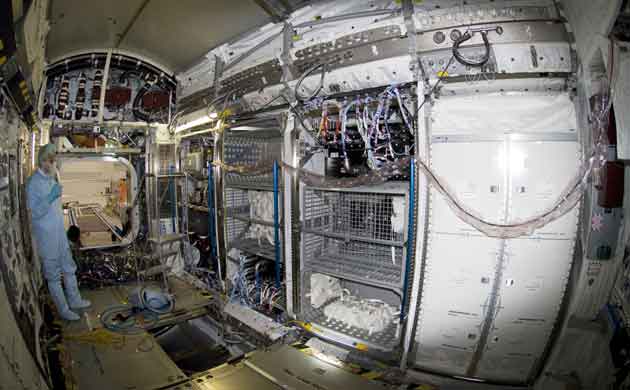
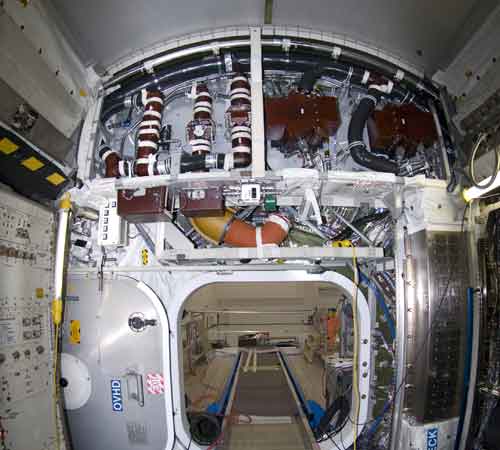
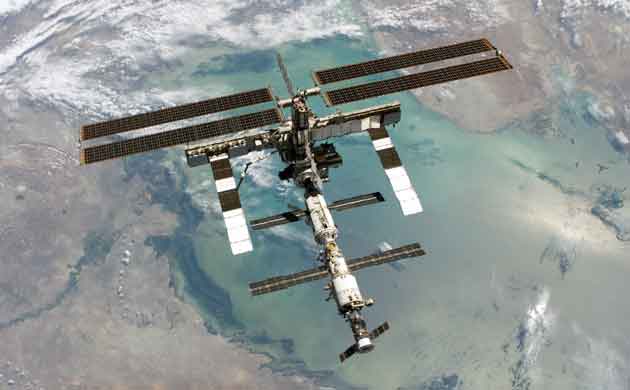
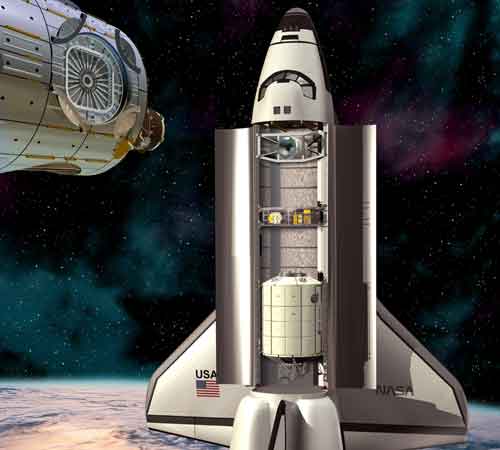
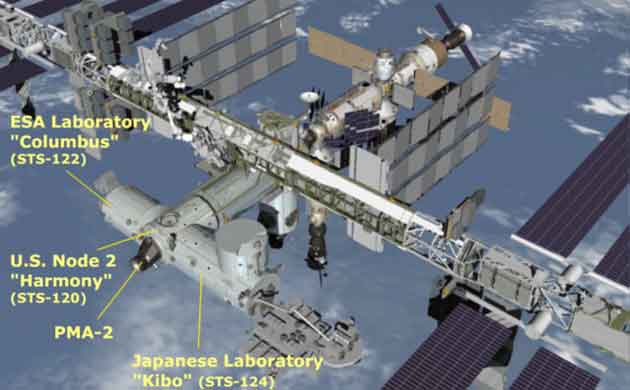
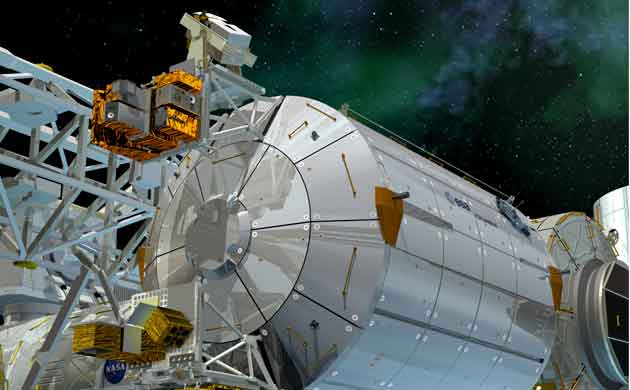
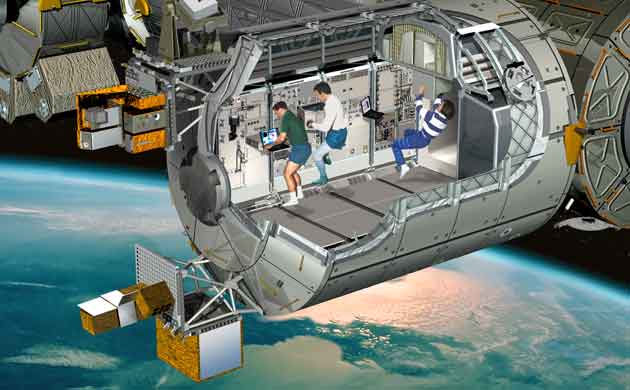
Columbus has room for ten "payload racks", eight situated in the sidewalls and two in the ceiling area. Each is the size of a telephone booth and able to host its own autonomous and independent laboratory, complete with power and cooling systems, and video and data links back to researchers on Earth (Photo: ESA)Photograph: ESAInterior view of Columbus during pre-flight preparations at the Kennedy Space Center's Space Station Processing Facility (Photo: ESA)Photograph: ESAAssembly of the International Space Station began in 1998 and should be completed by 2010. The ISS is in low Earth orbit and can be seen from Earth with the naked eye. It travels at an average speed of 17,240 miles per hour, completing 15.79 orbits per day (Photo: STS-114 Crew, NASA)Photograph: ESAArtist’s impression of the space shuttle Atlantis - with Columbus in its payload bay - docking with the ISS (Image: ESA)Photograph: ESAArtist's impression showing the positioning on the ISS of Columbus and the Japanese science module Kibo, which is due to be installed early next yearPhotograph: ESAArtist's impression of Columbus after installation on the ISS. The module is Europe's biggest contribution to the $100bn space station project and will double its capacity for scientific research (Image: ESA)Photograph: ESAArtist's impression of astronauts at work inside Columbus. Outside, the module has four mounting points for external payloads. Exposed to the vacuum of space, and with an unhindered view of Earth and outer space, science packages can investigate anything from the ability of bacteria to survive in space to volcanic activity 400km below on the Earth. Two external payloads will be attached shortly after the module docks with the ISS (Image: ESA)Photograph: ESA
Sign up to read this article
Read news from 100’s of titles, curated specifically for you.