You wait ages, then six come along at once. From 2010-2015, there was not a single ministerial letter of direction to a permanent secretary, the process whereby ministers confirm that something should go ahead despite civil service officials judging it is not value for money.
But since January there have been six. One of these ministerial decisions concerned the failed charity Kids Company and on Monday MPs on the Commons’ public accounts committee (PAC) probed the details of who, exactly, decided to continue funding the charity, despite officials raising concerns many times.
Ministerial directions are a peculiar process. From daily, intimate contact, in which the civil servant strives to protect their minister’s back, the two are suddently exchanging letters on gov.uk. The permanent secretary, as accounting officer, makes a public declaration and tells the National Audit Office that she or he is being told to spend money dubiously. But the spending still goes ahead and the sanctions are usually minimal.
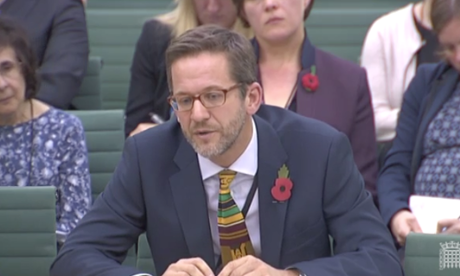
In the case of Kids Company the ministers in the cabinet office – Oliver Letwin and Matt Hancock – who were guilty of overriding the professional judgment of their top official have barely, yet, been questioned; but the official, former permanent secretary in the cabinet office Richard Heaton, has been hauled over the coals by the PAC.
The PAC hearing came a week after Hancock, the cabinet office minister, pitched up at the Institute for Government envisioning a great, glorious digital future for public services, from which, it seems, civil servants will be largely absent as citizens interact directly with machines. Meanwhile, in his day job, Hancock signed off precious millions on the back, it turns out, of minimal evidence about the efficiency and effectiveness of grants to Kids Company and in defiance of the advice of his top officials.
Not that Heaton breathed Hancock’s name during his trial at the PAC. He referred only to unnamed ministers, from whom (eventually) he sought direction, before giving yet more money to the charity. Chris Wormald, permanent secretary at the education department, which had responsibility for the idiosyncratic funding arrangements for Kids Company till 2013, was even more circumspect. He did not once mention the words Michael Gove or, indeed, Ed Balls, Alan Johnson or all the other politicians responsible for approving its grants in previous years.
Wormald might have sought letters of direction at various points in his connection with Kids Company – so he said – but instead he exercised his judgment. That senior public managers should have discretion and latitude isn’t the issue. Nor is it that Kids Company founder Camila Batmanghelidjh proved to be a devastatingly effective lobbyist of prime ministers and MPs over many years despite (we now know) not delivering.
What the MPs on the PAC didn’t explore was just how ill-equipped departments, especially their top echelons, are at dealing with one-offs and special cases. Heaton and Wormald are, we hope, strategists and (the evidence is less secure) managers. They are not fitted to be caseworkers. With Kids Company they neither knew enough about its operations nor understood its political potency; they were on the back foot all the time.
Wormald counted among his “lessons learned” that Whitehall departments are not joined up – not, you can safely say, a new lesson. Kids Company had been adept at approaching several different departments, safe in the knowledge that they rarely swapped information, even about their spending. What the PAC should have asked is how these silos are going to be broken down.
Martin Donnelly at the business department recently girded his loins and told his bullish secretary of state he needed to be directed to spend [pdf] in the wake of the closure of the Redcar steel plant. Is this is a signal of permanent secretary assertiveness?
Meg Hillier, the PAC chair, evidently hopes that Whitehall will take heed of the comparative performances of Heaton and Wormald before her committee – the former protected by the fact he had eventually asked for a letter of direction, the latter squirming because he hadn’t – and become more vocal on marginal spending decisions by Tory ministers.
Talk to us on Twitter via @Guardianpublic and sign up for your free weekly Guardian Public Leaders newsletter with news and analysis sent direct to you every Thursday.