It’s a simple concept, but one we seem unable to grasp. Our linear “take-make-consume-dispose” economy is unsustainable. The only option is to move to a circular economy where once a product is finished with, it is sent back to the start of the manufacturing process to be made into something else.
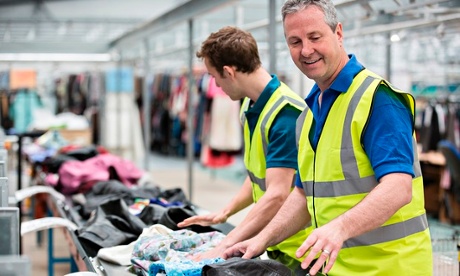
Some companies and countries are leading the way: for instance, fashion brands that collect used clothing to recycle into commercial-grade fibre; restaurant chains that run their transport fleets on biodiesel made from used cooking oil; and Japanese manufacturers typically own their materials’ recovery and recycling process, with compliance schemes to retrieve the products they sell. Consultancy McKinsey estimates that circular business models could add $1tn (£640bn) to the global economy by 2025.
But our “buy-cheap-and-throw-away” mentality is deeply ingrained. UK households throw away 26,000 tonnes of stuff each year, recycling less than half of it. Commercial and industrial waste adds 48,000 tonnes, of which an estimated 21% is recycled. Much less is reused. A circular economy requires new models of product recovery, leasing rather than selling, and collaboration. It requires systemic change.
How to achieve this was the topic of debate for three groups of experts during discussions as part of GSB’s Rethinking Resources series, sponsored by Veolia.
Promoting the circular economy: ‘Employing people is heavily taxed, plundering the Earth is free’
The first discussion saw chair Jo Confino ask Liz Goodwin, CEO of Wrap, Estelle Brachlianoff, senior executive vice-president of Veolia UK and Ireland, and Rob Boogaard, acting president and CEO of Interface, what can be done to increase the use of the circular economy in the business world?
There is a cold, hard, business case for circularity, said Boogaard: “Sustainability adds £7.5m to our bottom line on an annual basis – for a company that’s about £250m gross [in Europe].”
Despite being in an industry that is reliant on oil-based materials, Interface, the carpet manufacturer began its “mission zero” in 1995 to eliminate any negative environmental impact from its operations by 2020. It has since gone on to produce 100% recycled carpet tiles, innovate leasing models and source used nylon from other industries, including commercial fishing.
“It is not just good for the environment, but it pays,” said Boogaard. However, he believes that legislation doesn’t make it easy. While employing people is heavily taxed, “plundering the Earth’s resources is free”, he said. Such perverse incentives see industry put more research and development resources into robotics and IT to cut labour, than it does to eliminate waste and the use of raw materials.
With some raw materials becoming scarce, however, this will force the issue. “Some companies will find that their material costs go up … [and] become volatile,” said Goodwin. Wrap, the UK waste and recycling body, finds that sectors are responding at varying speeds, she said. The food and drink packaging sector is relatively advanced, she said, while textiles and electricals lag behind, largely because of the complexity of their supply chains.
“The challenge is actually making it real on the ground,” said Goodwin. “It’s all very well saying that the UK economy could save £24bn. What does that mean for me – for my company?”
Veolia, for example, has transformed itself from a environmental management company to one focused on manufacturing. It has even pioneered a way of “mining” the dust swept up from the street for precious metal. But it also has an educational role, said Brachlianoff: “Our job is to knock on doors, starting with the big companies, and then the SMEs.” Indeed a recent survey conducted by Fusion among 300 European SMEs revealed that half hadn’t even heard of the circular economy. While a SME may struggle to see what it could do alone, they could pool their resources and waste flows, suggested Brachlianoff.
“The natural tendency in business is to [come up with] something innovative and then think: ‘How can we keep this for ourselves?’” said Boogaard, adding that business needs to move from exclusive to inclusive thinking. Suggestions for how to do this included a stock exchange for companies to buy and sell excess materials; financial industry products that meant working capital is not the sole responsibility of the manufacturer; and MBA and design courses making “closed loop” thinking integral to their syllabus.
Product leasing too is gaining ground, with Kingfisher, Philips and Mud Jeans trialling product-as-service models. Such a move “is a big risk for a company to take,” conceded Goodwin. But organisations, such as Interface, prove that it can work, and it can pay.
Tackling waste: innovations in recycling and reuse
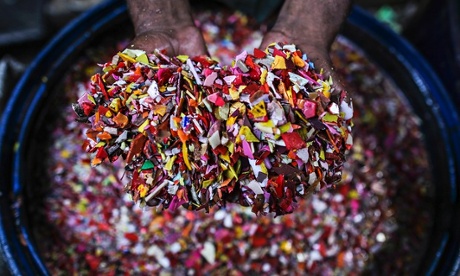
The next debate saw four experts tackle the issue of waste. Asked whether material innovation can save the world, Scott Hamlin, co-founder and CEO of Looptworks, Richard Kirkman, technical director of Veolia, Sophie Thomas, co-director of design at the RSA, and Kresse Wesling, environmental designer and co-founder of Elvis & Kresse, agreed that circular business models are only possible with innovative design. Yet most products are made with little thought to what happens when they are thrown away – think of non-recylable packaging or phones without removable parts.
But materials that used to be considered waste are now being viewed as potential sources of supply.
Looptworks was founded in Portland, Oregon, by two designers from the sports textiles industry with the aim of eradicating waste from the manufacturing process. “We don’t use the word ‘waste’,” said co-founder Scott Hamlin. “Waste has the connotation of being disposable, dirty. We use the word ‘excess’ which creates an image of abundance … it is an opportunity to create beauty from excess.”
A Looptworks project with Southwest Airlines recovered more than 80,000 leather seat covers, turning them into sports bags and accessories. “It takes 2,090 gallons of water to make a pound of new leather,” said Hamlin. Multiply that by 80,000 leather seats, and that’s an awful lot of water saved, not to mention carbon and cows.
Wesling co-founded Elvis & Kresse with the motto: “Reclamation, innovation and donation.” A recent line saw luxury handbags made from used fire hoses, with half the profits going to firefighters’ charities.
Veolia too is engaging with its supply chain to find an end-use for unloved materials. It’s also a means of generating new business, said Kirkman. An example of which has seen plastic made from sludge.
However, most designers and engineers don’t prioritise end-of-life, said Thomas of the RSA. “Industries have incredible composite materials, but none have been developed with end-of-life in the brief,” she said. “For example, LED light bulbs have no end-of-life plan. Mobile phones have 40 elements in them, [some have] over 70. Elements are becoming ‘endangered’.” A way to change this, she said, would be to have a regulatory requirement to integrate end-of-life into design briefs.
Another missing component is the engagement of marketing, sales and procurement departments, added Wesling. Current sales and supply targets are not designed for circularity.
“It’s not the consumer that has to solve these problems, it has to be industry,” argued Kirkman. A brewery in Scotland, for example, works with Veolia to turn waste hops into biogas.
The idea that such systems could become the norm is not far-fetched. “Already in a decade we’ve had food waste bins and recycling bins come into the house,” said Wesling.
“That has all changed. And it will change again.”
Local authorities and creating the right landscape
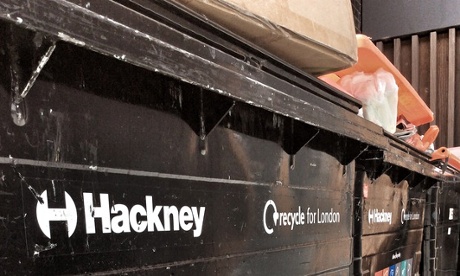
With the first two debates looking at the meta-narrative of the circular economy, the final session zoomed in to the ground level. Chair Jo Confino opened by asking: “It’s great to have the concept and to know that corporations are now thinking about this, but how do we actually drive it on a practical level?” In the UK, he said, “that is clearly about communities and local authorities”.
Many local authorities espouse circular economy principles. However, few seem to match good intent with good practice. England’s recycling rate has plateaued at 43% while Germany (65%), Austria (62%) and Belgium (57%) forge ahead. Differing waste collection schemes in almost every local authority cause a confusing landscape for individuals and businesses.
“Our resource management systems are designed for waste, to take stuff from the back of your house and into landfill,” said Dustin Benton, head of resources and energy, the Green Alliance. “We are in the slow, torturous process of trying to turn that waste system into something that captures value.” That, he said, could include £1.7bn from food, electronic and plastic waste alone. However, there “aren’t very many political incentives to work together”, Benton said. “The neighbouring local authority might be under a different political control, and then they’re the enemy.”
Working with local authorities throughout the UK, Estelle Brachlianoff, executive vice-president UK and Ireland, Veolia, agreed that “we have to simplify [the process] and make it understandable. The same colour bins, the same message, across the country.”
The “reduce, reuse” message is also getting lost, argued Janet Gunter, who co-founded Restart to repair and refurbish old electronics. Inaction on the part of local authorities comes down to “a really complicated set of policy and economic circumstances”, she said.
“There are incentives to promote recycling, there are not so many incentives to promote reuse and prevent waste,” said Gunter. For example, Bracknell Forest council offers residents reward points for using blue recycling bins, which can be redeemed at the local gym or sauna.
Coming up with innovative solutions is where civil society must play a role, said Gunter. Open data and transparency about the waste and resource system would help more ventures, such as Restart, to emerge. “Freecycle is a great example of a social innovation that scaled massively with no resources because people wanted a way to keep things in circulation,” said Gunter.
There is a lot of interest in this agenda. In Southwark, south London, Veolia runs open days at its recycling centre that attract big groups, even on a Saturday. Gunter described young people attending Restart workshops “who were brought up in an extremely linear buy-discard culture”, but now “can’t afford to consume in the same way”.
Local authorities and communities both strive for an simpler system. They must work together, as Benton described it, to make “the default the right thing to do”.
Read more like this:
- Waste-free, Willy Wonka packaging is coming but are consumers ready for it?
- Five countries moving ahead of the pack on circular economy legislation
- Brought to you by Veolia: Circular economy in action: mining metals from street sweepings and making plastic from sewage
The rethinking resources series is funded by Veolia. All content is editorially independent except for pieces labelled brought to you by. Find out more here.