When cricketer Jonathan Trott walked off the field in Barbados recently, having failed to make a score for the third time in five innings, the crowd stood and applauded him. This was partly in recognition of what he had achieved in the past, but also in recognition of what he was suffering in the present, which was a form of the phenomenon known in sport as choking. In The Choke (Saturday, 8pm, Radio 4), Matthew Syed, who once played – and, by his own admission, choked – as a competitive table tennis player, looks at the crucial difference between things happening to go wrong, which is always a factor in sport and life, and the choke, which is the sudden catastrophic failure of powers that had hitherto seemed second nature.
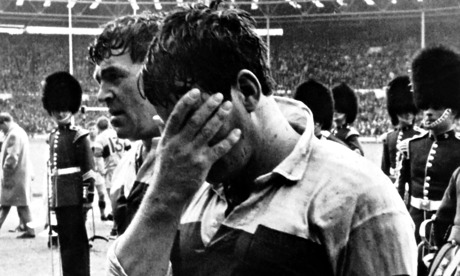
Sporting examples include Don Fox missing the kick at the end of the 1968 rugby league Challenge Cup final, Scott Boswell delivering what is billed on YouTube as “the worst over ever” in 2001, and Jimmy White losing six world championship snooker finals. The former cricketer Ed Smith recalls the moment he realised his career was not going to work out the way he had always pictured it. From the outside it appeared just like another cricketer getting out but for the player it was different because, “I had glimpsed how bad it can really feel when you’re at your worst.” You can only choke at something you’re really good at, apparently. The problem is that after the choke you never play with the same sublime certainty again. The psychologist who’s studied the subject puts it down to “the breakdown of automaticity”.
Nepal – Risks And Rewards (Tuesday, 5.30pm, BBC World Service) is the first of a series of co-productions between the BBC and the Australian Broadcasting Corporation called Workers Without Borders. It was made before the recent earthquakes, for which it helps provide some context. Every year, almost 900 Nepalese die while working overseas. Many of them go to the Gulf where they are construction workers or domestic servants. Most of these are glad to get the work because no matter how miserable, onerous and dangerous it is, they can come back laden with flat-screen TVs and save enough money to ensure that the children they never see are educated. Many of them build palaces in their old neighbourhoods. Some of these houses have fallen down of late.
Assassins (Monday, 11.15am, Radio 4 Extra) is a repeat of three linked dramas by David Pownall examining the motives of the three individuals responsible for the deaths of historical leaders. The series begins with the story of Charlotte Corday, who came from Normandy all the way to Paris in 1793 to kill Jean-Paul Marat as he sat in his bath. Tuesday’s play deals with the aggrieved timber merchant who killed prime minister Spencer Perceval in the House of Commons. Then, on Wednesday, the series marks 150 years since Abraham Lincoln perished at the hand of John Wilkes Booth.
A Short History Of Ukrainians In Britain (Wednesday, 11am, Radio 4) starts with the people who came here at the end of the second world war because it was too dangerous to go back, particularly since some had been wearing the wrong uniform when the music stopped. Most of that generation have now passed on and only recently have their children and grandchildren learned to embrace their old identity. For most of their lives, their British neighbours preferred to regard them as Russians. It was only through the medium of football that they began to assert their nationality.