
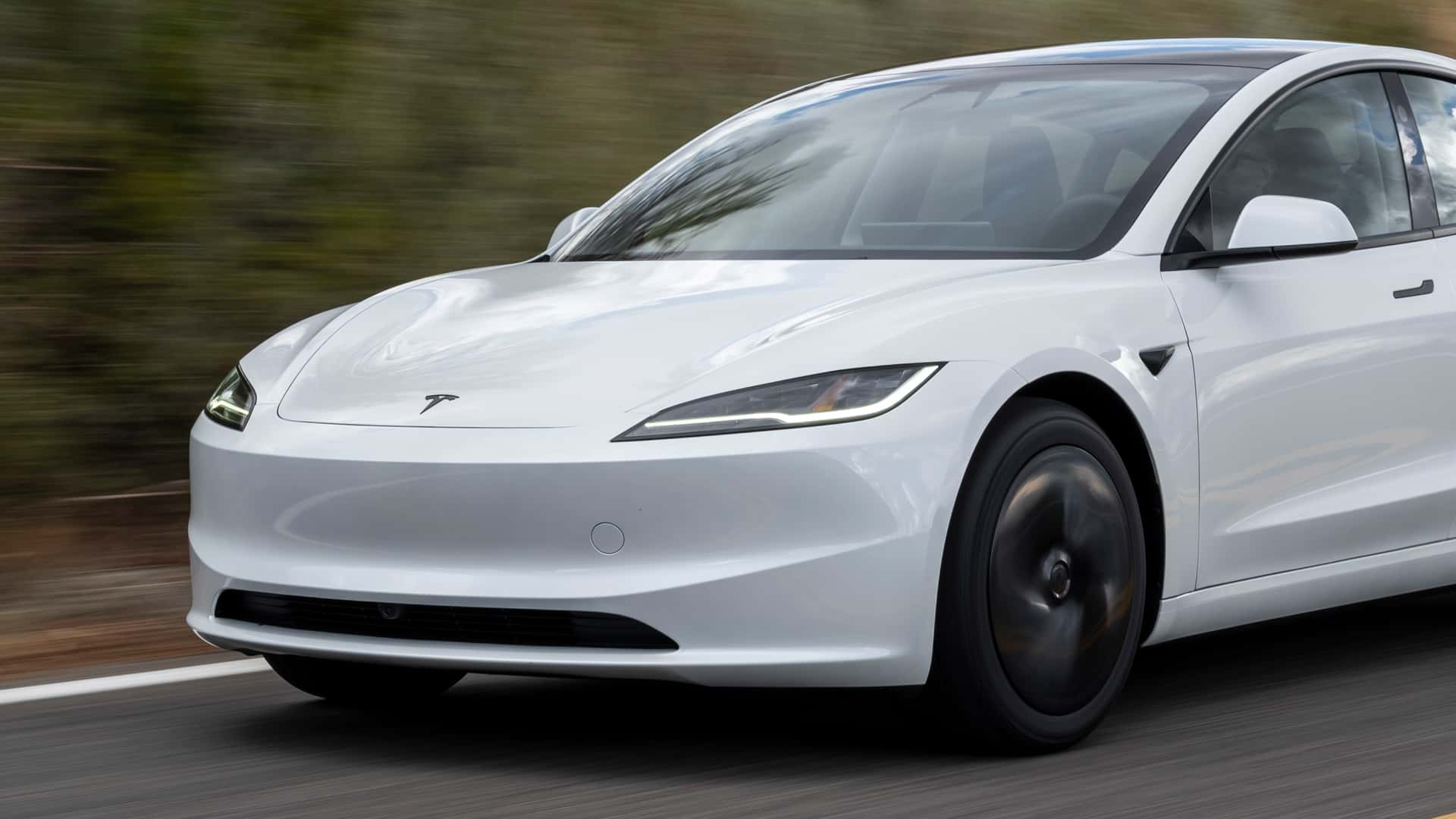
- The 2026 Tesla Model 3 Standard is the cheapest new Tesla right now.
- Starting from $38,630, it’s EPA-rated for 321 miles on a full charge.
- In Edmunds’ independent range test, the Model 3 Standard beat its official rating by nearly 6%.
The Tesla Model 3 Standard came out of nowhere, and it mostly flew under the radar at first, considering that everyone’s attention was pinned on the Model Y Standard. But now that the dust has settled, the cheapest new Tesla EV is making headlines–and not because of its lack of creature comforts.
Starting from $38,630, the most affordable Tesla out there has an EPA-rated driving range of 321 miles on a full charge, which is anything but bad. Here’s the thing, though: it just beat that estimate in Edmunds’ independent range test, where it drove nearly 6% over the official estimate.

With a full battery, the 2026 Tesla Model 3 Standard drove 339 miles before pulling over, which leads to an average energy consumption of 23 kilowatt-hours per 100 miles. That’s slightly better than the 24 kWh/100 miles EPA rating, and it’s on par with the new Mercedes-Benz CLA-Class EV, but it’s worth noting that Edmunds got Mercedes’ electric sedan to drive 434 miles on a full charge, courtesy of the car's larger battery.
In Edmunds’ testing, the Tesla Model 3 Standard also drove further than the 2026 Tesla Model Y Standard, which managed 337 miles–16 more than its EPA estimate. It’s a great result, but it’s worth noting that the longest-range Model 3 that went through Edmunds’ test is the 2021 Model 3 Long Range, which drove 345 miles on a full charge.

Still, for less than $40,000, the 2026 Tesla Model 3 Standard feels like less of a compromise than its crossover sibling, according to Edmunds. Compared to the Premium trim, the Standard does without an FM radio, an 8-inch rear touchscreen, ventilated seats, Autosteer, and frequency-dependent dampers. The side mirrors are manually adjustable, as is the steering wheel.
The entry-level Tesla Model 3 also has slower charging, with a maximum input of 225 kilowatts instead of the 250 kW achieved by the rest of the lineup. In the real world, Edmunds said that the base-spec Model 3 averaged 89 kW during a charging session, which means 387 miles of range per charging hour. By comparison, the 2024 Model 3 Long Range averaged 109 kW and 456 miles per hour.
There is one asterisk in all of this, though. Here at InsideEVs, we often prioritize range tests at a constant 70 mph on the highway. Others do the same, and it’s because we want to see how an EV performs in less-than-ideal conditions. Edmunds, however, believes this doesn’t accurately represent real-world driving conditions for most people. As a result, its testers follow a strict route that’s made up of 60% city and 40% highway driving, with an average speed of 40 mph.