The latest personal borrowing figures from the Bank of England published this morning show that the British public's desire for unsecured credit continues to surge.
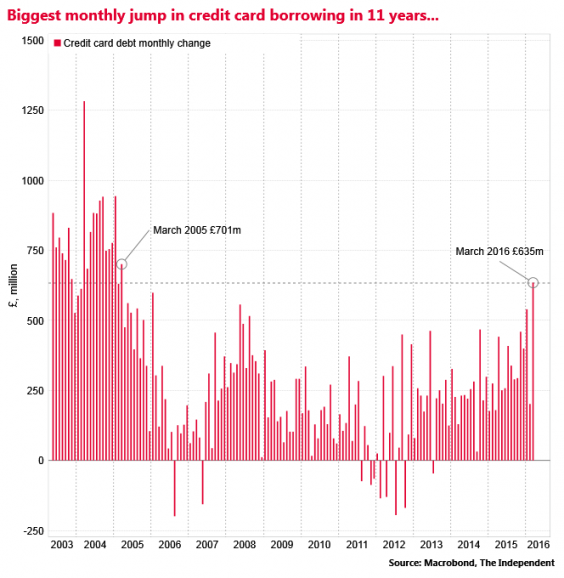
We put £635m on our credit cards in March - more than in any single month since March 2005:
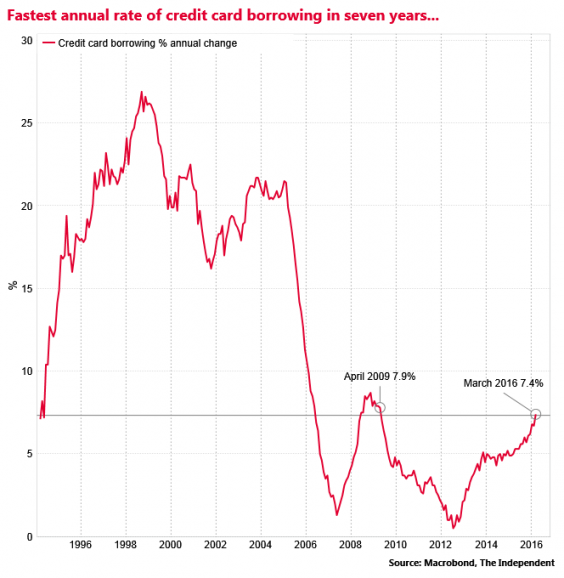
We shouldn't, of course, put too much emphasis on a single month's figures. But the 12 month comparison of the level of credit card debt is showing a similar story. In March 2016 it was rising at an annual rate of 7.4 per cent, the fastest in seven years. And the growth rate has been steadily climbing since 2012:
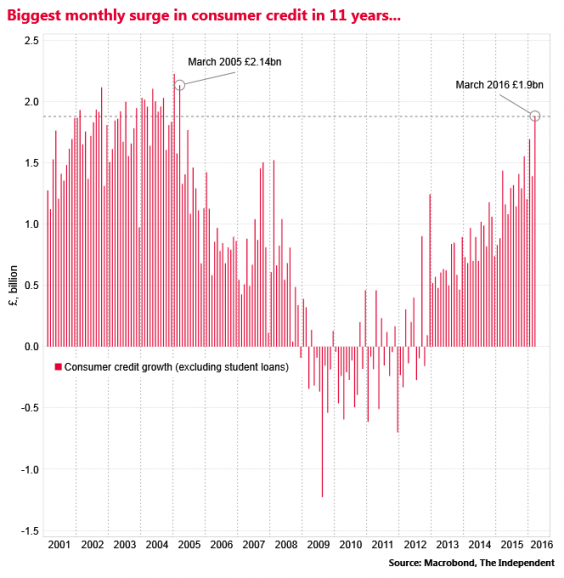
It's not just credit cards. We're also loading up on car purchase loans and other personal loans. Indeed, consumer credit - which is all personal borrowing excluding mortgages for house purchases and student loans - jumped by £1.9bn in March. That's the biggest monthly increase in 11 years:
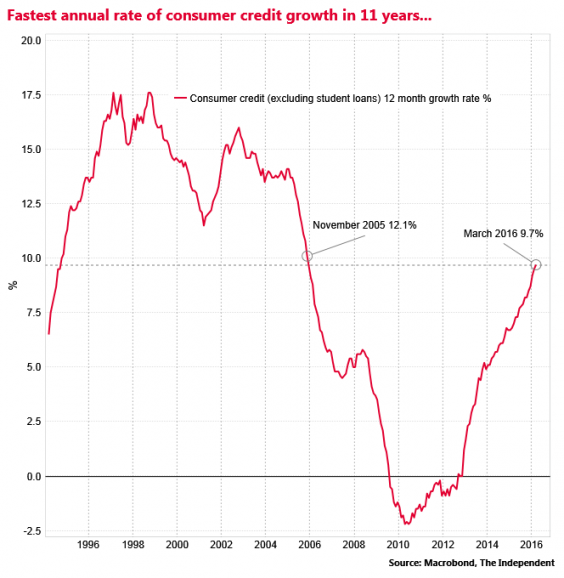
The annual growth rate is now 9.7 per cent, the highest since November 2005:
Will this surge continue?
The answer from the Treasury's official forecaster, the Office for Budget Responsibilty, is a yes.
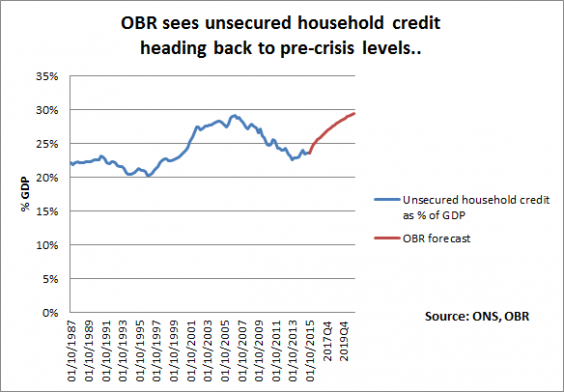
The OBR sees household unsecured growth rising rapidly over the next four years to around 30 per cent of GDP. That's just roughly where it was when the financial crisis struck:
Is this dangerous, setting the scene for a new financial collapse? Or a healthy sign of recovery in consumer confidence? Economists argue about this.
But one thing is certain: our appetite for unsecured credit is still rising.