Social work is never an easy option, but in most developed countries social workers are supported by an infrastructure of team meetings, managers and continued professional development. Now imagine what it’s like to be a social worker in a country where none of that applies.
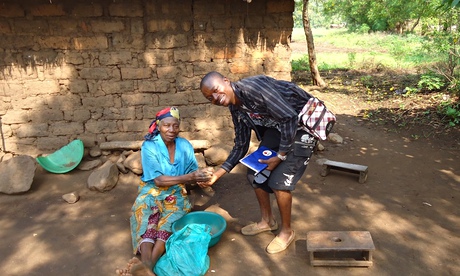
This is the case for Lucio Kikuni Kangela, a young social worker whose remit covers the eastern and northern parts of the Democratic Republic of the Congo as well as neighbouring Burundi. Kangela is employed by Hope and Health Vision, an organisation he set up with two friends in 2011.
Since civil war broke out in DRC (formerly Zaire) in 1998, more than five million people have died either directly or indirectly as a result of the conflict, many of them from malnutrition and diseases such as pneumonia. Although the war officially ended in 2003, there are still outbreaks of fighting, particularly in the eastern part of the country, and about 2.6 million people are internally displaced.
DRC has little in the way of healthcare infrastructure, and maternal mortality is high. A particular feature of the conflict has been the use of rape as a weapon of war: in some cases sharp implements are used that leave women with long-term health problems such as obstetric fistula. Raped women are sometimes disowned by their husbands and families.
For a lone social worker, the challenges are enormous. As Ruth Stark, president of the International Federation of Social Workers (IFSW), points out: “Social workers are working without the support systems that we would have here for children and families in terms of health and education, and so the task becomes much more difficult.” She adds, however, that this provides social workers with an opportunity to focus on building up communities, which is rarely the case in the developed world.
Kangela, himself a native of Congo, wanted to be a social worker so he could do something to help the people he grew up with. “I fled the wars several times so I know the pain of being a refugee,” he says.
There are no university social work programmes in Congo, so he studied for his degree in social work and community development at Hope Africa University in Burundi, a private university established by the Free Methodist Church. Kangela graduated last year, but has been working part-time as a social worker since 2011. Although Hope and Health Vision has other employees, he believes he is the only social worker in the eastern part of Congo.
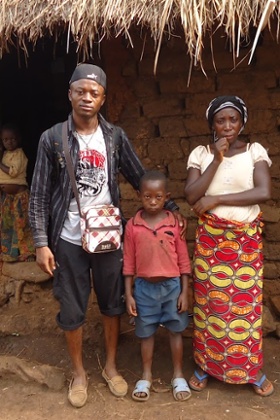
There are two main strands to his work for Hope and Health Vision: helping vulnerable children, including those who had been recruited as soldiers, and supporting women who have been raped. He sees social work as being about helping to rebuild communities rather than short-term interventions.
One example is the work he does reuniting rejected children with their families. “There are some children who are just rejected because the family is poor, and maybe the father has taken another wife and the second wife doesn’t like the child,” he says. “Our main objective is to return the child to the family.” It can be a slow process that involves talking both to the children and to the family, and it can be three or four months before the family agrees to take the child back.
As a young man, Kangela finds offering support for raped women particularly difficult. “When a woman sees a man, she’s thinking he’s like the man who was doing these things [to her],” he says. He works closely with other organisations: a convent called the Xaverian Missionary is able to provide shelter for the women, while the general hospital in Mwenga provides medical treatment. Hope and Health Africa also trains nurses in the hospital in psychotherapy so they can offer psychological support to the women.
Some cases are very difficult to deal with: Kangela cites in particular a 10-year-old who was raped by a member of her family, who he has tried to counsel, and a woman whose baby was conceived through rape finds it hard to look at the baby because of the painful memories it creates.
His isolation from other social workers makes it hard for Kangela to know what to do for the best in situations such as these. He is, however, able to talk to his managers in the US and Europe by Skype and email, and has also been helped by the IFSW, which is developing internet forums for social workers and has two Africa-based officials supporting the development of social work on the continent. “We need to get social workers together so they can build up their resilience in terms of providing the services they need to do,” says Stark.
Although the challenges seem enormous compared with those facing social workers in the developed world, Stark believes that Kangela and others in similar situations are doing an essential job. Countries such as Congo need not just short-term aid but social workers who are helping to rebuild communities, she says: “Important as humanitarian aid is, it’s the sustainable development that’s going to actually make the difference to people’s lives.”
Read more:
• A history of social work in Botswana – and why the future looks bleak
• Dementia care in Japan is being solved through volunteer schemes, not government
• Social work in Myanmar: a slow and difficult birth
The international social work hub is funded by Cafcass. All content is editorially independent except for pieces labelled advertisement feature. Find out more here.
Why not join our social care community? Becoming a member of the Guardian Social Care Network means you get sent weekly email updates on policy and best practice in the sector, as well as exclusive offers. You can sign up – for free – online here.