Get all your news in one place.
100’s of premium titles.
One app.
Start reading
The Guardian - UK
The Guardian - UK
Business

The business week in pictures

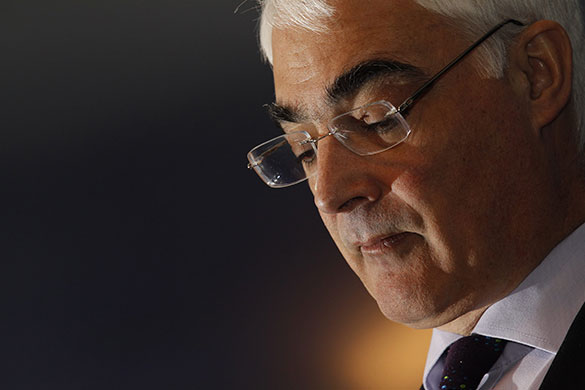
Week in Business: Alistair Darling speaks at a news conference in London
The G20 group of rich and poor countries is likely to make rapid progress on a radical International Monetary Fund plan to tax the world's financial institutions in the hope of reaching a deal by the end of the year, Alistair Darling said. Speaking to the Guardian, the chancellor said that Britain, the US and the eurozone countries were agreed that action needed to be taken to cut banks down to size and to prevent another crisis putting pressure on public finances
Photograph: Suzanne Plunkett/Reuters
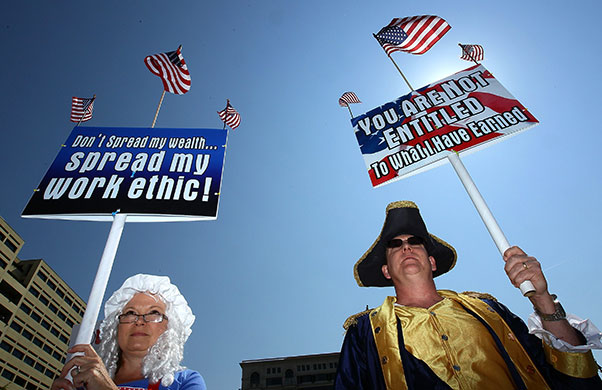
Week in Business: People in constume participate in a Tea Party Protest in Washington, DC
The IMF provided a boost for Labour's campaign strategy when it warned rich western countries that their economies were too weak for spending cuts, tax increases or higher interest rates. In its influential World Economic Outlook, the IMF said the recovery in global growth over the past year had relied on 'highly accommodative' policies and there was a risk of a relapse
Photograph: Win McNamee/Getty Images
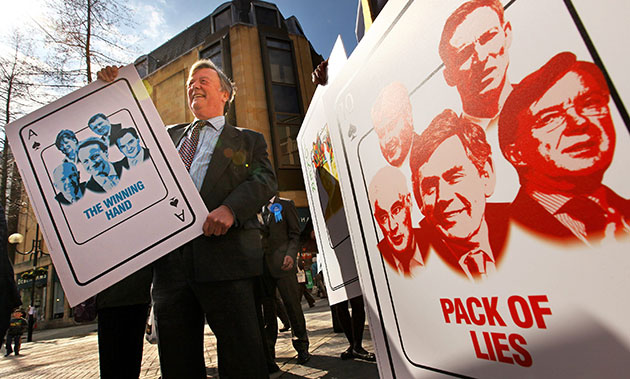
Week in Business: Ken Clarke, Shadow Secretary of State for Business, campaigns in Scotland
However, former chancellor Kenneth Clarke warned Britain could be forced to appeal to the IMF for help if voters elect a hung parliament. Clarke said that the City would be spooked by an unclear election result. 'Bond markets won't wait,' the shadow business secretary said of the likely City reaction to post-election backroom deals at Westminster. 'Sterling will wobble. We have seen even minor flickers in the opinion polls causing problems with interest rates in the recent past. If the British don't decide to put in a government with a working majority, and the markets think that we can't tackle our debt and deficit problems, then the IMF will have to do it for us.'
Photograph: Jeff J Mitchell/Getty Images
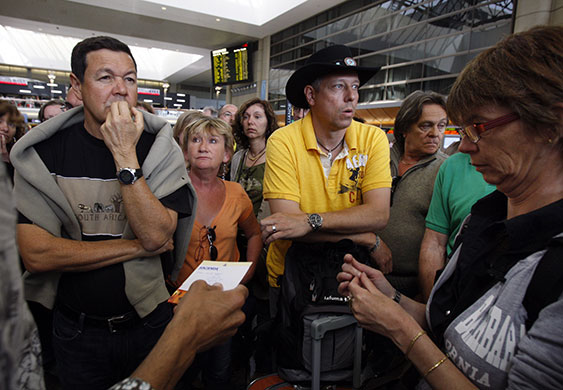
Week in Business: Delayed travellers at Los Angeles International Airport
Costs of the disruption to the global airline industry caused by the volcanic ash cloud have spiralled to $1.7bn (£1.1bn), according to new estimates from the International Air Transport Association (Iata). Iata, which is also demanding that European governments compensate the airline industry, initially estimated that airlines were losing $200m a day. Now, however, it says costs soared to $400m a day on Saturday, Sunday and Monday when the crisis was at its peak
Photograph: Christine Cotter/AP
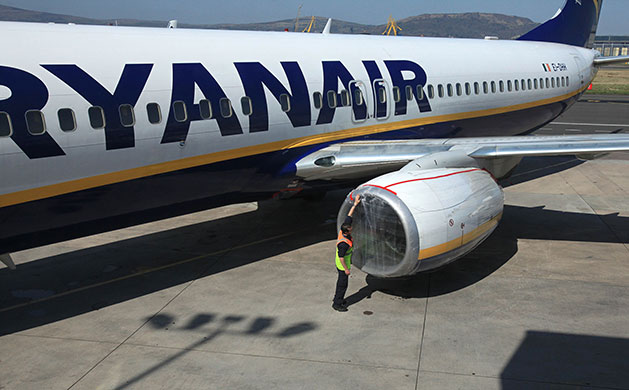
Week in Business: Ground staff secure a plastic cover on the engine of a Ryanair plane
The budget airline Ryanair sparked a furious response from politicians and risked a consumer backlash by refusing to pay the hotel and food bills of passengers stranded by the volcanic ash cloud, in a blatant refusal to abide by strict EU consumer rules. As Britain's skies opened for business at last after a catastrophic six-day shutdown, the carrier's chief executive, Michael O'Leary, told passengers his airline would not meet hotel and subsistence expenses incurred while they were stuck abroad. Ryanair would reimburse travellers the original price of their air fare and no more, he said
Photograph: Peter Muhly/AFP/Getty Images
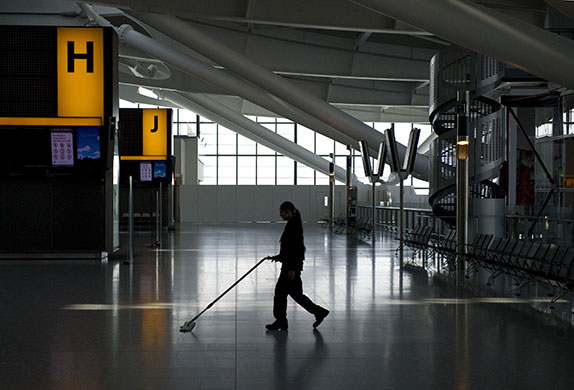
Week in Business: A cleaner works at a quiet Heathrow Terminal 5 after flights were cancelled
A cleaner works at a quiet Heathrow Terminal 5 in Middlesex, England, after flights were cancelled. Best of the Best, the company that displays luxury cars as competition prizes in airport terminals, was forced to issue a volcanic ash-related warning on profits as a result of deserted airports
Photograph: Carl Court/AFP/Getty Images
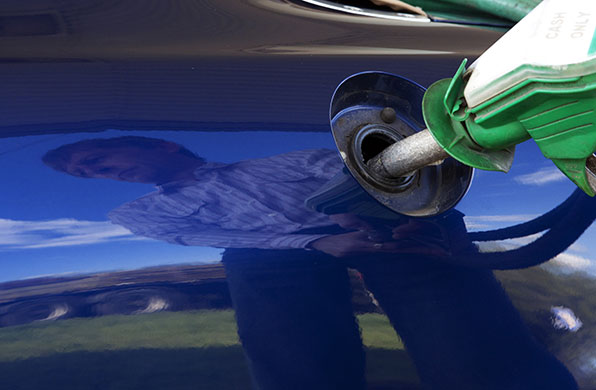
Week in Business: A motorist uses a petrol pump on a Gulf petrol station forecourt
A week of crucial economic data for the government got off to a bad start as March inflation came in higher than expected after costlier fuel and airline tickets ramped up price pressures. At 3.4%, consumer price inflation (CPI) is now way above the Bank of England's government-set target of 2%, the highest since January and one of the steepest rates in Europe. Economists had expected the Office for National Statistics data to show some rise given surging energy costs, and higher petrol prices in particular, but had only forecast an increase to a 3.2% rate from February's 3%
Photograph: Graham Turner
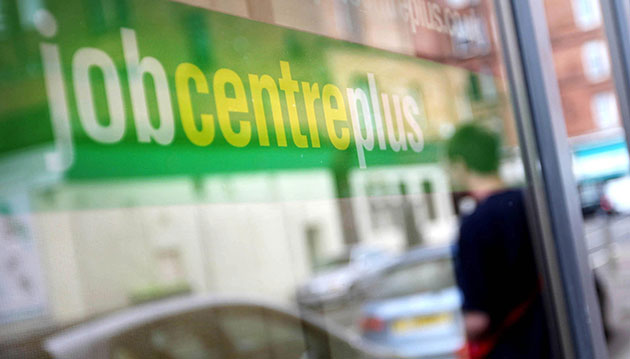
Week in Business: Jobcentreplus in Glasgow
UK unemployment broke through the 2.5 million mark for the first time since the Labour government came to power, after the jobless total jumped by 43,000 in the three months to February. At 2.502 million, the number of people out of work is at its highest since the last three months of 1994. The jobless rate is now 8%, its highest since 1996
Photograph: Danny Lawson/PA
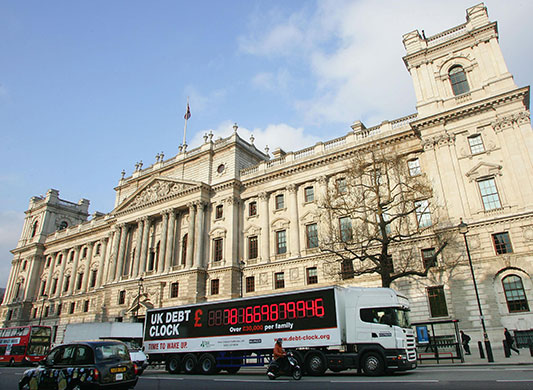
Week in Business: The TaxPayers' Alliance digital debt clock passes the Treasury
The TaxPayers' Alliance digital debt clock, which counts up the national debt, passes the Treasury on Whitehall. The bad economic data continued as official figures showed Britain's public finances had the worst year since records began in the 1940s. The Office for National Statistics (ONS) said that, excluding financial intervention, public sector net borrowing – the gap between the exchequer's tax take and its spending – stood at £163.4bn for the financial year just ended. This was below the government's latest forecast of £166.5bn and far lower than its original £178bn estimate
Photograph: Geoff Caddick/PA
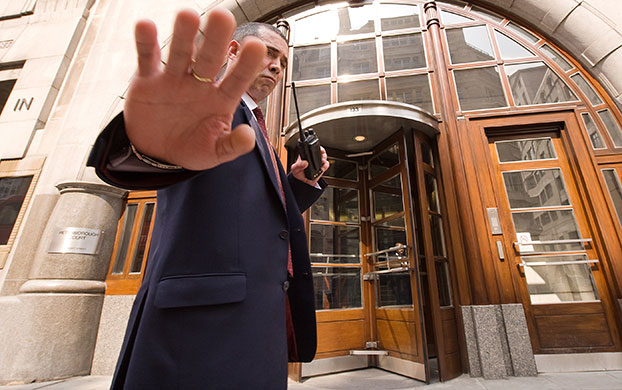
Week in Business: A security guard tries to stop a photographer outside Goldman Sachs London
A security guard tries to stop a photographer taking pictures of the Goldman Sachs offices in London. Fabrice Tourre, the Goldman Sachs banker charged with fraud by the US authorities, has been stripped of his licence to operate in the City of London. The 31-year-old French man had been registered with the Financial Services Authority to work with clients since November 2008 but his embattled employers applied to the regulator to de-register him. The firm insisted it had taken the decision without being pressured to do so by the FSA, which has embarked on a formal investigation into the London arm of the Wall Street firm
Photograph: Leon Neal/AFP/Getty Images
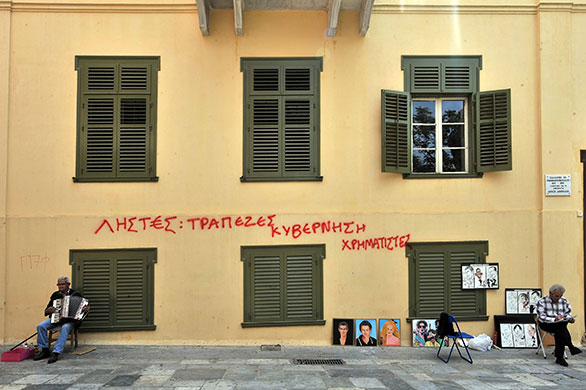
Week in Business: Graffiti on a house in Athens about the economic situation
Graffiti on a house which translates as 'Robbers -banks, government, stockbrokers' in Athens. Greek borrowing costs soared to new highs as traders speculated that talks with the IMF and European Union might go badly. Although the country found buyers for €1.95bn (£1.3bn) of 13-week Treasury bills, it will pay a yield of 3.65%. That is a record high for any eurozone nation and a sharp increase on the 1.67% yield Greece paid in January when it last auctioned this type of short-term debt. However, the Greek finance minister, George Papaconstantinou, said the sale meant that Greece's remaining borrowing requirements for May are below €10bn. 'There is no chance that Greece will be left high and dry in May,' he said. 'Greece will borrow either from the markets or from its partners.'
Photograph: Louisa Gouliamaki/AFP/Getty Images
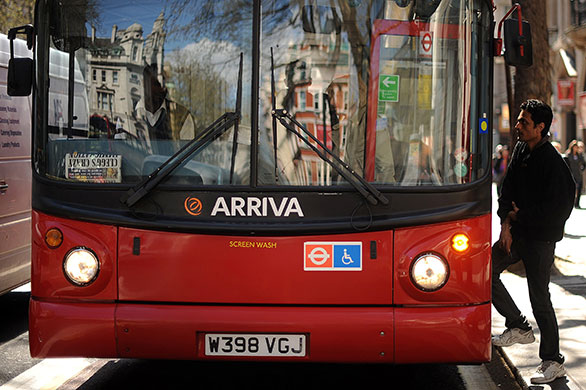
Week in Business: A public bus operated by British transport operator Arriva in London
Arriva, the bus and train operator, is being acquired by Germany's Deutsche Bahn in a £1.6bn deal that will create a major passenger transport firm. Deutsche Bahn will pay 775p per share to take control of Arriva. Arriva's board has accepted the offer, which is a 34% premium on its value prior to Deutsche Bahn's first approach a month ago.
Photograph: Ben Stansall/AFP/Getty Images
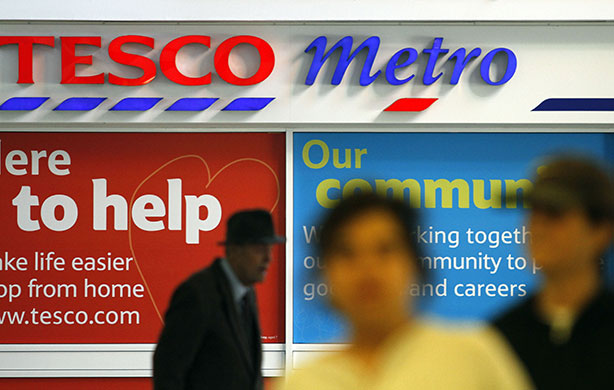
Week in Business: People walk past a Tesco supermarket in London
Supermarket giant Tesco rang up record annual profits yet again despite the economic downturn, and declared there is little danger of a double-dip recession in Britain. Britain's biggest retailer posted underlying pre-tax profits of £3.4bn for the 12 months to the end of February, a 10.1% rise on the previous year. Sir Terry Leahy, Tesco's chief executive, told the City that his company had 'weathered the storm'
Photograph: Lefteris Pitarakis/AP
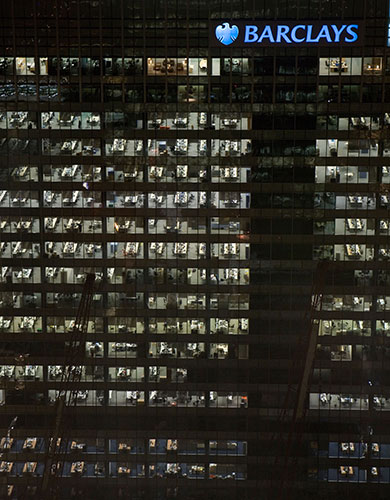
Week in Business: Barclays Bank Headquarters, Docklands
Barclays shareholders are being urged to vote down the bank's remuneration policies at its annual meeting next week amid mounting expectations that major City investors are preparing to crack down on big pay deals. Warning that the awards for directors are 'potentially excessive', Pirc, an influential body that advises institutional investors, concluded that shareholders are not given enough information to judge whether the targets being set are challenging enough. Barclays's head of investment banking Bob Diamond could receive a £60m reward package of shares and cash. Barclays disputes the figures and declined to comment on the Pirc report
Photograph: Niall McDiarmid/Alamy
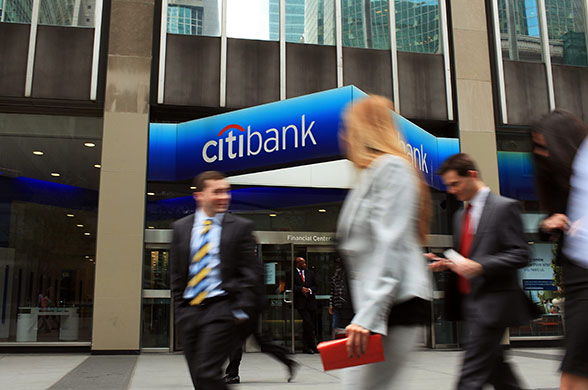
Week in Business: People walk by a Citibank office in midtown Manhattan
Just 18 months after teetering on the brink of collapse, the US bank Citigroup regained robust financial health as a leap in income from Wall Street trading contributed to a first-quarter profit of $4.4bn. Citigroup, one of the worst-hit players in the financial crisis, revealed that its revenue from securities and banking doubled from $3.3bn in the final quarter of 2009 to $8bn in the first three months of this year, as the bank's trading floor capitalised on a rebound in both equity and debt markets
Photograph: Spencer Platt/Getty Images

Week in Business: Lisa Morgan at the 2010 Game British Academy Video Games Awards
Videogame retailer Game Group announced the abrupt departure of its chief executive, Lisa Morgan, as it revealed that annual profits dropped by almost a third. Morgan, who had spent 13 years at the firm including three years at the helm, will be awarded a severance package worth at least £1.5m in salary, bonus and share options. Also leaving is chief operating officer Terry Scicluna, who is understood to have decided to go after it became clear the board would be canvassing external candidates to replace Morgan
Photograph: Lewis Whyld/PA
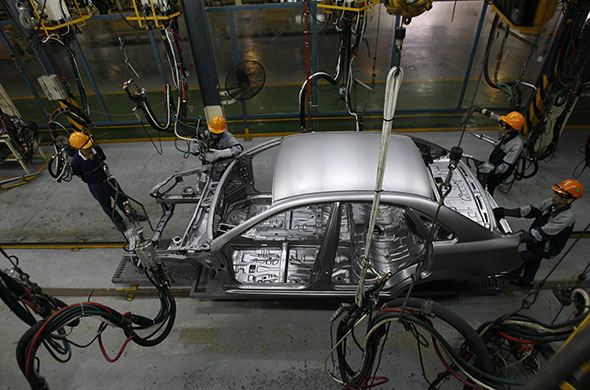
Week in Business: Workers assemble a car at the GM Daewoo Vietnam automaker plant in Hanoi
Workers assemble a car at the GM Daewoo Vietnam plant in Hanoi. The Detroit car industry delivered clear signals of recovery from the worst financial crisis in its history as General Motors paid back $8.1bn in emergency government loans and Chrysler revealed it has begun to produce an operating profit. Less than a year after emerging from bankruptcy the two companies are enjoying an upturn in sales and, after years of shedding jobs and closing factories, are beginning to increase production
Photograph: Kham/Reuters
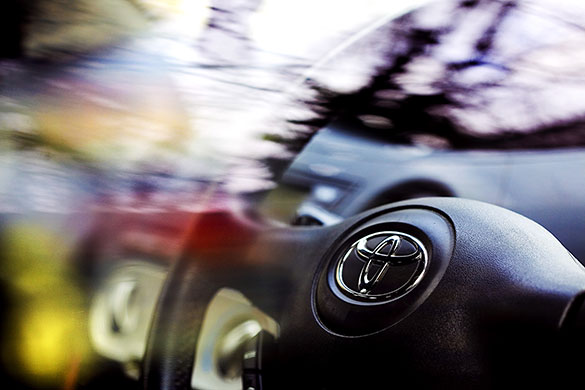
Week in Business: Detail of a Toyota steering wheel
Embattled carmaker Toyota agreed to pay a record $16.4m fine for safety violations in the US. The Japanese manufacturer agreed to pay the fine following an official investigation into the safety problems that have forced more than 8m cars to be recalled
Photograph: Felix Clay

Sign up to read this article
Read news from 100’s of titles, curated specifically for you.
Already a member? Sign in here
Related Stories
Top stories on inkl right now
One subscription that gives you access to news from hundreds of sites
Already a member? Sign in here
Our Picks
Fourteen days free
Download the app
One app. One membership.
100+ trusted global sources.