What is a sustainable business? How do you build a business that sustains through fashions and economic ups and downs, through changing demographics and competitive pressures? At Lifebuoy, we have made our business sustainable by making it all about a habit – a life-saving habit – not just a product.
Every year, 6.6 million children die before they reach their fifth birthday. Some 1.7 million of these children die from diarrhoea and pneumonia, infections that can be simply prevented through this habit of hand-washing with soap. If we, at Lifebuoy, can persuade more people to wash their hands with soap at the right moments, then we can help more people prevent the infections that cost so many lives, and we can build our business through selling more soap. That’s my definition of a sustainable business.
But changing habits is difficult, as any of us who have tried to start exercising or a new diet would know. That’s where a brand like Lifebuoy – the world’s biggest health soap, and part of Unilever, whose brands are used by two billion people around the world on any given day – can really help.
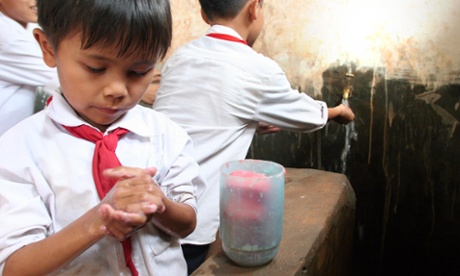
Every day, marketers persuade consumers to choose and change brands. Marketers are experts in human insights and behaviour change, translating statistics and science into compelling messages. At Lifebuoy, we turn this expertise into teaching children to wash their hands with soap and create lifelong, life-saving habits.
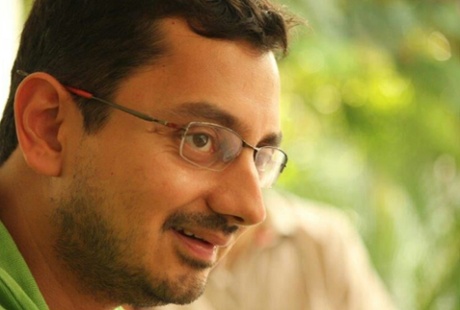
I understand the value and importance of this. Not just as a marketer and the person responsible for the health of the Lifebuoy business. But as a father too. My wife and I have two wonderful girls, and however much I love my job, there is no bigger purpose in my life than keeping our girls healthy. So I understand the true potential of this simple habit, as well as its potential to build a sustainable business.
As a father, I know that if I want my daughters to adopt a habit I need to make it fun and rewarding, and that’s how we approach our global hand-washing programmes with Lifebuoy. For example, we use hand-washing diaries, comic books, stories and games.
Comics are uniquely suited to spreading hygiene messages in an engaging and sustainable way: fun for children, inexpensive and portable - ideal for rural communities. By the end of last year, we had printed 20m copies of our School of 5 comics, which have now been translated into 19 languages.
Focusing our energies on this social and societal benefit – helping more children reach their fifth birthday – is good for business, and it’s important for us that we don’t shy away from saying that. Linking our social and business results openly is what makes us a sustainable business. Our results have consistently shown strong profitable double-digit growth for the past five years.
Social impact and profits can go hand in hand. It’s uncomfortable for some to hear business growth and lives saved in the same sentence, but it’s the business growth that allows us to do more. Every time one of the 257 million people we have reached through our programmes washes their hands with soap when they otherwise would not have is a new opportunity for Lifebuoy to be consumed.
The commercial incentive to sell more soap is transforming health outcomes – and it’s been happening for centuries. Lifebuoy was created by William Lever in 1894 during the Industrial Revolution, to combat the rampant disease and infections that ran rife in UK factory towns during a period of rapid urbanisation. It was Lever’s horror at the high infant mortality rates and the experience of being surrounded by the squalid, unsanitary conditions of 19th century Britain that made him determined to find the perfect germ fighting formula and maintain a low price so his soap was available to everyone. What he did in the process was not only create one of the world’s first consumer brands but also one with a strong social purpose to act as an agent of social change.
In just four years (as of the end of 2014) our programmes have reached 257 million people in 24 countries; in 2015 alone we expect to reach over a 100 million people. But that’s not enough. We aim to reach 1 billion people by 2020. We’re undeterred that these are ambitious targets. Only by putting our social purpose at the heart of what we do and sell will we ensure we’re a truly sustainable business and attract world class partners.
Partners are key to our work and our ambitions, and working with partners is central to a sustainable business model. We work with organisations who share a commitment to our cause including:
- RSPH (Royal Society of Public Health, the world’s oldest public health body), which has been a close partner in reviewing and endorsing our work.
- Global health experts like the London School of Hygiene and Tropical Medicine, Indian Public Health Association (IPHA) and British Skin Foundation (BSF) to ensure the highest levels of scientific rigour goes into making our products and programmes.
- Public Private Partnerships including DFID, USAID, WASH and the Millennium Village Project.
Behaviour change requires sustained funding and refinement. And that sustainability comes from these partnerships – their health outcome objectives and academic rigour, combined with the profit motives of the private sector.
It’s this motive that ensures we spend our days finding the optimum way to highlight the importance of hand-washing and change behaviours.
And knowing that it makes a big impact in reducing 1.7 million child deaths a year makes this not just worthwhile business, but a business it is a privilege to be a part of and an honour to serve.
Content on this page is paid for and provided by Unilever, sponsor of the sustainable living hub