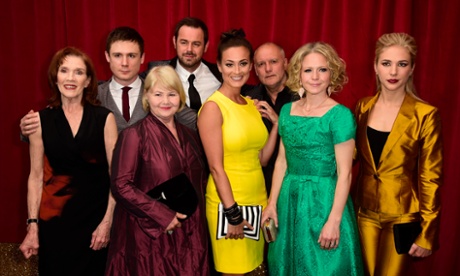
It’s a curious rule of TV that shows honouring the best achievements of the medium tend to be among the medium’s worst achievements. The Bafta awards, devoted to the year’s must-see TV, is almost unwatchable because of the combined tedium of the winners’ speeches and the cutaways to the losers trying sportingly to show support. The industry’s prizes to itself have become one of two TV events – the other being tomorrow’s Eurovision Song Contest (BBC1, 8pm) – that depend heavily on the distracting wit and charm of Graham Norton.
What hope, then, for last night’s The British Soap Awards 2015 (ITV, 8pm)? Not only are they fronted by Phillip Schofield rather than Norton, but, while the televised Bafta ceremony suffers from existing not to please the audience but to appease the industry, the BSAs, as they are forlornly hoping to become colloquially known, have the even bigger problem of being established to soothe the feelings of one part of television in relation to another.
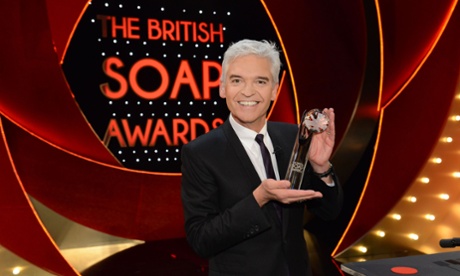
For years, the soaps felt overlooked by Bafta, which dished out a couple of dozen awards to drama every year while ignoring the television fictions with by far the biggest audiences. The Academy eventually addressed this anomaly by introducing an annual trophy for best Soap or Continuing Drama, the latter a term developed to appease another sensitivity in the genre. But this wasn’t quite enough and so The British Soap Awards now allow the twice and thrice-weekly shows their very own Baftas.
But the problem is, as last night’s hand-out again demonstrated, that a form of television depending more than any other on tension provides almost no uncertainty at its red carpet event. Whatever you say about the Baftas, most of the categories – with the exception of the one that Ant & Dec have been winning since VE Day – manage to feature contenders that have only been seen in the previous 12 months.

There are, though, only four famous soaps and two of those – Hollyoaks and Emmerdale – are hopelessly overshadowed by the big two of EastEnders and Coronation Street. Simply in order to generate some suspense about which shows will make the shortlist of four for the year’s top show, the organisers have now co-opted the BBC1 afternoon soap Doctors in order to create what are frequently referred to in presentation speeches as “the big five”.
Even so, the closest to a plot-twist this year was that – after much pleasure had been expressed by attendees that the BSAs are being held this year in Manchester, production home of Coronation Street, rather than London, the manor of EastEnders – the Albert Square gang took eight of the prizes back on the train down south with them. This was, as the ITV coverage noted, “revenge” for Corrie having taken this year’s Bafta for the genre.

As it has been a long-running complaint of commercial TV that the Academy’s awards disproportionately favour BBC shows, you must wonder how ITV feels about having given over two hours of Thursday night peak-time to what became effectively an advert for its biggest rival. Even more painfully, Corrie’s big moment was for a character the audience can no longer see: Deirdre Barlow, featured in a tribute by cast colleagues to actress Anne Kirkbride, who died in January, and whose posthumous trophy was accepted by her widower.
Yet, even here, the emphasis on Kirkbride having played the same part for a remarkable 42 years exposed another weakness of the evening. Whereas Bafta has its favoured performers – Julie Walters, Sarah Lancashire, Sheridan Smith – they normally make the shortlists for having been a different person in the previous year. The BSAs do admit the occasional new face – this year’s most interesting winner was Kellie Bright, taking two gongs for her Linda Carter in EastEnders – but, in most cases, the contenders have been the characters for almost as long as they have been themselves.
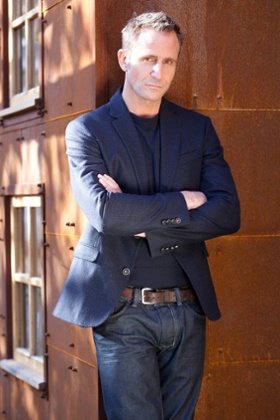
John Altman, nominated for Best Villain – a category which reflects the way in which soap has increasingly become a sub-division of crime drama – noted that he had been playing Nick Cotton in EastEnders “on and off” for 30 years. However, in what counts as a sensation in this parish, he lost out last night to Jeremy Sheffield, who has been Patrick Blake in Hollyoaks for only three years and, due to recent storylines, will struggle to reclaim his prize.
It was also a rare defeat on the evening for EastEnders. And, while it’s true that the mockney franchise had the advantage – with the combination of viewer and panel voters that give the BSAs – of celebrating its 30th birthday in 2015 but it’s hard to accumulate much enthusiasm for tuning in next year to see if Coronation Street will take revenge by beating the other one of the “big two” among the so-called “big five.”