Travelling
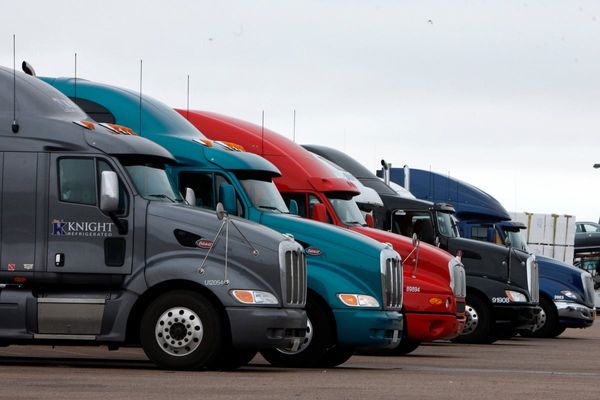
The biggest impending change to the way we travel has to be the advent of driverless cars. Stian Westlake of Nesta, the UK’s innovation foundation, explains: “Automakers and tech companies like Google are racing to make human drivers obsolete. If this works, expect far fewer road fatalities because of the reduction in human error. The environment should also benefit as driverless cars don’t need heavy crash protection, which reduces their weight, and therefore their fuel consumption. And your insurance premiums should fall in line with the number of accidents. Many vehicles will be electric, too, charged as you drive from wireless points along motorways. It’s not just cars. Elon Musk’s Hyperloop project offers a vision of ultra-high-speed mass transit, three times faster than HS2.”
The Smartphone
Today, one smartphone has more computing power than the combined technology that put Neil Armstrong on the moon, says Jonathan Earle, head of innovation and experience at O2. But the best is yet to come: “Most consumers don’t touch the sides on what their smartphone can really do. In the long-term, the mobile will be the remote control to our lives. It will control every aspect from driving, to monitoring your home, to switching things on and off around your own city. Even further ahead, there will still be a role for the hardware, but it is the software that’s the most exciting element. It will only be limited by designers’ imaginations, as the computing power is already so unreal. Ultimately, it will be the phone’s job to make our lives easier in ways we can’t even imagine yet.”
The Internet of Things
The Internet of Things means smartphone apps can control your home lighting or activate your heating. But Applied Futurist Tom Cheesewright (@bookofthefuture) explains: “The IoT will eventually mean machines will be smart enough to understand our needs and desires, acting on our words and gestures. Imagine going home early from work with flu. Your home’s intelligence picks up on this from the health and location sensors in your smartphone, automatically reorganising your calendared meetings. It brings the house up to temperature, orders medicine and tissues via drone delivery, checking what you have first, and runs a hot bath timed for your arrival, dimming the lights to a gentle hue.”
Business and Commerce
Our working environments and patterns are also changing thanks to technology. Emma Cerrone, co-founder of digital transformation company Freeformers, says: “For today’s Millennials of Generation Y and Z, working life will be far more fluid and creative. Digital technology brings all sorts of benefits, not just simple ones like flexible or remote working. The companies of tomorrow and beyond will be those that adapt fast to changing perceptions and needs. Successful companies will solve problems through more instinctive digital thinking, offering employees the backing to take direct control without layers of approvals. Companies need to listen and respond positively to what customers say about them, on whatever new social media platforms are the norm for the next-generation’s smartphones.”
Wearable Tech
Wearable technology has fast become the latest must-have, but there’s more to it than just measuring how far you’ve walked. Duncan Geere, deputy editor of howwegettonext.com, says: “The future of wearable technology lies far beyond smartwatches and fitness trackers. Within the next few decades, we’ll each have our own personal internet of wearable devices exchanging data across our body. It’s also likely that we’ll start wearing technology inside our bodies, as well as on them, gathering data about our health, eating habits and even our brain chemistry. The key will be privacy, making sure that only services we trust have access to our most intimate information.”