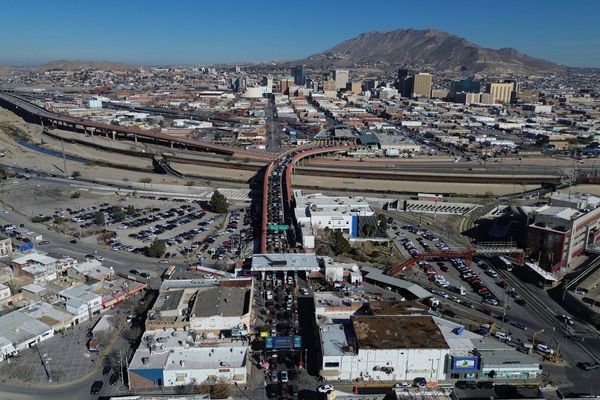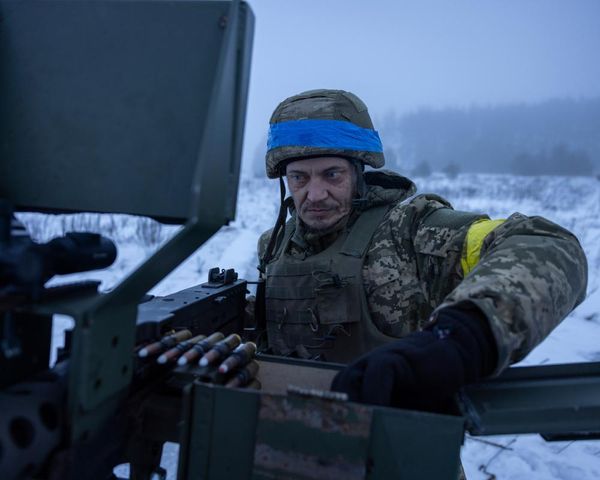
(Bloomberg Businessweek) -- As the Trump administration evaluates bids to prototype a wall along the U.S.-Mexico border, topography will present as big a challenge as political opposition. Corralling often wild land beneath miles of concrete isn’t easy, as can be seen in these photos taken of a 55-mile stretch of fence in the Rio Grande Valley of South Texas between tiny Peñitas and Brownsville, the last major town before land gives way to the Gulf of Mexico.
Whether and how to seal the U.S. southern border with Mexico has dogged government officials for almost three decades. As early as the Clinton years, officials recommended a physical structure along with increased enforcement amid public anxiety over drug trafficking and a flood of illegal immigration following Nafta. The 2006 Secure Fence Act called for nearly 700 miles of fence along the 1,954-mile border from the Gulf of Mexico to the Pacific Ocean.
The actual border is formed by the Rio Grande. No barrier can be built in the middle of the muddy green waters, and the banks of the river are a flood plain governed by international treaty. The fence also had to accommodate diverse interests—some landowners refused to sell their land to the government—and varied terrain spanning sand dunes and arroyos, mountains and deserts. In the Rio Grande Valley, sprawling vegetable farms and 18th century cattle ranches inherited from the King of Spain stood in the way of the fence. The result is a porous collection of concrete and steel barriers in various styles and heights set as far as 2 miles north of the actual border and punctuated by gaps to allow access for the thousands of private landowners whose acreage runs to the river’s edge.
Cordoned off from the rest of the U.S., these patches between the fence and the river have sprouted their own ecosystems. In border regions such as this one, which facilitate more than half a trillion dollars of trade every year, life must go on. Workers still harvest the crops, tourists still enjoy butterfly sanctuaries, and families still play with their children. —Lauren Etter
To contact the author of this story: Kirsten Luce in Washington at kirstenluce@gmail.com.
To contact the editor responsible for this story: Miranda Purves at mpurves5@bloomberg.net.
©2017 Bloomberg L.P.