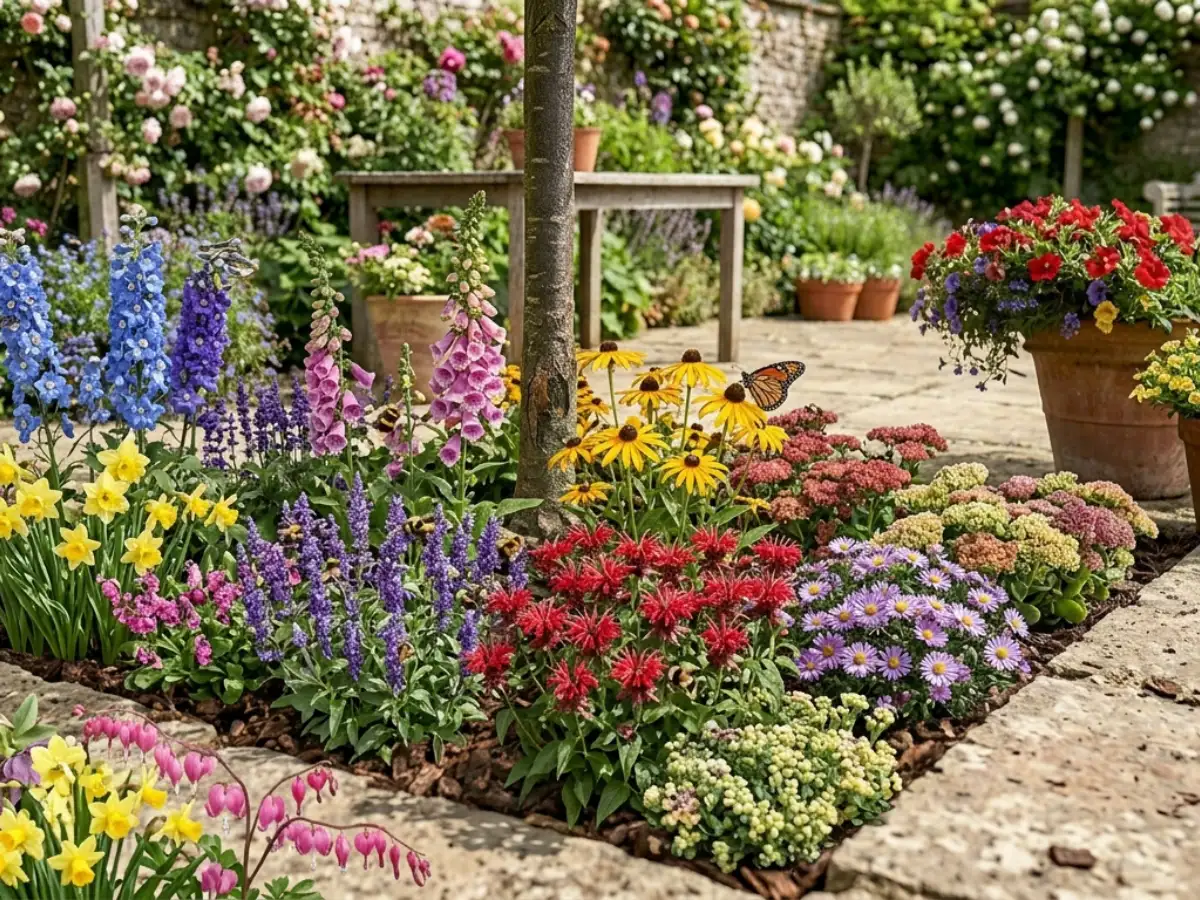
Not only does a garden border have the capacity to frame the landscape and make the area around the border look vibrant, but the right border can be relied upon throughout the season, from spring until the first frost, as a source of sustenance for pollinators. The RHS suggests that this is possible by selecting the correct flower species and managing the border after blooming is complete.
The tendency is for many people to spend their time focusing on flowers during the summer and then clearing all of the growth out afterwards. However, research suggests that it may be better to consider a border as a system as opposed to something temporary.
Plan the border before planting
As stated by the RHS perennial borders guide, planning is crucial for any successful border. This involves the consideration of the shape of the area, the timing of flowering, the height of the plants, and the function of the border throughout the year.
Planning is important since pollinator-friendly borders require a continuous supply of resources. If all the plants flower simultaneously, there might be an ample amount of nectar for a couple of weeks, but later, there would be none for the insects. It is important that each flowering time is staggered so that bees, butterflies, and hoverflies have something to feed on throughout spring, summer, and early autumn.
It is noted by the RHS that perennial borders are particularly effective due to the combination of easy management and seasonality.
Leave some stems standing through winter
One of the easiest things to do to benefit wildlife is something which often gets overlooked by gardeners. According to the RHS, some perennial stems are better left alone until the following spring, before they get trimmed back.
Although dead stems might look unsightly at first glance, the RHS has explained that leaving them standing can provide habitat for insects. Some insects can use hollow stems to hibernate during winter, while some seed heads will provide bird food throughout the season.
As stated by the RHS, cutting back perennials after they have flowered not only looks better but can actually help their future development. However, leaving some stems standing means a middle-ground between aesthetics and benefiting wildlife. Rather than ending a border’s life as soon as flowers have faded, gardeners can keep extending its ecological value well beyond that point.
Making this simple change in timing can really make all the difference when it comes to the wildlife you attract to your garden.
Think beyond the peak bloom
A good border is not characterized by the best week of June or July but by how well it works for the rest of the year.
As suggested in RHS perennial guidance, managing seasonally is very important since some plants need to be cut back after flowering, whereas others can stand out a bit longer for wildlife purposes. This way, even after the flowers have died down, there is some level of structure created.
In the case of pollinators, it is much more important to provide them with food sources on a consistent basis rather than giving one big bang of blooms at once. This can be achieved by planting different combinations, such as spring flowers, summer perennials, and fall blooms.
In this way, you get an environmentally friendly yet organized garden.
Let lawns support wildlife, too
Not all pollinator-friendly gardening is done at the edge of the garden. The RHS’s guidance about wildlife in gardens suggests that allowing sections of the lawn to grow long in summer might aid in feeding caterpillars of the meadow brown, gatekeeper, ringlet, and small heath butterflies.
This recommendation is a challenge to the notion that lawns should be kept trimmed throughout the summer. Even a few patches of lawn that grow longer will allow for insects that are part of the garden's ecology.
Furthermore, the RHS recommends the planting of flowering plants on lawns in order to increase their contribution to the garden's fauna. There is no need to convert one's entire garden into a wilderness. Small changes will bring about a gradual transformation towards the creation of nectar-rich areas and cover.
Use flowering plants to extend the season
As per RHS instructions, flowering plants can significantly contribute towards enhancing the appeal of your garden from a biological perspective. However, the most successful gardens are usually not the most lush or vibrant. They are the ones that were conceived for the purpose of achieving consistency.
By introducing various flowering plants into your garden, you can make sure that the supply of nectar remains steady all year round. This way, spring-flowering plants will be useful for bees, whereas summer-flowering plants will help butterflies and hoverflies.
Finally, RHS recommends planting seeds in pots initially to allow yourself time to strategically place them in your garden.
Build a border that works year-round
The more general message that RHS gives is clear. Garden borders must not be thought of as displays that last only for a few weeks. Garden borders that will be most useful for pollinators should be designed as a natural system. They are properly pruned after the flowers have bloomed, and their growth is regulated according to the seasons, leaving them some structure even during the winter. Even lawns could play a part by having longer grass and wildflowers.
It may sound like small actions, but all the right choices taken at the right times can make a difference in creating a beautiful and meaningful garden ecosystem.