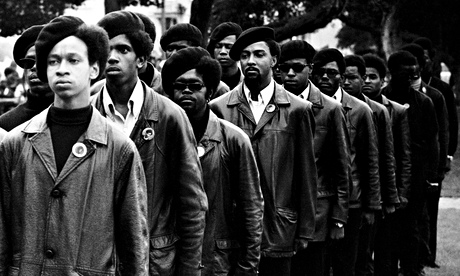
Stanley Nelson Jr’s The Black Panthers: Vanguard Of The Revolution is a tragedy of squandered promise and political disillusionment, and the perils of the cul-de-sac “revolutionary” mindset of the American left in the late 60s and early 70s. It briskly lays out the history of the Black Panther Party For Self-Defense, founded in Oakland, California in late 1966 by students Bobby Seale and Huey P Newton. The world it vividly depicts – a million afros, lots of leather, tons of funk – seems upside down when compared with the politics of today: back then, all the paranoia about fascist government and enthusiasm for unrestrained gunplay were to be found on the left, not the right, as with today’s Tea Party.
The Panthers grew out of social conditions in Oakland, and the party’s early organising efforts concentrated on feeding kids and setting up alternative schools. They were hugely successful and vigorously administered by a rank-and-file membership made up largely of women.
The problem was the men. Newton was a gifted organiser but his time spent reorienting the activities of various street gangs to more socially useful purposes meant that some of their attitudes – especially towards women and guns – rubbed off on him. Jailed for (allegedly) shooting an Oakland cop in 1967, he was reduced to a symbol of revolutionary fervour. Huey in jail was the best thing that ever happened to the Panthers, as was proven by his autocratic behaviour upon acquittal in 1970.
In his absence, meanwhile, the Panthers drew the attention of J Edgar Hoover. Using the monstrous Cointelpro programme, Hoover’s men filled the party with blackmailed provocateurs, until meetings were riddled with informants. Hoover wanted to prevent the rise of “a messiah” and promote splits in the party, and pulled it off. Acting on tips from the agency, Chicago police murdered the charismatic 21-year-old organiser Fred Hampton in December 1969, after he had reached out to leftwing Puerto Ricans and revolutionary-minded working-class whites, a bridge too far for white supremacist J Edgar.
Then Huey was back from lockup. He installed himself in a fortified Oakland penthouse, acting as if he was in a Fred Williamson movie, pimping, pushing, dishing out beat-downs, dangerously volatile, a degeneration of the movement’s ideals into pseudo-revolutionary, patriarchal macho bullshit.
The Black Panthers film could stand to be three hours, not just two. The extent, and the evil, of the Cointelpro infiltration is underplayed, as are the near-psychotic conditions prevailing among the feuding leaders as the curtain came down. It’s an excellent primer in the history of the Panthers, though it could use more warts and marginally less “print the legend”.
-
The Black Panthers: Vanguard Of The Revolution is released in cinemas on Friday