Despite the scorching Sun, the hot season is the time most holidaymakers flock to beaches and islands, mainly because it's also the period when the sea is calm and most beautiful. But is there a different kind of destination you can go to for your next summer vacation?
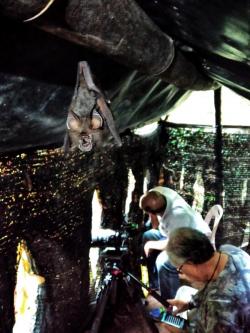
Left While watching and photographing birds you need to be patient, quiet and not scared by creatures, like this bat, that might come to seek shelter in the same blind.
Of course, there is. How about a natural fashion show in the forest where you can be the photographer, and the models come in the form of wild birds that take turns awing you with their graceful plumage?
No, I'm not talking about conventional birdwatching where you have to walk and constantly scan the surroundings for the feathered fellows while lugging along binoculars or a telescope mounted on a heavy tripod. You just sit and the birds will come to you.
A few weeks ago I visited Kaeng Krachan, Thailand's largest national park and one of the Kingdom's best destinations for birders. The park is now partially closed. Since November, visitors to Kaeng Krachan are not allowed to venture beyond Ban Krang Camp because the road leading to the inner parts of the forest is undergoing a major restoration, which is expected to last 18 months.
So instead of paying the full entry fee for half of what the park used to offer, I dropped in at one of the bo nok (bird waterholes), which are scattered along the park's boundary.
Like water feeders some Westerners put in their backyards, these bo nok serve as an extra source of water for wildlife. During the hot season, when many streams and ponds dry up, these sites are frequented by various types of birds who come to quench their thirst, from partridges and pheasants to babblers, laughing thrushes, raptors and many more.
This is, therefore, the best time for birds lovers and shutterbugs to visit these artificial waterholes built by villagers living along the forest's edge.
"Watching and photographing birds from a blind erected next to a bo nok is not as physically demanding as searching for them along the trails in the woods. But it requires a great deal of patience," said well-known bird and wildlife photographer Samarn Khunkwamdee who has moved from his previous home in Bangkok to settle down near the park after his retirement.
"You never know when the birds will show up. Sometimes, they keep coming incessantly. But there are also times that you have to wait for hours.
"And thanks to the fact that the blinds are so close to the waterhole [just 5m or so], you do not need an expensive long telephoto lens to get decent pictures of the bird."
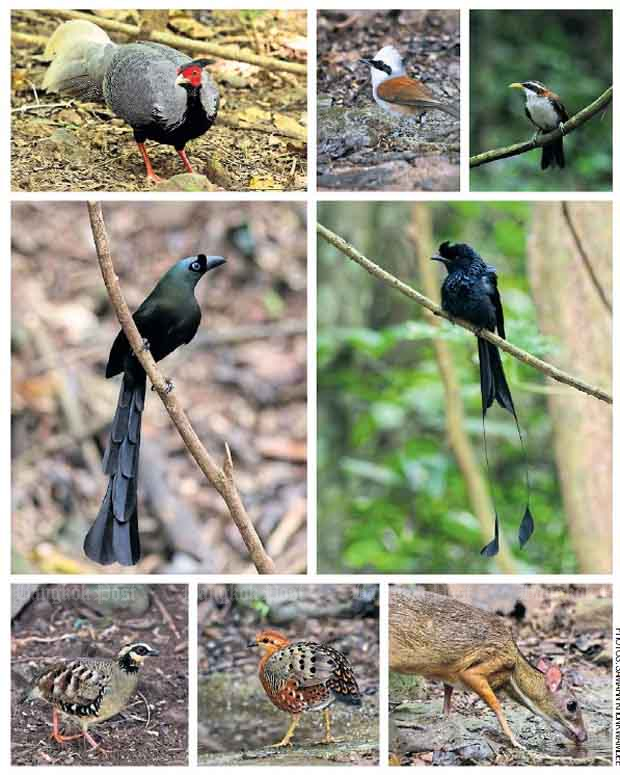
Over the past few years since bo noks were introduced, Samarn has got from these artificial waterholes numerous exciting shots of not just birds, but also other animals such as civets, mouse deer and even the iconic king cobra.
Once the rainy season returns, the birds no longer need to visit these little artificial waterholes. To take photos of these winged creatures during those months, you'll need to look for them in the vast wilderness.
TRAVEL INFO
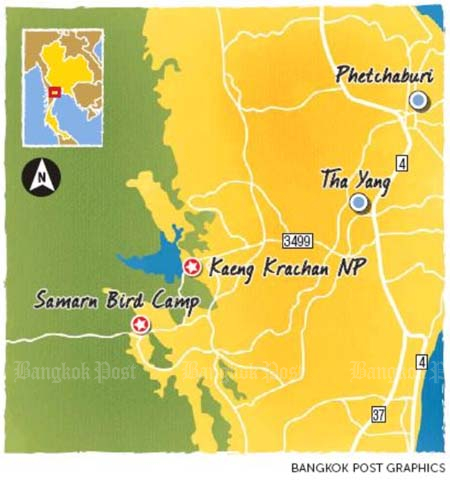
- A number of bo nok are available along the eastern boundary of Kaeng Krachan National Park. These artificial waterholes and the photographer blinds require regular maintenance, and they are taken care of by different individuals who make sure hunters do not come to take advantage of the sites. At each site, each visitor is requested to pay a fee of 200 baht per day.
- Each waterhole attracts a different number of birds each day. It's therefore important to know which site is the best during your visit. For advice, call Samarn Bird Camp on 081-810-7307.
- If you wish to contact the park, call 091-050-4461 or 032-772-311.