Summer 2014 and Britain’s biggest overseas base since the second world war is beginning to be packed up. With 28,000 troops, 4,032 contractors, 3,080 vehicles, 1,206 tents, restaurants … the numbers in The Billion Pound Base: Dismantling Camp Bastion (Channel 4, Sunday) are mighty impressive.
Or are they? Glastonbury – Camp Glastion – is way bigger: 175,000 people, many more tents and restaurants, and they just get on with it, in a couple of days, every year. But then I guess they’ve been there less time, have less stuff, and not so far to go. No airport either, nor military hardware, aircraft to get home, bombs to get rid of, Taliban lurking behind the perimeter fence, ready to pounce. Or maybe there will be next year, the deadly Somerset sleeper cell …
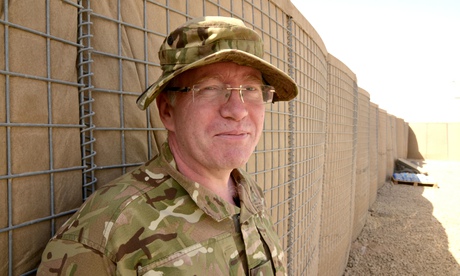
OK, a big deal then. In charge of the big operation at Basto is Lt Col Laurence Quinn, whose packing talents I hope are better than both his bagpiping and his metaphors. The job “is like riding a tiger, and the tiger tries to turn and bite you every day, so you have to try to push it back on track”, he says, mysteriously. He’s a cheery chappie though, animal lover too by the look of things – he feels for the sniffer dogs in the 40C heat, and the pigeons trapped in the rafters of the counter IED training centre building.
That building’s staying, for the Afghans. No military stuff is, though, so Sergeant Urie Hill, a Jamaican and former professional cricketer, is cutting up anything that could be a weapon (including bread knives by the look of it) at a place called Warlike Scrap. Bullets are disposed of in a brilliant thing called the popcorn machine, the reason for which is obvious the moment it’s switched on. Mmm, copper’n’lead flavour popcorn. Oi, why’s that nice orange Land Rover being crushed though, that’s not a weapon, is it? Bloody wasteful.
Over at the Bio Wash, vehicles that are being taken home are having their undercarriages douched, to Car Wash by Rose Royce on the Bastion radio station. It can take up to four days to clean a car here. WHAT? I have some Lithuanian friends who’ll do it – really well – in about seven minutes. Are you watching Mr Osborne? There’s your deficit. Total cost of military operations in Afghanistan: £37bn.
The day it all has to be done by, the last day there, is called Bidet. Well, B-day really, for Bastion I presume, but it’s hard not to think of douching human undercarriages. Personal hygiene remains important incidentally. “We must ensure our soldiers are changing their socks and pants,” Major Austin Moore tells a meeting of top brass.
The best moments in the film, though, come when Quinn and his team show a delegation of Afghans round the base they’re going to inherit. The local colonel isn’t so happy about how much of the infrastructure has been stripped out, he tells the Afghan translator (in Dari or Pashto presumably).
“Should I translate that?” asks the translator.
“No, I’m just telling you.”
“But they’re looking at me to translate.”
“Say something different. Say you’ve spent a lot of money here, thankyou.”
[Turning to Quinn] “He’s just saying, sir, that you’ve spent more here on Camp Bastion and it looks very nice, good infrastructure from every point of view, so very good.”
Quinn looks chuffed to bits. “They like it, they like what we’ve done with the place,” he says. “It’s fantastic, that’s why.”
Ha, funny. Also a little bit sad – because of the ungratefulness of the Afghan colonel, and the just-not-getting-it of the Brits. Could it – with the mistrust and misunderstanding and just missing the point – even be a tiny bit symptomatic of not just eight years of Camp Bastion but the entire intervention, 13 years of bloody war boiled down to a comedy moment in a documentary?
Then, just a few days ago, post B-day Camp Bastion is hit in a deadly attack by a strengthening Taliban. And you think of the moaning Afghan colonel, and the missing infrastructure, the lack of radar, and the ill-equipped Afghan soldiers taking over in the control towers, without even radios, communicating with the next tower by waving(!). Suddenly a light-hearted packing-up-and-moving-house documentary is asking more serious questions. Not just about whether the colonel had a point, but also about whether we left too early, and even about whether we should have ever have been there in the first place.