To imagine a language is to imagine a vivid form of life, Ludwig Wittgenstein once argued persuasively in his Philosophical Investigations. Whether you agree with him or not, what Wittgenstein observed -- the interrelation between language and life -- has, without a rupture, been one of the most intensive socio-historical and philosophical investigations in modern times.
Philosophers, socio-cultural theorists and psychologists analyse the relation between the two predominantly for the search of a possible link between language and the construction of thought.
Outside this analytical plane is where our focus lies -- on a practice that is fundamentally non-analytic. There are those who have long interlocked life and language in their day-to-day practice prior to the arrival of Wittgenstein's Investigations; or even The Tractatus Logico-Philosophicus.
I am speaking of the actors here. I will draw particular attention to stage actors as they come closest to the interlinked "life-word".
The term drama is etymologically rooted in the ancient Greek dran, meaning deed, to do, or to act. A word a bit more modern is dra-ma which means to act but, at this point, is evolving towards an intense physical act or play. And the play needed its course of action from the sources of the texts.
The ancients, not only the Greeks but also the Indians and the Chinese, weren't reliant on texts to play as the dran were done mainly out of religious ubiquities. Around the late 500 BC in Athens, written language began superseding this religious tradition and became a bearing torch where the "play" and "life" could interweave into one.
In China and India, although pre-modern shamanic rituals and the sacred Rig Vedas, which were composed mainly of Sanskrit hymns, trace back farther, their processes of theatrical dramaturgy occurred more slowly. Around the 14th century in China and somewhere between 11th to 18th centuries in India.
Fast forward to late modernity or the time at which we remain gazing with marvel. Language, a generally structured system of communication by which humans apply grammar, vocabulary, sign, or small talk "into the open" to make their listeners understand, has unequivocally changed.
From the latter half of the 18th century to the entire 19th century, a period historians have named the "golden age of the nation states", actors, to whom a concept of nationality was being introduced, mainly spoke a single national language.
But this practice has to be adjusted as the idea of the de rigueur nation state waned or otherwise altered profusely towards the end of the 20th century. Bilingualism gradually became a robust alternative.
By 2024, the United Nations recognised that about half of the global population of 8.2 billion people spoke at least two languages.
Bilingualism has become a necessity out of human-life factors: dual language exposure, migration, relocation, exodus, war, famine, refugeeism, as well as globalisation. Bilingual plays often address or answer to these factors.
For example, Sanaz Toossi's acclaimed piece, English, encapsulates Iranian adults studying to be proficient in English as it would be an asset to qualify them to migrate to work in foreign countries, with the US being a prime example. Their task to study and language progression are to be lucidly interplayed with the shape and reshaping of their identities.
Theatre companies with bilingual and multilingual productions such as the Repertorio Español (New York), CHUANG Stage (Boston), Theatraverse (Paris) and Teatro Multilingue (France, Italy, Spain, UK) also draw heavily on identity experiences of local, migrant, plural, transcending (in both lingual and physical), fragmenting, reinventing, renewing, to name only some.
Their plays personify the nuanced flows of culture, advocating the usage of the bi and multi-languages as a bridge, not a border. And regardless of their footing -- local or global -- their works exhibit how language and theatre are integrated into the world's wider diverse communities.
Siam Repertory Theatre Company
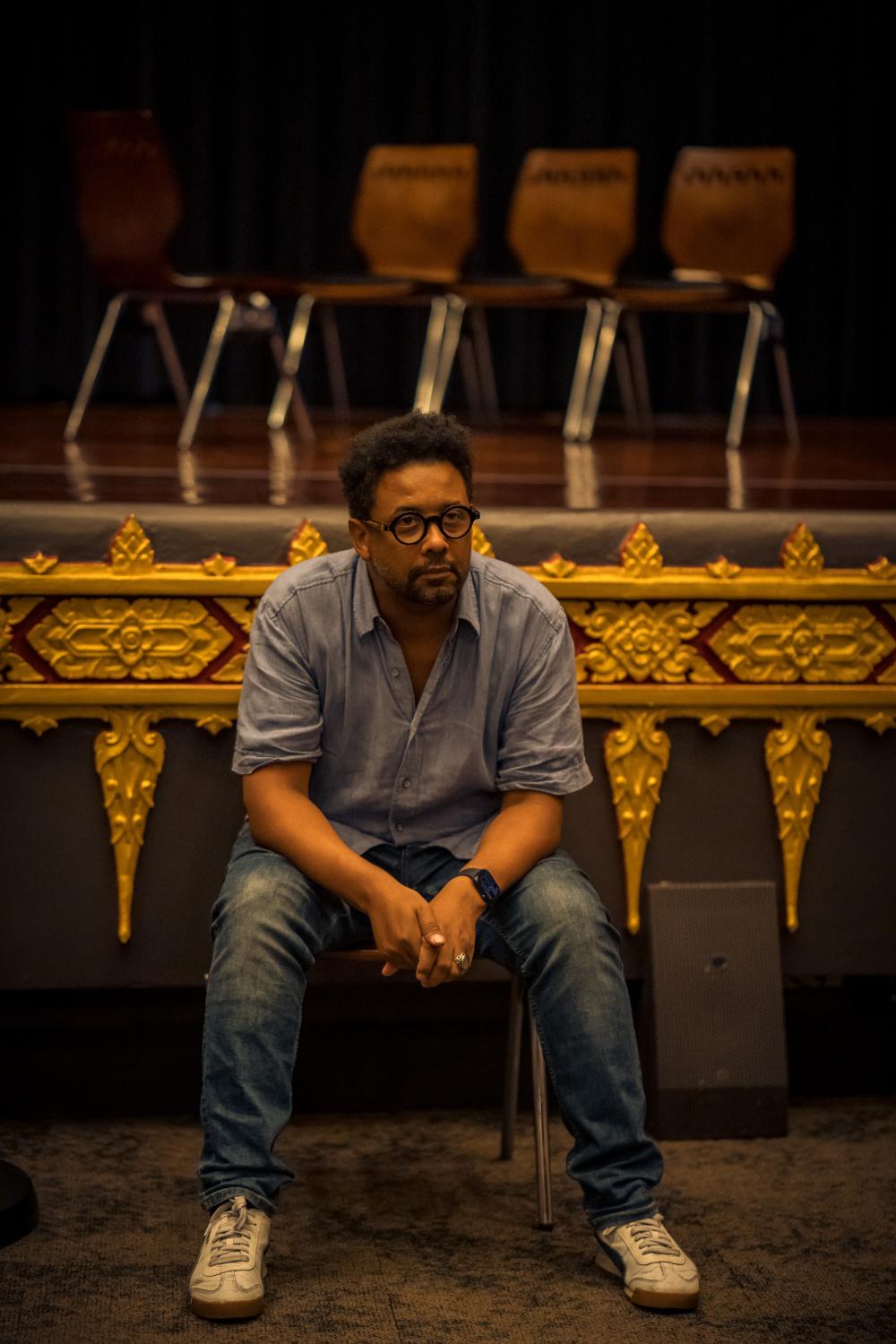
Bangkok joined the bilingual theatrical community early this year. A brainchild of a native of Scotland as well as a long-term expat of Bangkok, Paul Ewing has named his recent creation the Siam Repertory Theatre Company (SRTC).
It is a bilingual theatrical company based in Bangkok but armed with artistic ties to British companies. It has the term Siam as Ewing expresses that the raison d'être of SRTC are twofold.
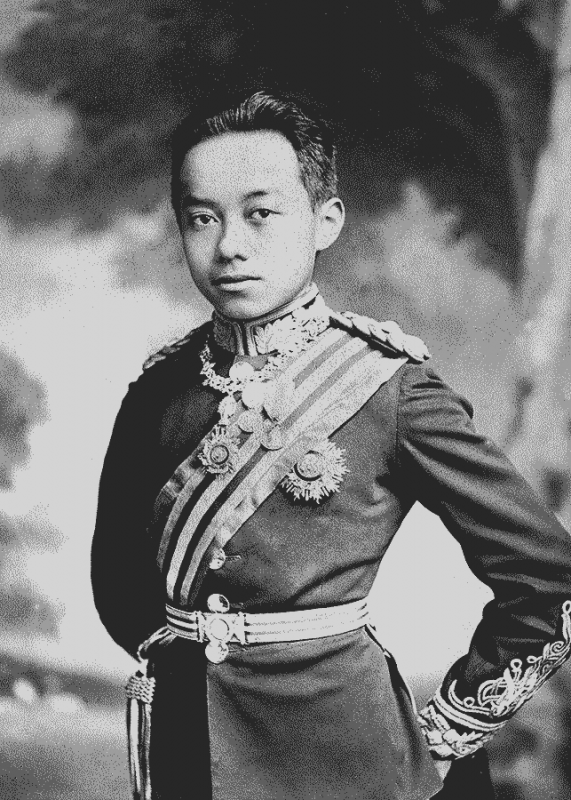
The first is to establish an international bilingual repertory company that generates professional actors from Thai soil. The latter is to revive King Vajiravudh's theatrical and creative oeuvres. King Vajiravudh or Rama VI was the artistic king of Siam.
Although he prolifically penned over 50 original plays, many of them did not receive sufficient examination. Only a handful of Vajiravudh's plays were performed to the public.
When we met at a sunlit café in central Bangkok, Ewing further elaborated the purpose of launching SRTC to me in a cheerful and polite demeanour. He said he had envisioned a bilingual platform at which recent Thai drama graduates or actors in their early developmental phases can widen their horizon, get skilfully mentored and confidently expand their potential in a supportive environment.
With years of British theatrical experience of national and cross-cultural touring and acting with the Riding Lights Theatre Company, the Young Vic, and the Royal Shakespeare Company, as well as of television producing and presenting with the BBC, Ewing seems well-suited as the first mentor of blooming actors arriving to his company.
Visiting professionals from the UK are also expected to be coaching in acting, workshops, co-productions and writing for SRTC's members.
When asked how SRTC would identify the type of its actors, Ewing answered that SRTC's overall intention is to preserve Thai heritage and identity, but true to its principle of bilingualism, the company will be Thai-rooted yet internationally open when it comes to auditions.
However, when I thoroughly probe into SRTC's meaning of identity, Ewing replies aptly that: "Thai identity may be inherited, lived, learned, or consciously chosen. It may be historical, contemporary, hybrid, or newly forming. One of SRTC's central interests is to explore how Thai identity continues to be shaped through language, movement, history, and international exchange."
Thus, the definition of an actor joining SRTC is as bold: a Thai national, dual national, long-term resident, migrant, one with mixed heritage, and the list goes on. The requirement that applies to all must be their ability to act professionally in English and exchange adequately in Thai when performing in Thai plays.
The Dramatist King
The SRTC aims to shed light on King Vajiravudh's role of being a pivot in his own right. Born in Bangkok in 1881, Prince Vajiravudh became the heir of King Chulalongkorn the Great in 1895 when his half-brother Crown Prince Vajirunhis died.
Prince Vajiravudh was subsequently sent to be educated at the Royal Military College, Sandhurst, and later went up to Christ Church, Oxford, in 1899, to study law and history. The young Prince fully immersed himself into British (and French) theatrical life, arts and culture. He began writing Western-style plays that held a dialogue of spoken words during his student days at Oxford.
Prior to this, the Siamese theatre at court was traditionally dominated by silent dancers with elaborate head gear and dresses and classical dance drama with all-female cast.
Later, King Vajiravudh's writing oeuvre, expanding to over 50 plays and more than 100 Western play translations and adaptations, revolutionised Siamese theatre as he not only introduced lakon phut (dialogue dramas), but also blended them with local Thai textual writings. Most of the king's plays were truly Westernised in a Greek Catharsis genre: plot, character, and moral reading.
Chulalongkorn University, the National Library, the National Archives of Thailand, the Fine Arts Department of Thailand and Siam Society keep a large collection of King Vajiravudh's writings.
Chulalongkorn University has a voluminous digitised archives but it is rightly understood that some of King Vajiravudh's English writings were not all obtained as they were handwritten abroad and may be in private possession.
His dialogue notes, short-verse diaries and travel memoirs, for instance, remain at his alma mater, Christ Church in Oxford. I read them during my student days there.
The King's Command
In Oxford, then Prince Vajiravudh wrote this play through the pseudonym of Carlton H. Terris. The King's Command was finished, produced and rehearsed in 1902 at Westbury Court in Gloucester, an idyllic estate belonging to Maynard Willoughby Colchester-Wemyss.
The then 21-year-old Prince directed the play whereas his Siamese and British friends assumed the cast. He also took the role of François, Duc de Morbihan, a man forced by a royal decree to wed a lady whilst he was de-facto in love with another woman.
Despite its amateur nature, the show at Westbury Court was well received by visitors and local audiences. The production proceeded to Town Hall in Cheltenham, also in Gloucestershire, to have its public premiere. Since 1990, the Gloucestershire County Records Office has been holding the archival pictures of the original cast of The King's Command.
The SRTC will premiere The King's Command in Bangkok on July 17 at 7pm at the National Theatre of Thailand in Phra Nakhon. After the premiere, there are two more performances at the Sri Ayudhya Auditorium at the National Library on July 19 at 2pm and 4pm. Contact the Rama VI Foundation at the National Library of Thailand at 02-280-9828.